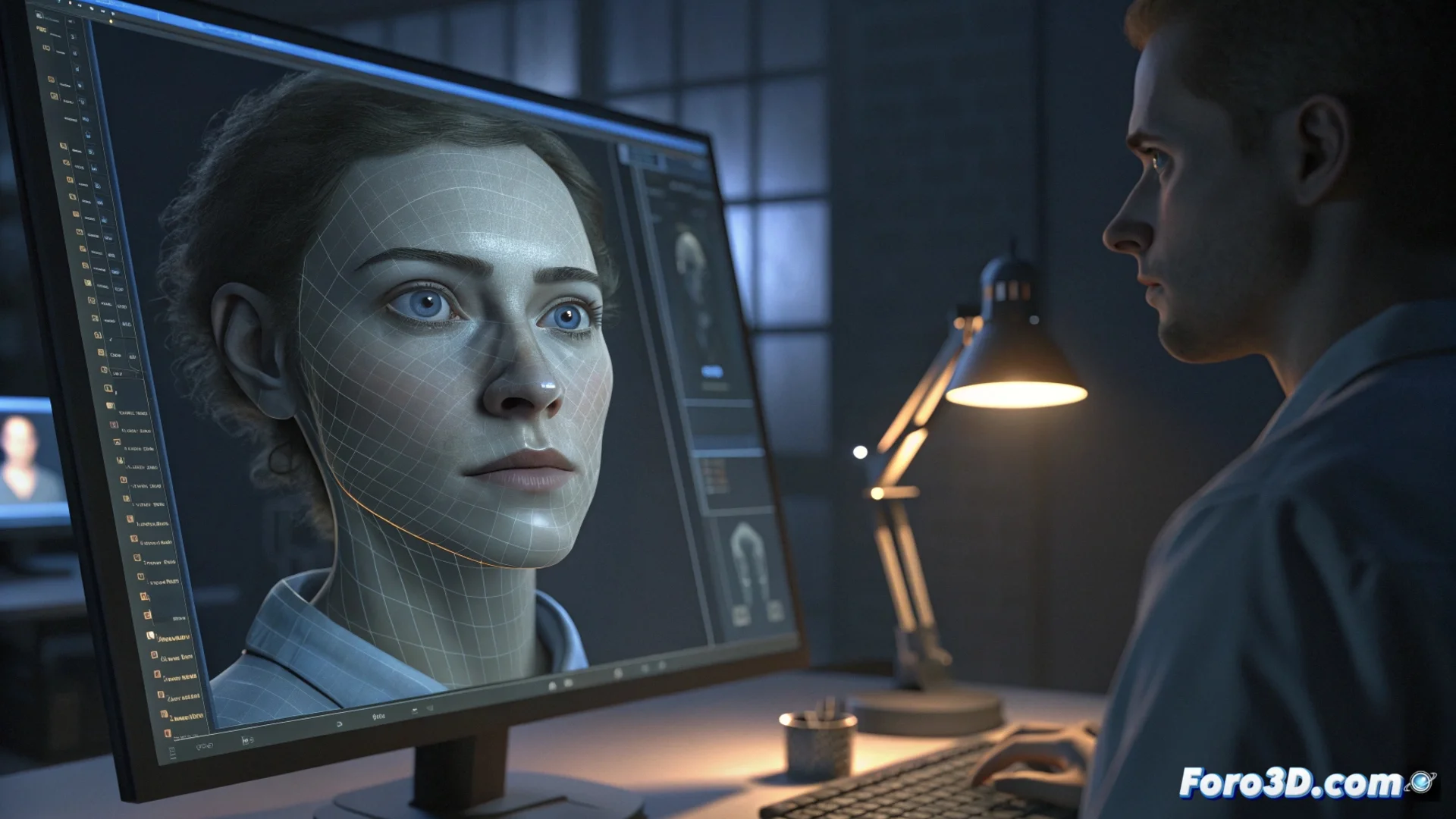
Authorities Intensify Fight Against Non-Consensual Deepfakes and 3D Avatars
Regulatory agencies and law enforcement bodies are increasing their activity to pursue the use of 3D avatars and characters generated by artificial intelligence without authorization. This content, often called deepfake, is used to impersonate identities for fraudulent purposes or to spread false information. The measure directly impacts animators, modelers, and studios that rely on these technologies, as clear legal boundaries are sought regarding the permission needed to use a digital image. 🚨
The Law Updates in Response to Generative Technology
The new legal framework does not prohibit creating or using 3D avatars, but it does require explicit permission from the person whose appearance is copied, even in stylized or modified versions. Processing facial biometric data without this authorization can become a crime. For artists, this means documenting agreements with reference models and verifying the origin of AI training datasets. Platforms hosting this material must implement systems to identify manipulated content and act on requests to remove it.
Key Changes for Creators:- Document and archive consent agreements with any model whose image is used as a reference.
- Verify the origin and permissions of datasets used to train generative AI models.
- Online platforms must develop tools to detect deepfakes and respond quickly to notifications.
Technology advances faster than laws, but now priority is given to cases where demonstrable harm exists, such as scams or defamation campaigns.
Impact on Digital Workflows
Professionals in the sector must review their methods to ensure compliance with regulations. Using facial tracking software on actors' recordings requires their prior consent. Generating an entirely synthetic character, but with features that can be associated with a real person, can also violate the law if done without their agreement. The irony lies in the fact that the same tools that enable the production of hyperrealistic characters for film or video games are those that facilitate the creation of convincing fake news.
Critical Aspects to Consider:- Prior consent is mandatory for using facial or motion capture technology on actors' performances.
- Creating an avatar with recognizable features of