YouTube's algorithm mistakenly flagged the stop-motion shorts of Marie Hart and Peter Heacock as AI-generated content. This led to the demonetization of their channel, but the situation became a turning point for the Philadelphia couple. Their character, a tiny Korean grandmother inspired by Hart's eccentric mother, went from having a niche audience to accumulating millions of views on TikTok, YouTube, and Instagram.
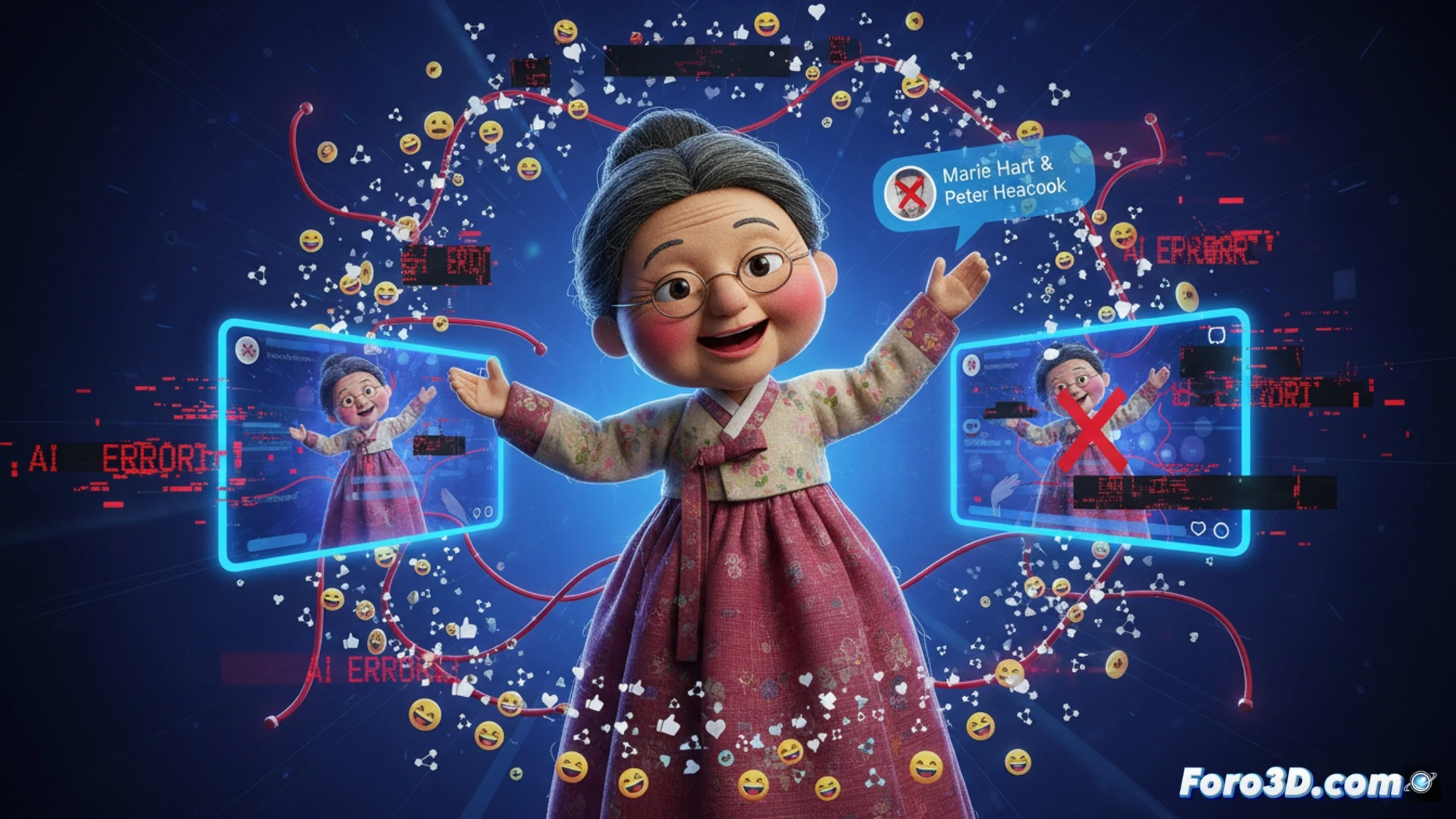
The algorithm's error that boosted the creators 🤖
YouTube's moderation system uses machine learning models to detect AI-generated content, but in this case, it failed by identifying frame-by-frame animation as synthetic material. The couple used traditional stop-motion techniques with puppets and physical sets, an artisanal process requiring hours of work per second of video. The demonetization forced the creators to appeal the decision, which coincided with a sudden surge in traffic on their platforms. The algorithm penalized authentic content while the audience rewarded it.
The grandmother who beat the machine 🏆
It turns out the best publicity for a creator is for an algorithm to accuse them of being an AI. Marie and Peter went from being unknowns making clay puppets to having millions of views, all thanks to YouTube mistaking their manual work for a Midjourney prompt. The Korean grandmother, who once only made family friends laugh, is now more famous than most computer-generated influencers. If the algorithm wants to keep this up, it should start accusing more independent animators.