Monolith Productions has revealed technical details about its upcoming Wonder Woman title, confirming the use of the proprietary LithTech Firebird engine. This engine, an evolution of the legendary LithTech, is the foundation for the ambitious integration of the Nemesis system. The promise is clear: to bring the reactive intelligence of Mordor's enemies to a world of gods and gleaming metals, demanding a qualitative leap in visual fidelity and combat fluidity.
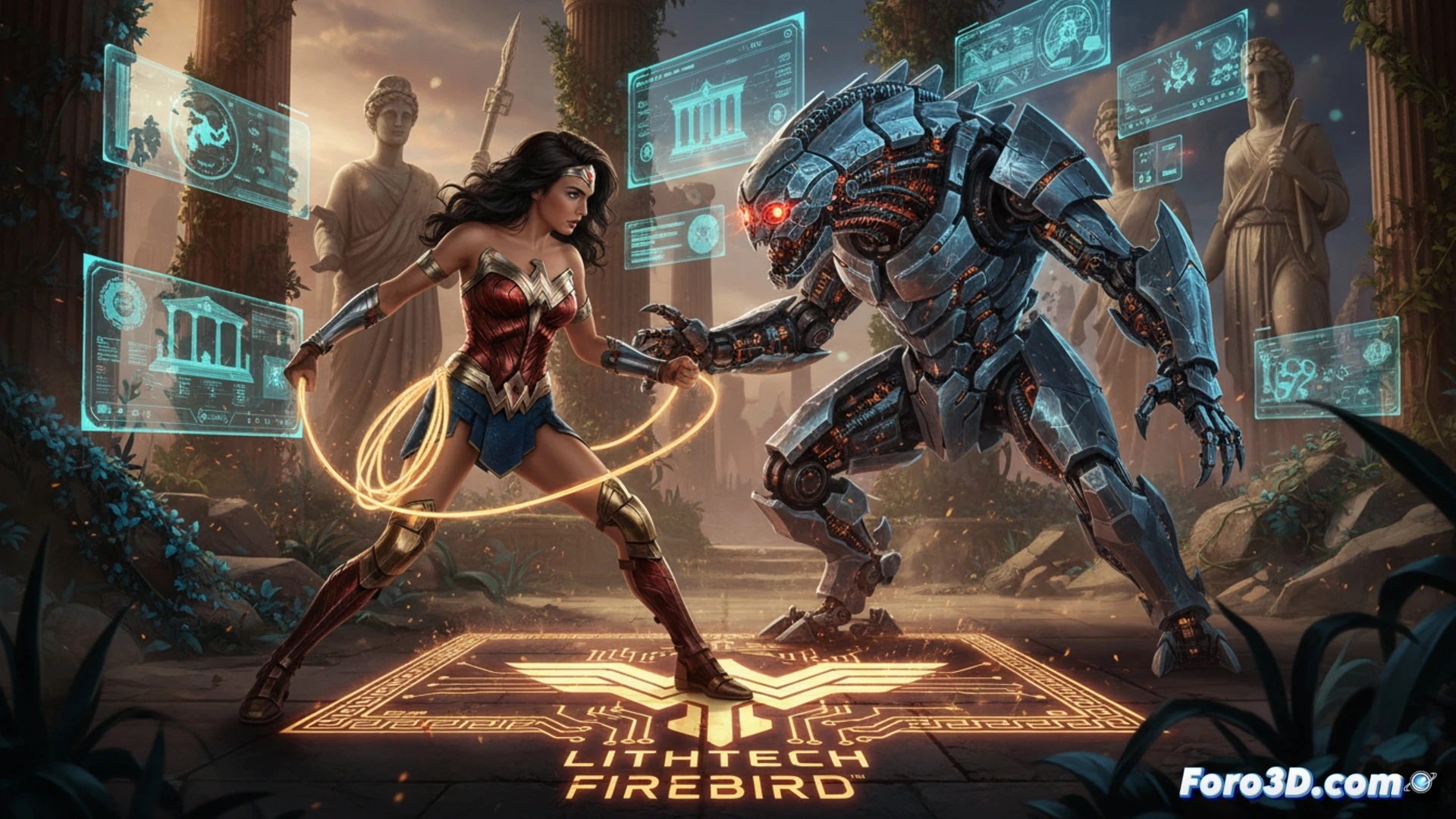
Armor modeling and rendering pipeline 🛡️
The artistic pipeline relies on the trident formed by Autodesk Maya, ZBrush, and Adobe Substance 3D. Artists use Maya for rigging and base animation, while ZBrush sculpts organic details and armor filigree. The crucial step occurs in Substance, where PBR (Physically Based Rendering) texture maps are generated, allowing the LithTech Firebird engine to calculate precise specular reflections on metal. Unlike other AAA studios using Unreal Engine with its Lumen reflection system, Monolith has chosen to optimize its own shaders to achieve a characteristic shine on armor without sacrificing performance in massive combat scenes.
Combat fluidity and the legacy of Nemesis ⚔️
The key to the Nemesis system is not just the AI, but the animation. LithTech Firebird implements a procedural animation system that allows smooth transitions between strikes, dodges, and enemy reactions. While titles like Batman: Arkham use pre-rendered animations for choreography, Monolith bets on a physics engine that deforms armor in real-time. This implies a huge technical challenge: synchronizing the reflections of Diana's armor with the impact of each blow, a detail that sets this title apart from the competition in the action-adventure genre.
As a developer, what specific technical advantages does the LithTech Firebird engine offer for recreating Wonder Woman's powers and flight physics compared to other commercial engines like Unreal Engine 5?
(PS: 90% of development time is polishing, the other 90% is fixing bugs)