A moderate-intensity swell caused the capsizing of a fast-charging floating dock for electric ferries, putting a key infrastructure for sustainable mobility out of service. The technical expert appraisal, supported by 3D simulations with OrcaFlex and Rhino, discovered that the original design did not account for the inertia of the storage batteries' weight under wave dynamics.
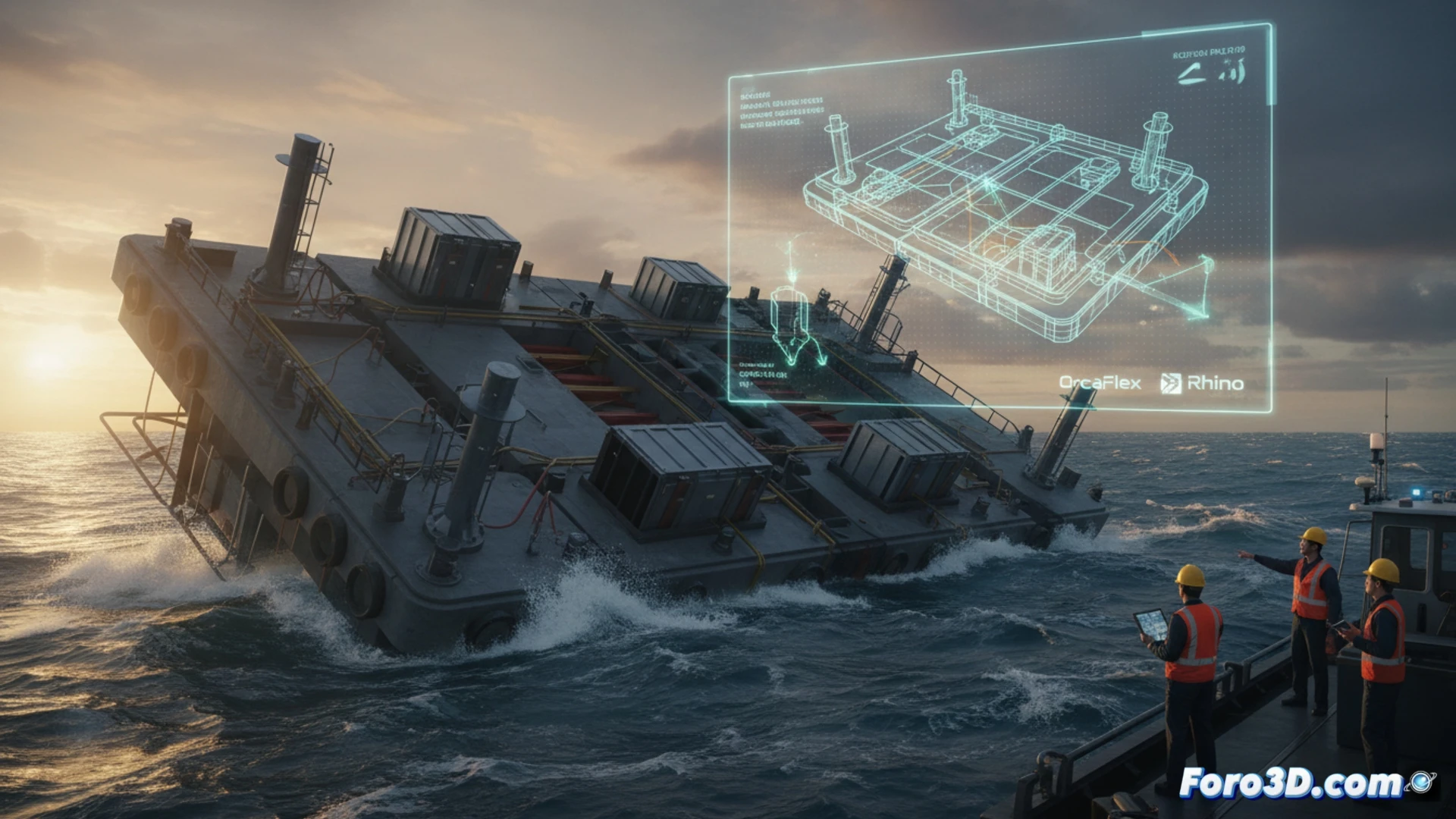
Dynamic simulation in OrcaFlex and stability analysis in Rhino 🌊
The marine analysis with OrcaFlex modeled the dock's behavior under different sea states, from 0.5-meter waves to the critical 1.8-meter swell. The results revealed that the dynamic center of gravity shifted dangerously when the static weight of the batteries combined with the rolling induced by the waves. In Rhino, the structural mesh was recreated and the overturning moments were calculated, confirming that the energy storage module acted as an unbalanced ballast. The inclusion of historical wave data in Autodesk Revit allowed cross-referencing the dock's geometry with environmental loads, demonstrating that the safety factor was insufficient for a simultaneous lateral wind gust and swell.
Lessons for electric port infrastructure ⚡
The incident shows that port electrification not only involves installing chargers, but also redesigning the buoyancy of docks and pontoons to absorb the weight of the batteries. Redesign proposals include active ballast tanks controlled by wave sensors and an asymmetric distribution of energy storage. The 3D expert appraisal with Lumion also visualized the need for dynamic moorings to avoid resonance with the waves. Without these adjustments, any floating dock for electric vessels risks repeating this collapse under adverse weather conditions.
Would you export the results to GIS format?