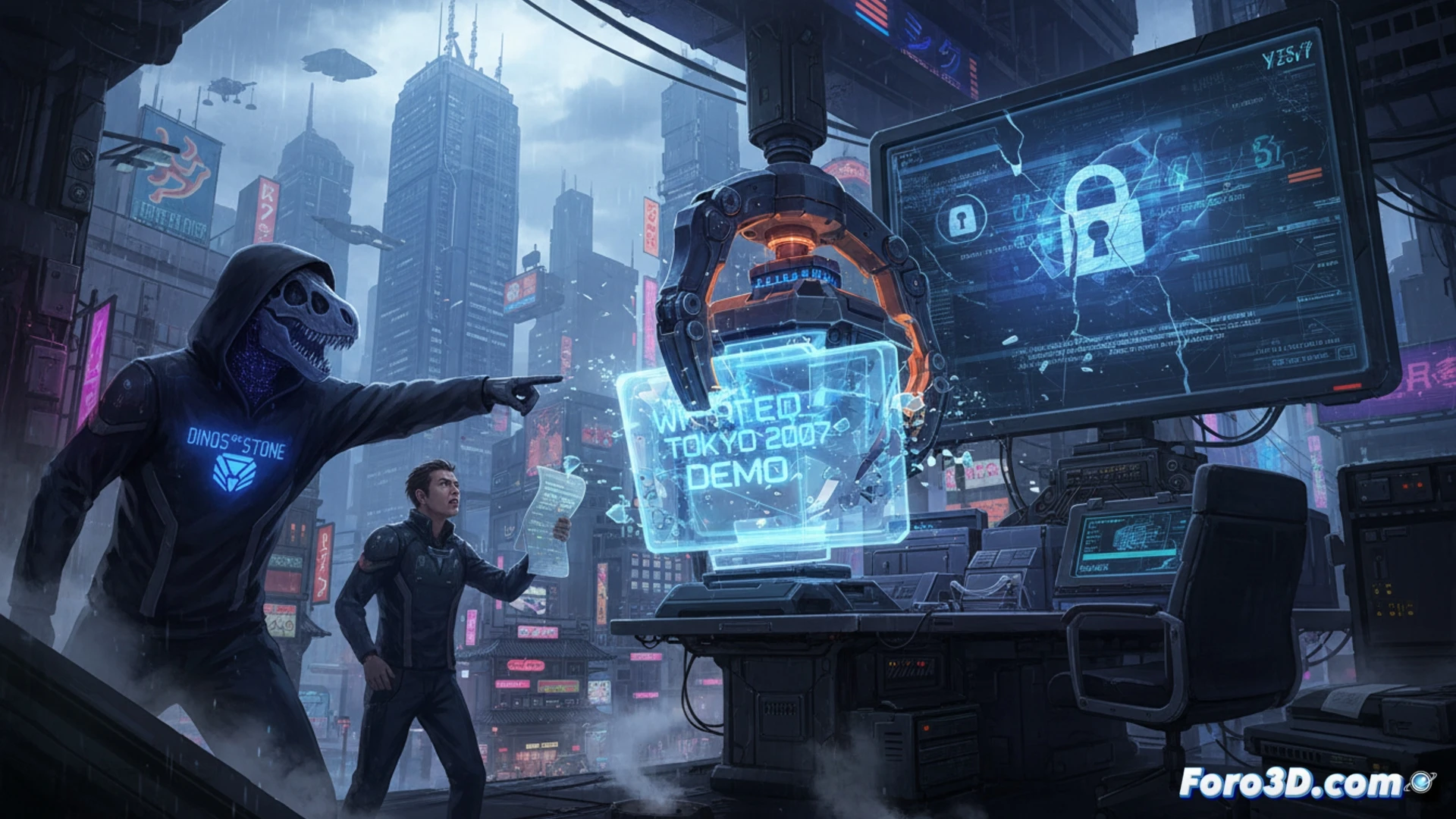
Independent developer Daikichi_EMP wanted to publish a demo of his game Wired Tokyo 2007 on Steam, but Valve rejected it for alleged intellectual property infringement. The problem is that the accused title, Dinostone, a dinosaur card game, was created by the same author under a pseudonym. The platform now demands legal documents to verify that there is no plagiarism, ignoring that both works are his.
The Logic of Bureaucracy in Digital Distribution 🏢
To resolve the block, Valve asks Daikichi_EMP for licensing contracts or a legal opinion signed by a lawyer. The developer must prove that he has not copied himself, something that in any other context would be obvious. This type of automated and rigid review process on Steam contrasts with the lack of human oversight, creating absurd obstacles for small creators who do not have access to immediate legal advice.
The Lawyer You Need to Sue Yourself ⚖️
Daikichi_EMP now has to find a lawyer to certify that his dinosaur game and his other action title are not the same product. The funny thing is that if Valve had reviewed the profiles, they would have seen that the same email registered both projects. But of course, it's easier to ask for papers than to look at the screen. Meanwhile, the author hopes that his future success won't require witnesses to prove that he is himself.