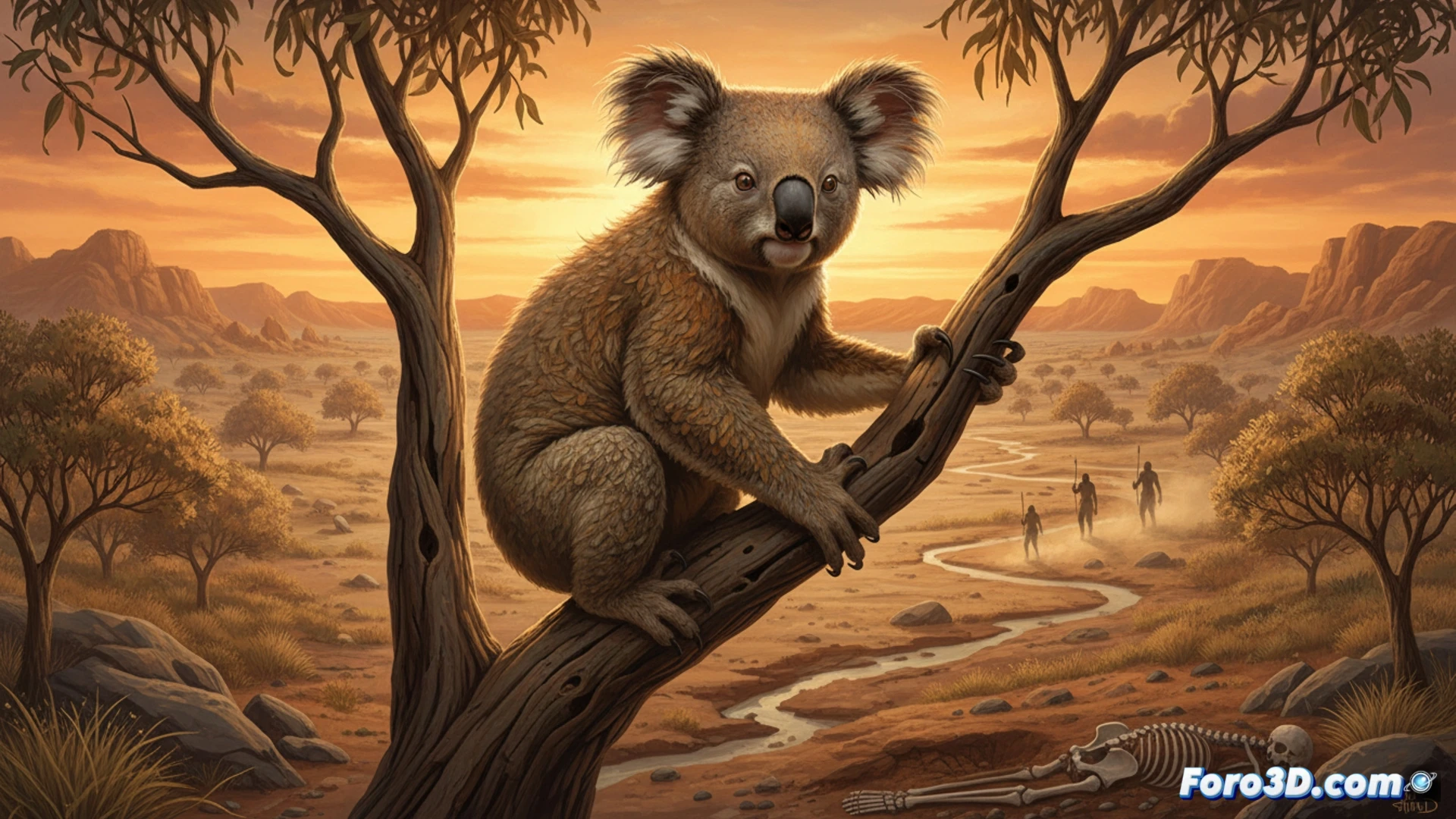
A fossil found in Western Australia has revealed the existence of an extinct relative of modern koalas. This marsupial, adapted to dry climates, lived until about 30,000 years ago and coexisted with the first humans to arrive on the continent. Unlike the modern koala, which prefers the humid areas of the east and south, this species thrived in arid conditions. A discovery that changes what we knew about the distribution of these animals.
How dating technology solved the fossil puzzle 🧩
The fossil analysis was carried out using uranium-thorium dating techniques and 3D reconstruction by computed tomography. Researchers compared the cranial morphology with current species and other fossils of the genus Phascolarctos. Precise dating places its extinction in the late Holocene, coinciding with the arrival of humans. The study used ecological niche models to confirm its adaptation to drier areas, something unprecedented in modern koalas.
The koala that didn't need premium eucalyptus 🍃
While modern koalas are eucalyptus connoisseurs and refuse to move from their favorite trees, this western cousin was more austere. It survived in the dry west, without bathing in top-quality leaves. Perhaps that's why it went extinct: it didn't know how to network with the newly arrived humans. Or maybe the first settlers stole its secret of water conservation. A hipster koala avant la lettre.