In 1773, Henry Cavendish designed an experiment to measure gravity using a torsion balance. Now, scientists propose updating that same design to hunt for dark matter. The idea is to miniaturize the device and make it up to 10,000 times more sensitive than current detectors, allowing the search for low-mass particles that other methods cannot reach. A cheaper and faster alternative to the massive underground detectors.
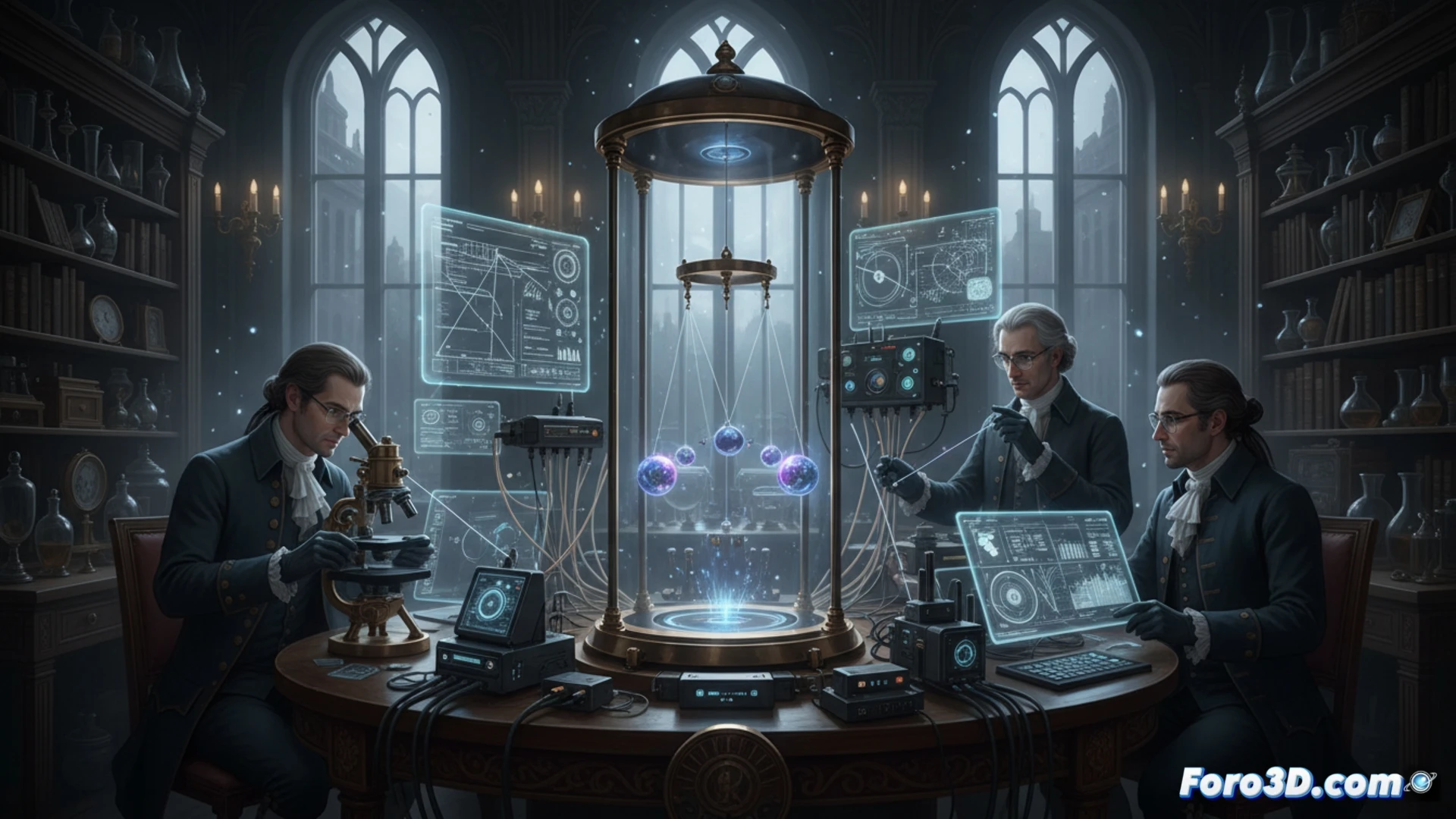
Torsion Balance 2.0: Enhanced Classic Technology 🧪
The proposal, published in a scientific journal, uses a reduced version of the original torsion balance. Instead of measuring the attraction between lead masses, the device would look for weak interactions of hypothetical dark matter particles with ordinary matter. Being smaller and more sensitive, it can explore a range of masses that underground experiments, such as those using tons of liquid xenon, cannot detect effectively. This offers a complementary and more accessible path to solving one of physics' great mysteries.
Cavendish, the Unwitting Cosmic Ghost Hunter 👻
It turns out that the very man who weighed the Earth with threads and lead weights might, unknowingly, have created the most effective dark matter detector. And while others build underground tanks the size of a building, some ingenious folks have said: why not use a 250-year-old toy? Next, they'll be searching for the Higgs boson with a Newton's cradle. If it works, we'll have to thank an 18th-century dead guy for solving the universe's mystery.