The Military Historical Museum of Cartagena houses a cinematic piece. A 75 mm Whitworth cannon with a hexagonal bore, manufactured in Manchester in 1873, has been identified as the same one that appears in the final sequence of The Good, the Bad and the Ugly. The discovery was made by Diego Montero, from the Sad Hill Cultural Association, by cross-referencing Peter J. Hanley's book with the museum's records. The piece, inventoried as MUE-5410, was used in the Third Carlist War and restored in 2010 by retired British and Spanish volunteers.
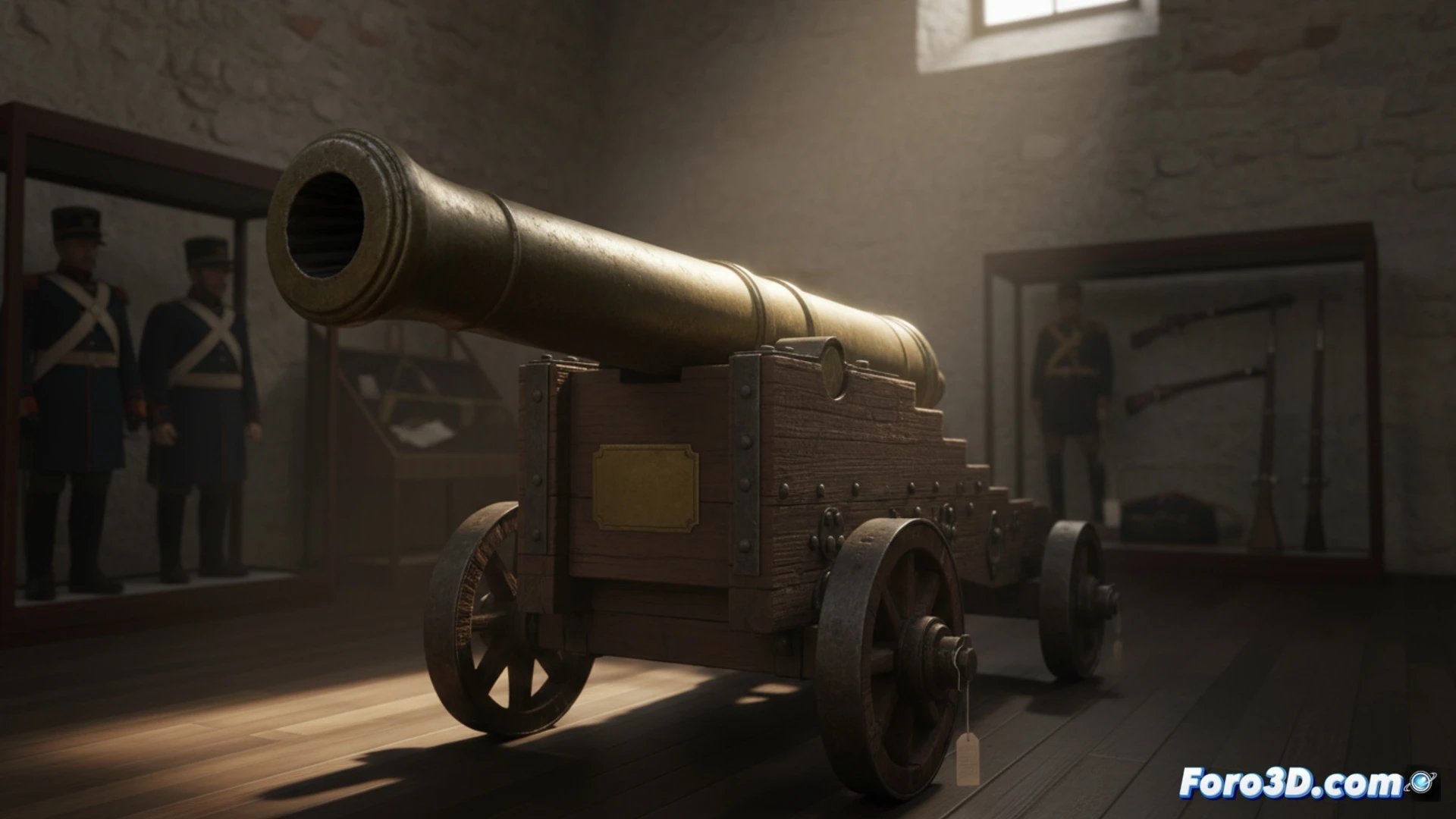
Victorian war technology for Leone's cinema 🎬
The Whitworth, designed by Sir Joseph Whitworth, is distinguished by its hexagonal bore, a system that sought to improve projectile accuracy by rotating on its own axis. Instead of using conventional rifling, the cannon used a shell that fit that shape, reducing gas leakage. During filming, Sergio Leone requested several original 18th and 19th-century pieces from the Army Museum in Madrid, which were moved to Burgos under military custody. The 75 mm cannon fired 5.5 kg ammunition at about 300 meters per second.
The cannon that didn't shoot anyone (but did shoot to fame) 🤠
The curious thing is that this cannon, designed for war, ended up being more famous for not shooting anyone in a film than for its actual service in the Third Carlist War. While 19th-century soldiers used it to scare the enemy, Leone used it to scare viewers with that epic duel. Of course, at least now we know that the cannon in the final scene wasn't a papier-mâché prop, but a piece of history with more shooting miles under its belt than some supporting actors.