Director Leyla Bouzid addresses in her new work the story of a young Tunisian lesbian who, from Paris, returns to her country for her uncle's funeral. There she introduces her girlfriend as her roommate, a deception that reveals the layers of oppression they face: a personal prison, a family prison, and a legal one, where homosexuality is a crime.
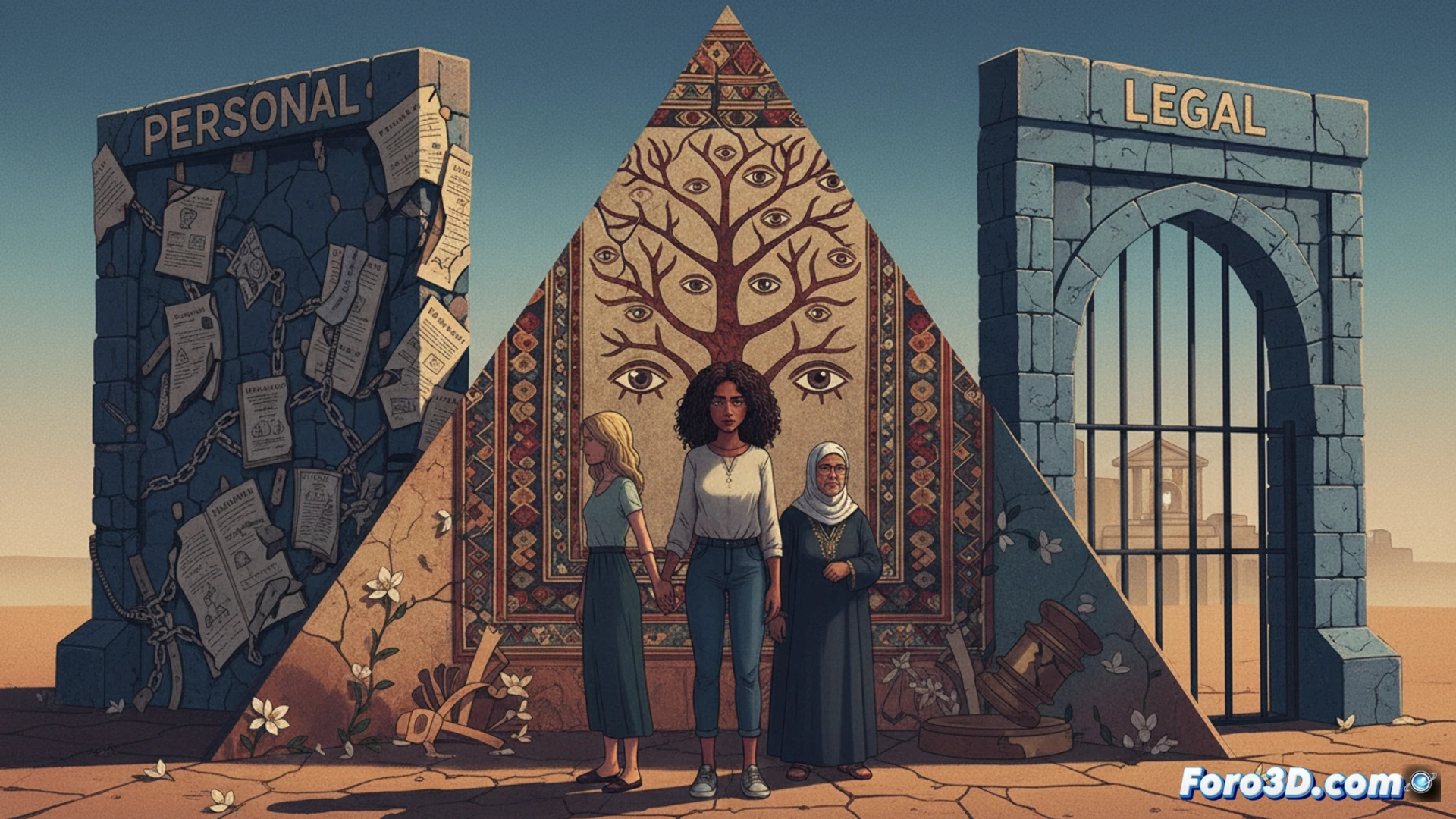
The development of an identity under layers of binary code 🧩
The film functions as a system of overlapping layers, similar to computer code where each line hides the next. The protagonist must execute a social script: deny her orientation (personal layer), avoid family rejection (network layer), and evade Tunisian law (security layer). Each interaction is a temporary patch that does not fix the underlying error: a social operating system that does not recognize her existence.
Incognito mode as state policy 🕵️♀️
The technical solution for the protagonist is simple: activate lifelong incognito mode. Like when you browse and delete your history, she erases her identity every time she crosses the border. The problem is that, unlike Chrome, in Tunisia there is no keyboard shortcut to come out of the closet without the family antivirus detecting you as a threat.