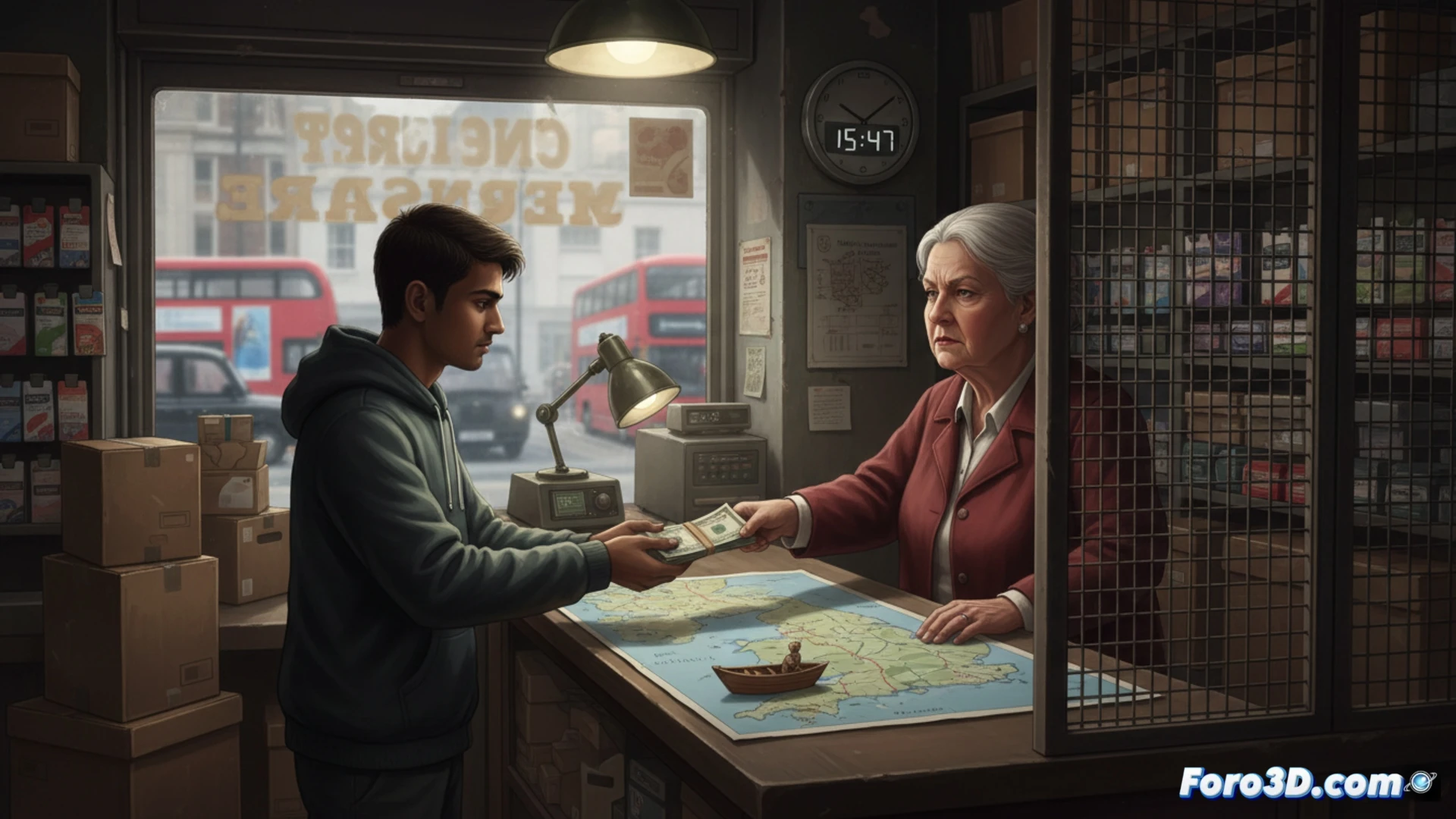
A BBC investigation has uncovered a low-tech but effective method: human traffickers are using companies registered in the UK to receive payments for illegal crossings of the English Channel. Over three months, a team secretly filmed employees of a mobile phone shop in Woolwich, London. One worker told an undercover investigator that he could deposit nearly £3,000 in cash to send it to a trafficker in France. The system operated with bureaucratic normalcy.
The technological side of the cash route 💰
Payments were made via bank transfers from legal company accounts, but the source of the money was cash deposited in shops like the one in Woolwich. Traffickers used encrypted messaging apps to coordinate deposits and crossings. The financial flow combined traditional methods, such as cash, with digital payment systems. The mobile phone shop acted as an entry point for undeclared funds. The BBC documented at least three similar cases in different parts of London.
The trafficker who invoiced like a serious company 🚤
The scene is quite something: a human trafficker invoicing his illegal services through a registered British company, as if he were selling insurance or french fries. The shop employee, with the same casualness as selling an iPhone case, offers to send thousands of pounds across the Channel. Very professional, complete with a receipt and commission. In the end, the business of crossing borders turns out to be as simple as making a transfer at a convenience store. Of course, the trip includes an inflatable boat and a free scare.