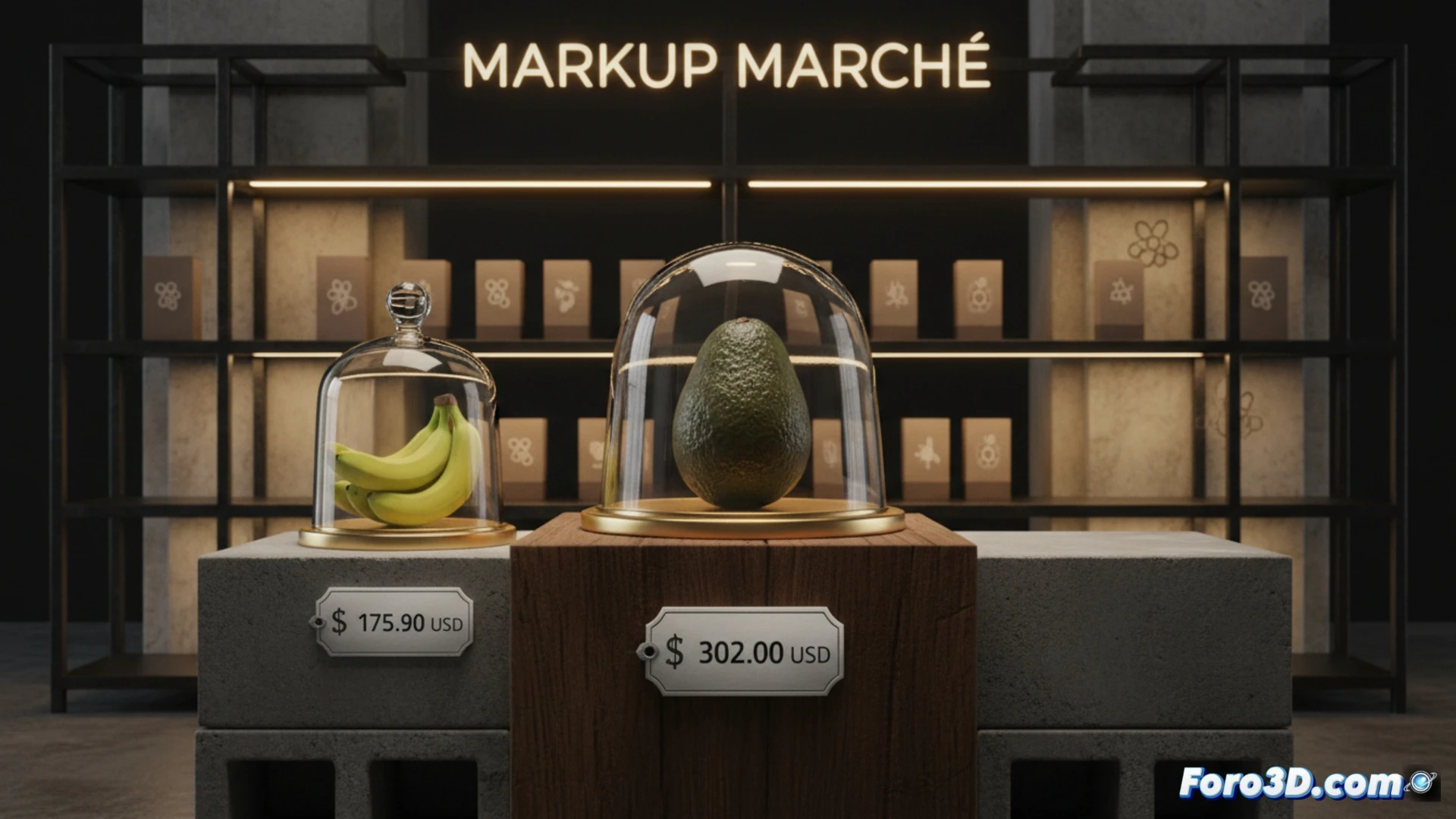
The Ordinary has launched Markup Marché, a pop-up store selling basic items like avocados and bananas at luxury prices. An avocado costs $302 and a banana $175.90. The brand aims to expose how premium companies use sophisticated language and flashy packaging to inflate prices without offering real value in their skincare formulas.
The marketing algorithm: how technical language inflates the price 🧠
Markup Marché's strategy replicates the process followed by many cosmetics brands. First, they assign complex names to common ingredients, such as fermented fruit extract instead of vinegar. Then, they design packaging with matte textures and minimalist typography. Finally, they add descriptions like controlled release technology to justify a premium price. The Ordinary dismantles this system by selling an avocado using the same method: they call it Persea americana encapsulated in a controlled atmosphere.
How to sell a banana as if it were a facial serum 🍌
Imagine buying a banana for $175. At Markup Marché, it comes with a card that says natural source of potassium with biodegradable texture. It sounds like a moisturizing cream, but it's a fruit that will turn black in three days. The irony is that many would buy the pitch if it were sold by a luxury brand. The Ordinary demonstrates that the price does not reflect the content, but rather the seller's ability to dress up the ordinary with pretty words.