The speed of RAM is a determining factor in 3D modeling and rendering workflows. The new TeamGroup T-Force Delta RGB DDR5 kit reaches 7200MHz, far exceeding the base standards of DDR5. This article analyzes whether that extra frequency translates into real gains in applications like Blender and Unreal Engine, or if it's just a luxury for overclocking enthusiasts.
Technical Benchmarks: Bandwidth vs. Latency in Viewport 🚀
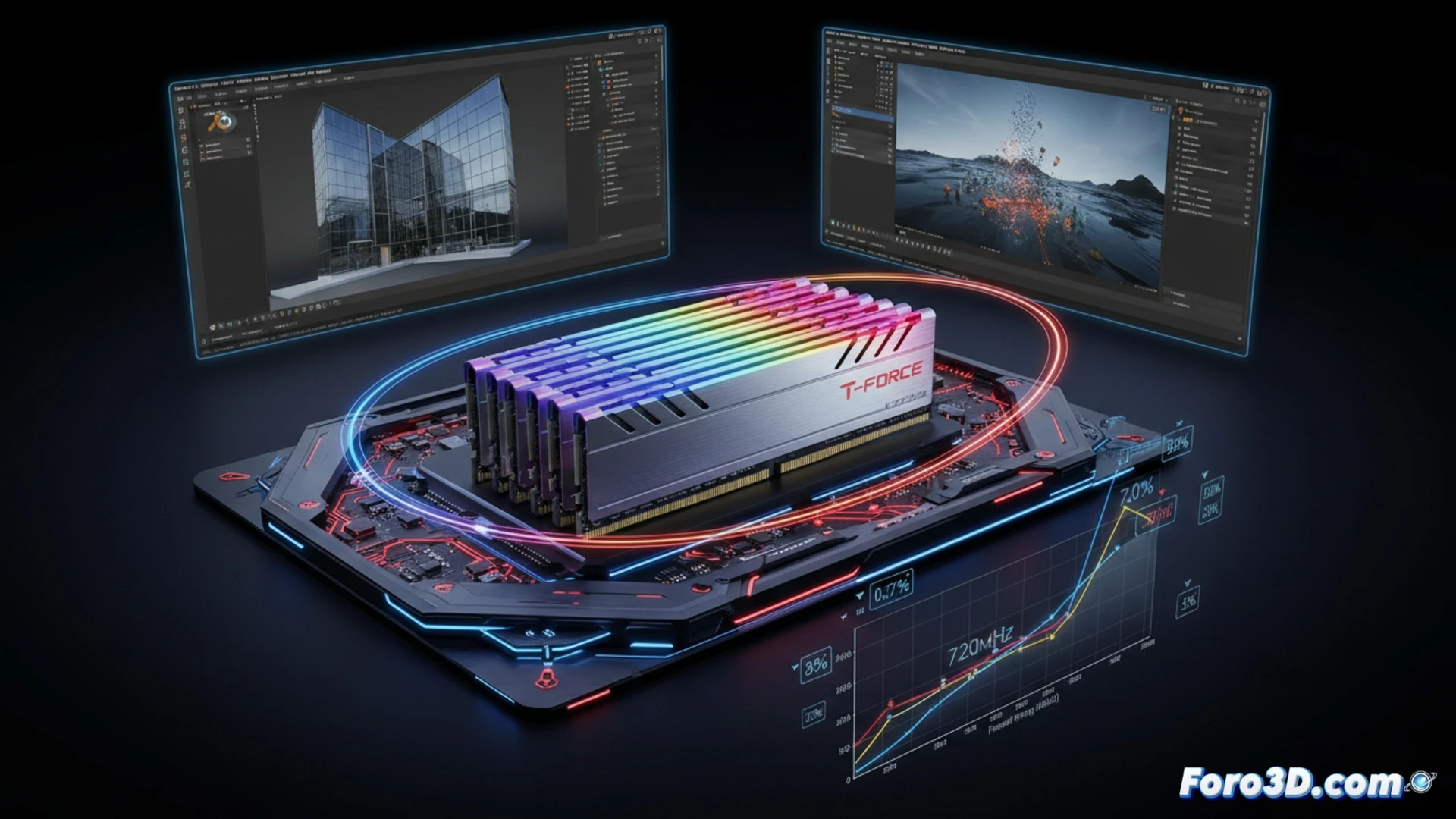
To measure the real impact, we subjected the 32GB (2x16GB) kit to tests in Blender 4.0 and 3ds Max 2025. In the Blender monster scene, the render time with Cycles dropped by 7% compared to a DDR5 kit at 6000MHz CL30. However, the most notable leap was in viewport smoothness in Unreal Engine 5. When loading the CitySample scene, the frame rate in the editor increased by 12% thanks to the higher bandwidth of 57.6 GB/s. The CL34 latency of this kit remains controlled, avoiding the bottlenecks that 7400MHz+ kits suffer on four-slot motherboards.
RGB and Stability: A Risk for Work Sessions? 💡
The 120-degree wide-angle lighting is attractive, but in a professional environment, stability is a priority. During an 8-hour continuous render simulation, the XMP 3.0 and EXPO profiles remained stable with no memory errors. The aluminum heatsink kept temperatures below 52 degrees Celsius, even with RGB lighting at maximum. Conclusion: RGB does not affect thermal stability, and the factory profile is reliable for prolonged workloads, although we recommend checking motherboard compatibility on the manufacturer's QVL list.
Is it possible that RAM latency affects 3D rendering performance more critically than the 7200 MHz frequency itself in multi-threaded CPU applications like Blender or V-Ray?
(PS: Your CPU runs hotter than the Blender vs. Maya debate)