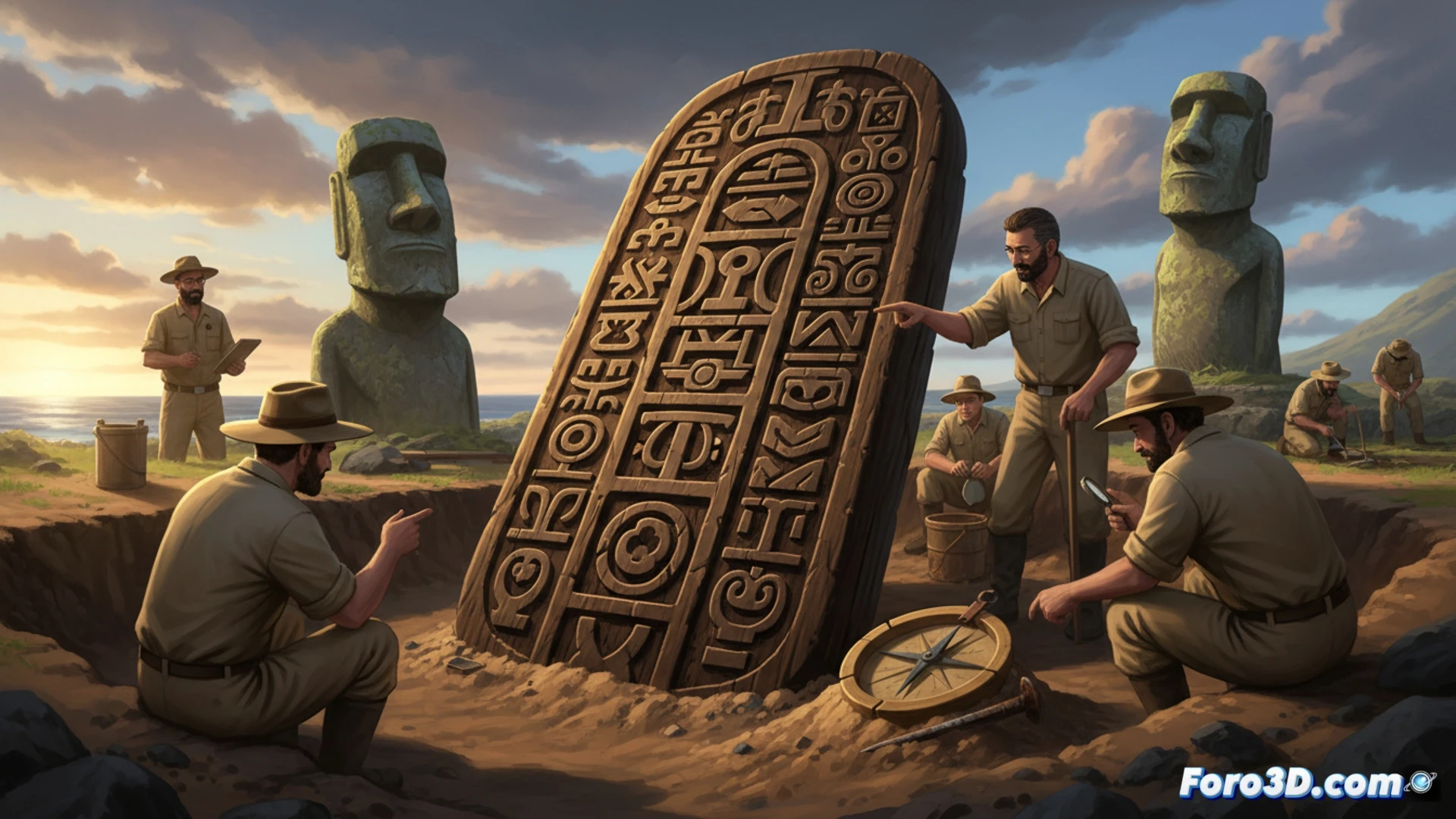
A team of researchers has discovered a tablet on Easter Island that could provide new clues about the origin of the rongorongo writing system, a pictographic system of about 400 characters that remains undeciphered. The main debate is not its meaning, but its origin, as it is unknown whether it was created independently by the Rapa Nui people or arose after contact with Europeans in the 17th century. Resolving this question would be key to determining whether writing could have developed indigenously in Polynesia and would have important implications for the history of writing.
Carbon-14 analysis to date the age of the glyphs 🧪
Researchers have subjected the tablet to carbon-14 dating tests and analysis of organic pigments. The key is determining whether the strokes were carved before the arrival of the first European navigators, around 1722. If the wood and ink turn out to predate that time, it would strengthen the hypothesis of an independent development of writing in Polynesia. The team is also studying the sequence of glyphs using digital photogrammetry to identify repetitive patterns and possible carver errors, which would help distinguish between a native system and a late copy of European writing.
Linguists, waiting for the glyphs not to just say fish recipes 😅
While scientists debate whether rongorongo was born on the island or arrived with the first European ship, linguists hold their breath. After centuries of failed attempts, the fear is that the tablet will turn out to be a shopping list or an instruction manual for building moai. Because it would be very typical of history that, after so much mystery, the final message is something like turn left at the Rano Raraku volcano and park behind the tallest statue. Humor, at least, needs no deciphering.