Foro3D analyzes the technical section of Super Mario Party Jamboree, the latest installment in the saga for Nintendo Switch. The title uses a proprietary engine from the big N, moving away from commercial solutions like Unity or Unreal. This allows total control over performance and very specific optimization for the hybrid console's hardware, although it also limits certain creative freedoms.
Optimization and materials: the art of the small 🎨
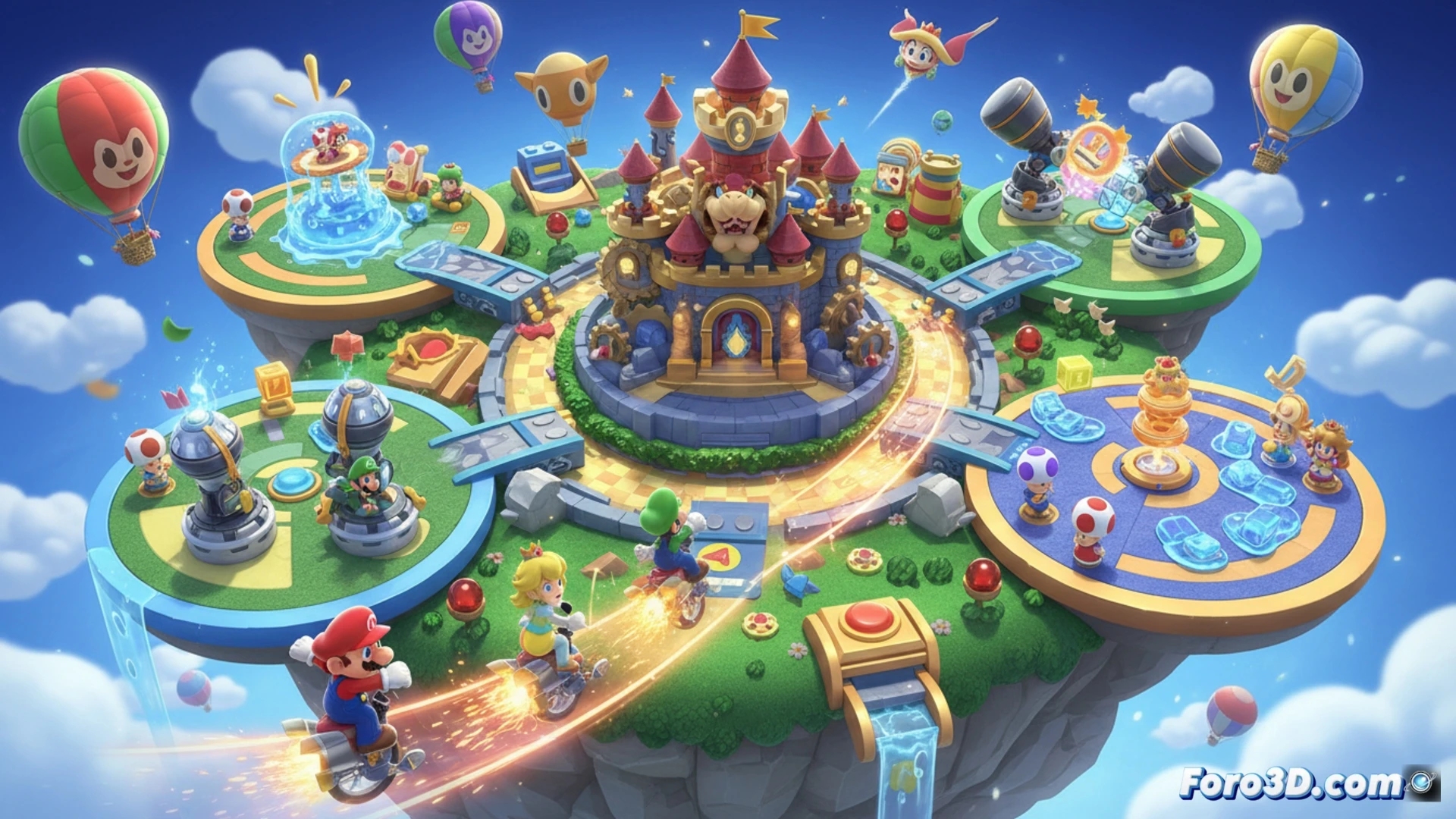
Nintendo's internal engine demonstrates its maturity in the minigames, where high fidelity in details and materials is appreciated. The textures of the dice, the reflections in the ice scenarios, and the lighting of the night boards show fine work. However, this quality is not constant throughout the game, as in the general views of the main board, a significant reduction in polygon load is noticeable to maintain stable 30 frames per second.
The engine that hates external developers 🔧
Nintendo uses its own internal tools, which means that if you are an independent developer and want to know how they achieve those shines in the Jamboree minigames, sorry, but you'll have to settle for guessing. It's as if the big N had a secret grandmother's recipe for apple pie, but instead of sharing it, they eat it in front of everyone. Sure, the pie is good, but what a drag to have to wait for the next game to see how they did it.