The remastering process of the Japanese studio's films has been detailed by technician Okui. Over a decade ago, they scanned and archived all the films in 4K to prevent celluloid deterioration. Now, for re-releases, they apply a new color correction with modern tools, seeking the highest possible visual quality.
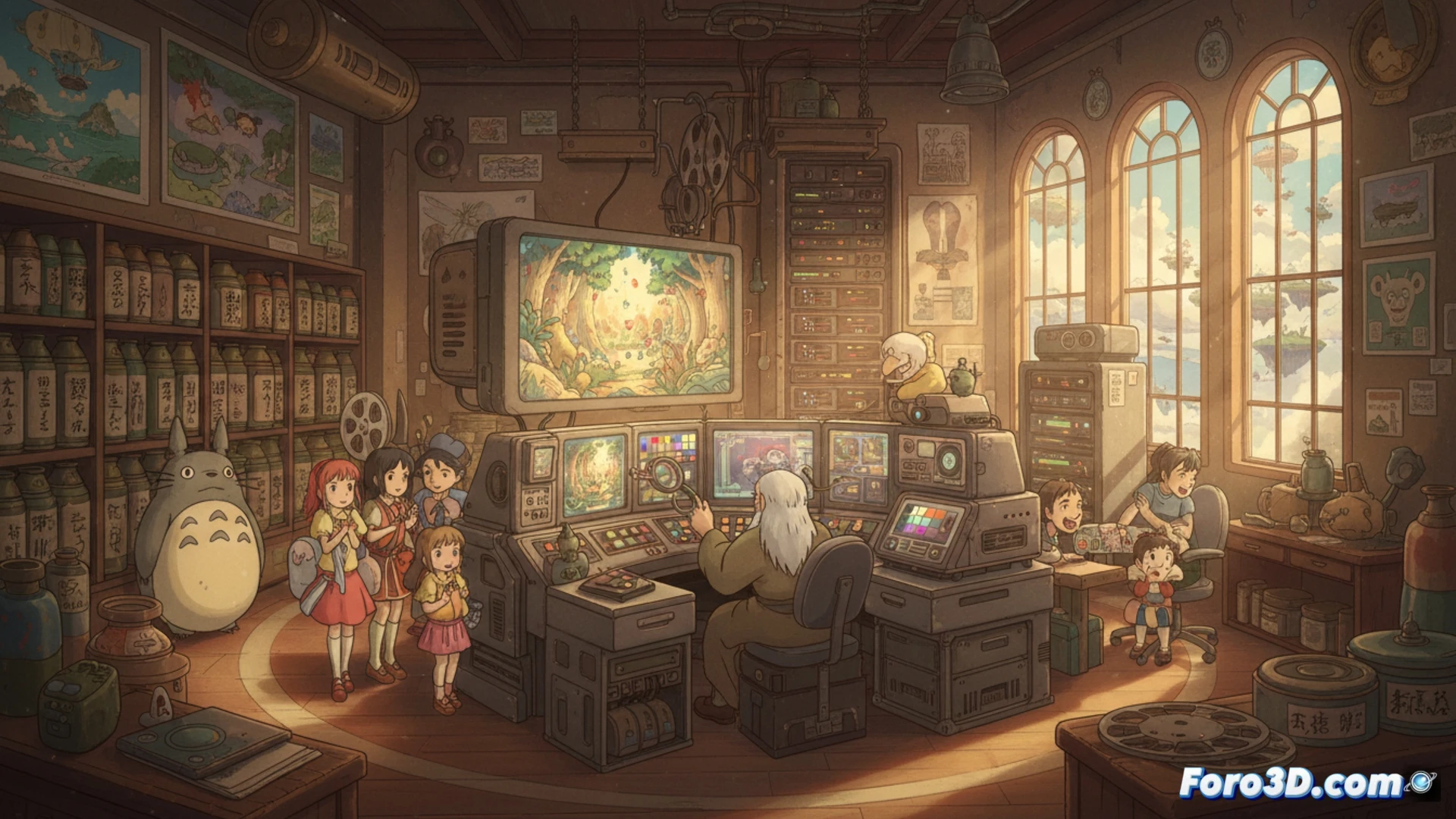
Color science applied to animated classics 🎨
Okui explains that the palette of Whisper of the Heart, with its cream and earthy red tones, was revised taking advantage of advances in color science. The original process was meticulous: first the background was painted on paper and then the character cells were superimposed. The new correction respects that artisanal foundation but adapts it to current digital standards to offer a sharper and more faithful image.
The art of painting backgrounds before Photoshop existed 🖌️
That today we can see those cream and earthy red tones in 4K clarity is a technical miracle. But let's not fool ourselves: if the original process was already slow, imagine the animators of the 90s, with their brushes and patience, thinking: someday, a guy with a computer will retouch this so it looks like we did it yesterday. Technology advances, but the artists' sweat remains the same.