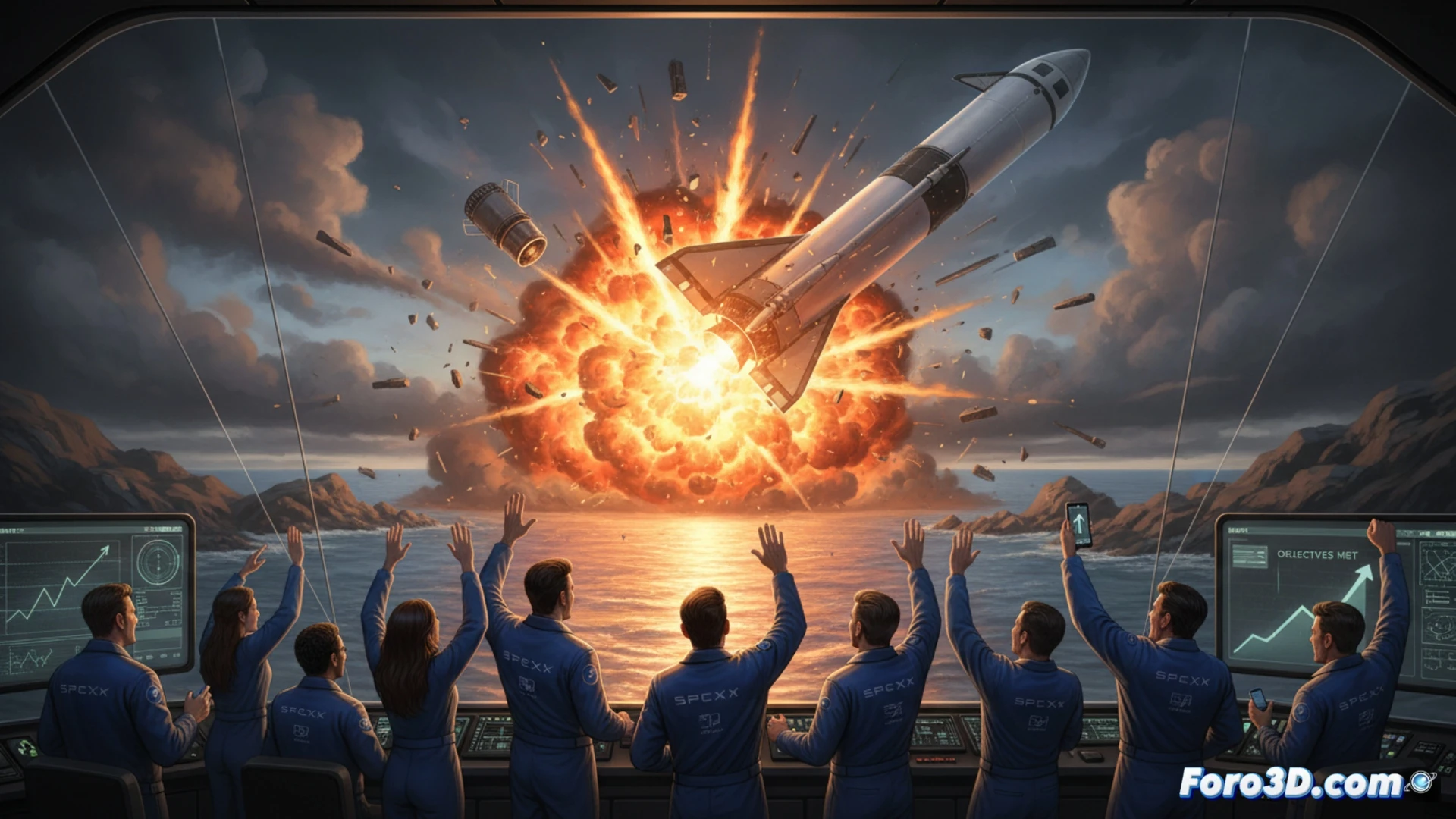
The Starship V3 rocket lifted off from Texas on its twelfth test, but the flight ended in an explosion. Even so, SpaceX considers it a success because it met almost all of its objectives. The failure of one engine in the 33-engine booster did not prevent stage separation, although the splashdown was off course. This launch, delayed three times due to technical failures, comes just as Elon Musk's company prepares to go public in three weeks.
33 engines and one failure: the mechanics of the new Starship V3 🚀
The booster lost one of its 33 engines during ascent, but the system compensated for the lack of thrust. Stage separation was executed normally, demonstrating advances in the maneuver. However, the booster failed to return to land and splashed down outside the planned area. This is the first test of the improved V3 version, designed to be fully reusable. SpaceX will collect data to correct deviations in future tests.
Exploding as planned: the new standard of space success 💥
If you explode but did almost everything right, you are a success. That's how space exploration works now, where a rocket that disintegrates can improve your company's stock price. The three delays prior to the launch already anticipated that it would not be a perfect day. But hey, as long as investors see flares and hear controlled explosions, everything is going according to the business plan. We just need the next flight to land where it's supposed to.