SpaceX is fine-tuning the final details to launch the largest version of its Starship rocket, which surpasses any previous space vehicle in height and capacity. This fully reusable design aims to transport large payloads and crew. Its development is key to NASA's Artemis program, which plans to return humans to the Moon by 2028 with this spacecraft as its centerpiece.
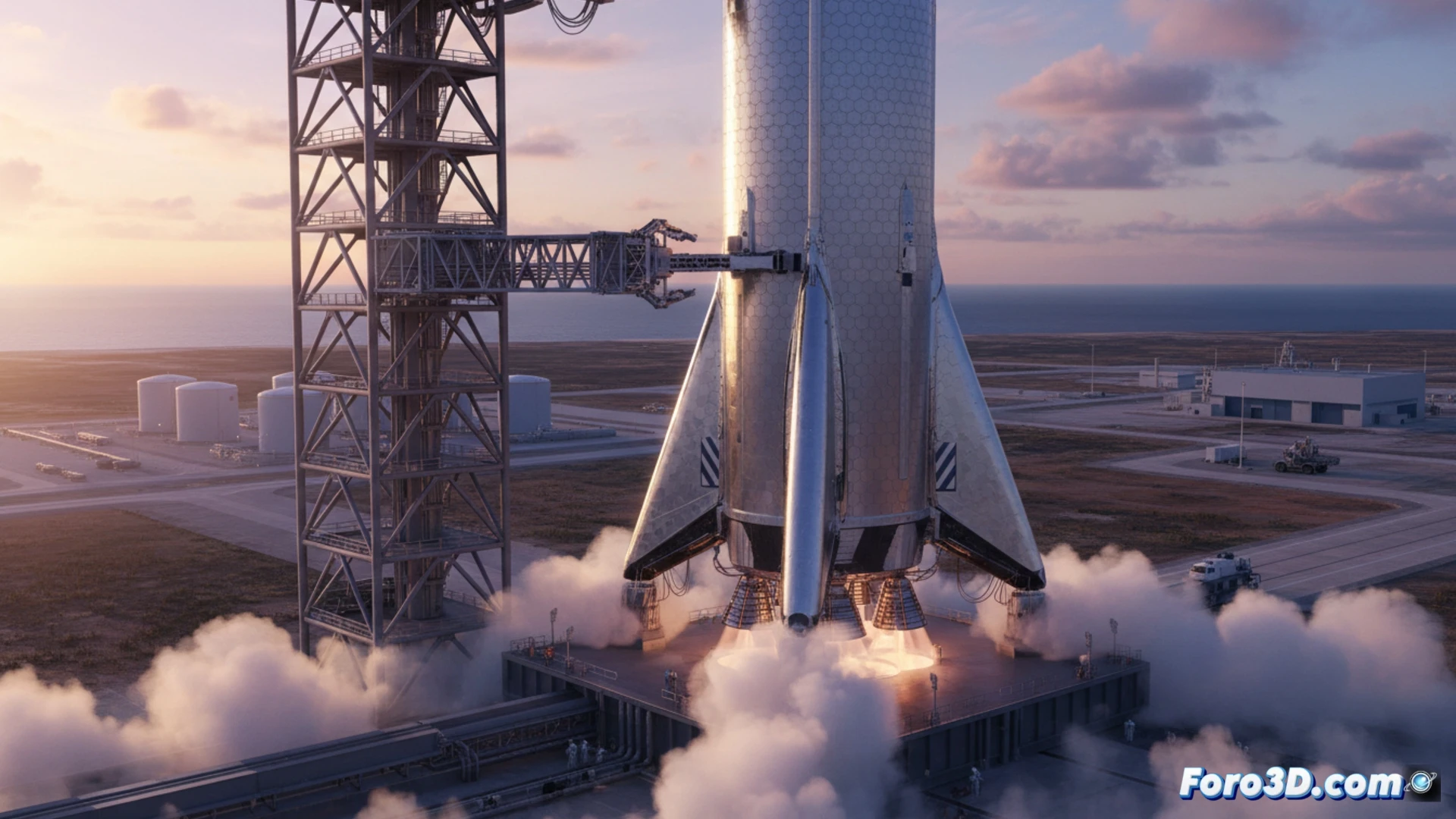
Height records and improved Raptor engines 🚀
The new Starship configuration, nicknamed Super Heavy, rises over 120 meters, surpassing the Apollo-era Saturn V. It equips 33 Raptor 2 engines in its first stage, capable of generating over 74 meganewtons of thrust. The design includes improved heat shields and orbital refueling systems, intended for lunar missions and, in the future, trips to Mars. The spacecraft is assembled with stainless steel and prioritizes rapid reusability.
NASA, the deadlines, and Elon's eternal patience 😅
While SpaceX tests its behemoth, NASA hopes Starship will land on the Moon before astronauts get tired of waiting on Earth. Elon Musk promises dates that seem pulled from a science fiction calendar: 2028 sounds optimistic if every launch involves putting out fires on the pad. But hey, if all else fails, they can always sell the rocket as the tallest skyscraper in Boca Chica.