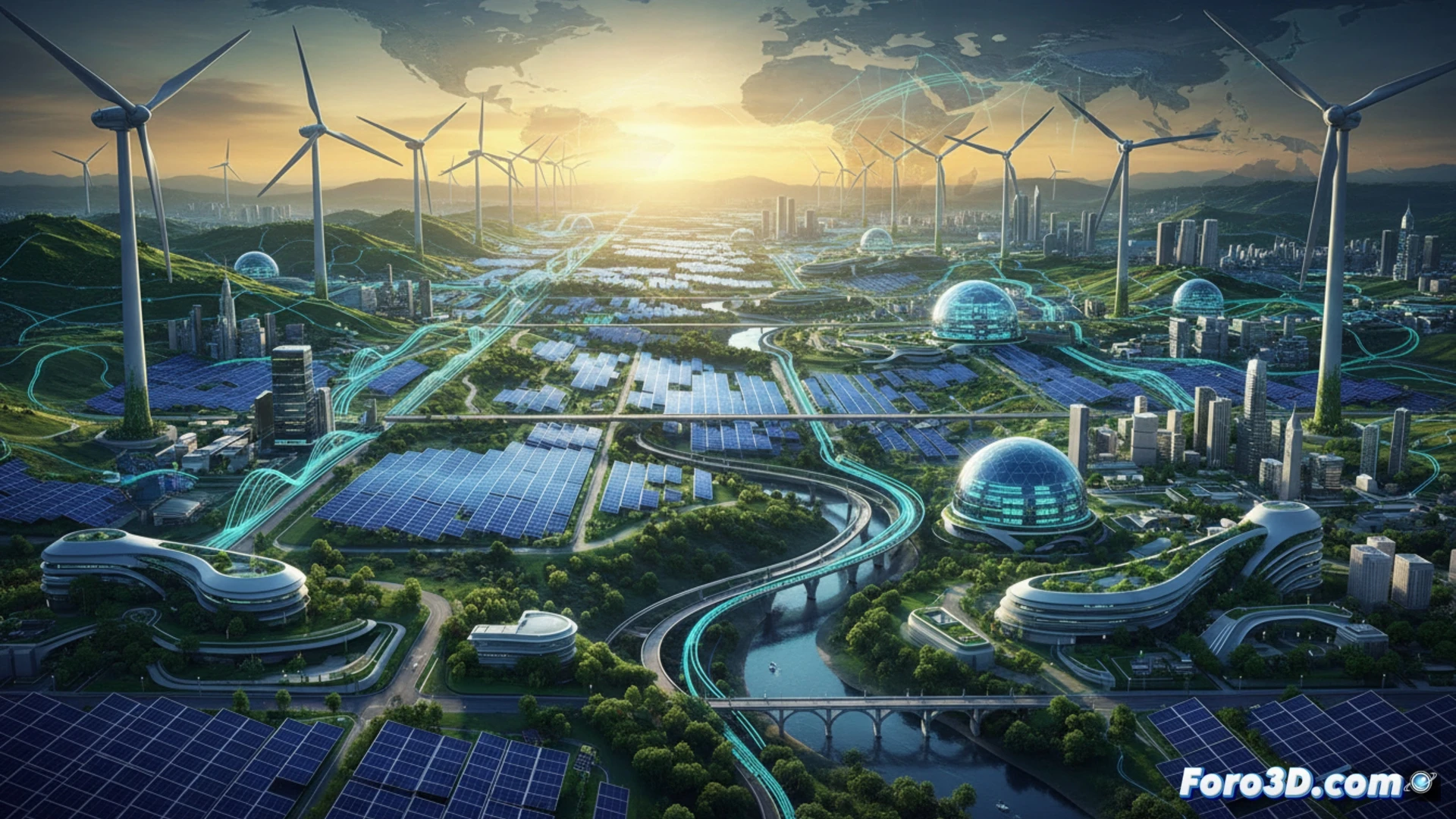
A study from Tsinghua University published in Nature Energy states that achieving a global electricity system powered by renewable sources by 2050 is technically feasible. The key lies in a massive expansion of solar and wind power, with 15 to 20 terawatts of installed capacity. Greater grid interconnection and active demand management are also needed.
Land near cities and smarter grids 🌍
The deployment would require over 9 million hectares, but 80% would be located near consumption centers, reducing transmission losses. Regional interconnection would help balance variable generation. Furthermore, the transition would facilitate cheap access to electricity in low-income regions like Africa, where demand is growing rapidly and solar resources are abundant.
The trick is managing when there's no sun or wind ⚡
The study does not mention that, when a cloudy and windless week arrives, we will need batteries the size of a stadium or a deal with the neighbor to lend us electricity. But hey, if we manage to give Africa cheap light and keep Europe from going dark due to a storm, the plan sounds almost as good as a politician's campaign promise.