A lightning strike on a wind turbine represents a critical technical challenge for the renewable energy industry. This natural event, although frequent in areas of high electrical activity, can trigger catastrophic damage to the blades, tower, and electronic systems of the wind turbine. In this article, we will analyze the phenomenon through 3D simulation to understand the lightning trajectory, current entry points, and possible fire propagation routes.
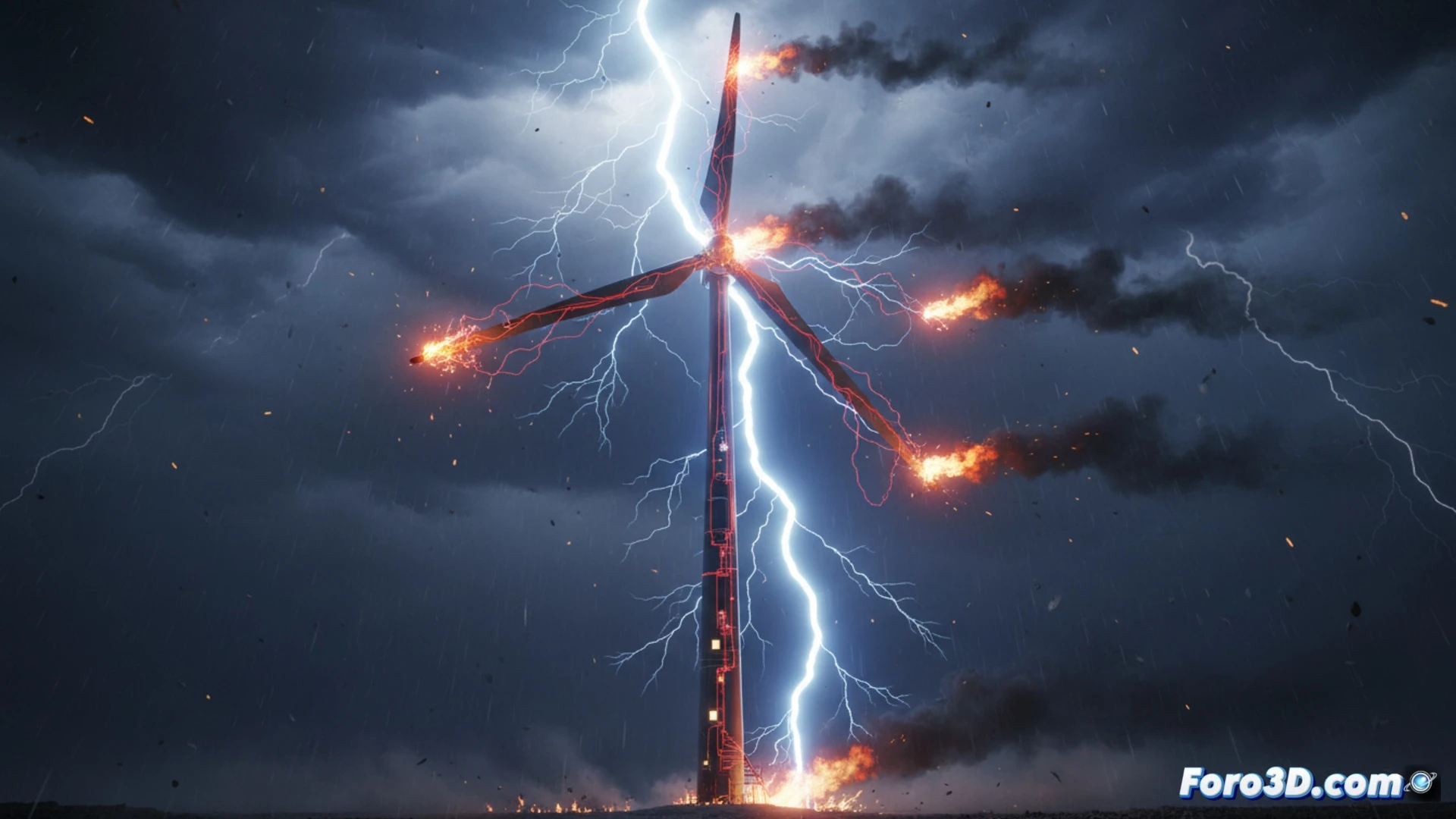
Modeling the trajectory and impact point of lightning ⚡
In the 3D simulation, the first step is to recreate the atmospheric environment and the geometry of the wind turbine. The model must include air ionization and the conductivity of the blade material, which are typically made of fiberglass and carbon composites. By applying a peak voltage of 30 kV, the lightning seeks the path of least resistance, typically impacting the tip of the top blade. The simulation shows how the 200 kA current is channeled through the lightning rod system integrated into the blade, descending through the metal tower to the grounding system. However, if the system fails, the current can generate hot spots exceeding 3000 degrees Celsius, causing fiber delamination and ignition of the blade core.
Lessons for protection design 🔥
The 3D visualization of this incident reveals that 70% of the damage is concentrated in the first few meters of the impacted blade, where the current density is highest. Comparison with real incident data from wind farms in Europe confirms that installing lightning receptors at the tip of each blade reduces the probability of fire by 90%. This analysis reinforces the need to simulate these events before construction, optimizing electromagnetic shielding and grounding systems to ensure operational continuity in the face of natural disasters.
How does the 3D simulation of a lightning strike on a wind turbine affect the design of its protection systems and the prediction of structural failures?
(PS: Simulating disasters is fun until the computer melts down and you are the disaster.)