Sea of Stars has managed to capture the attention of retro RPG lovers thanks to its visual proposal. The title combines traditional pixel art with dynamic real-time lighting, a contrast that is not easy to execute. Developed in Unity, the game demonstrates that it is possible to pay homage to the classics without giving up modern techniques. The result is a living world that breathes through its sprites and light effects.
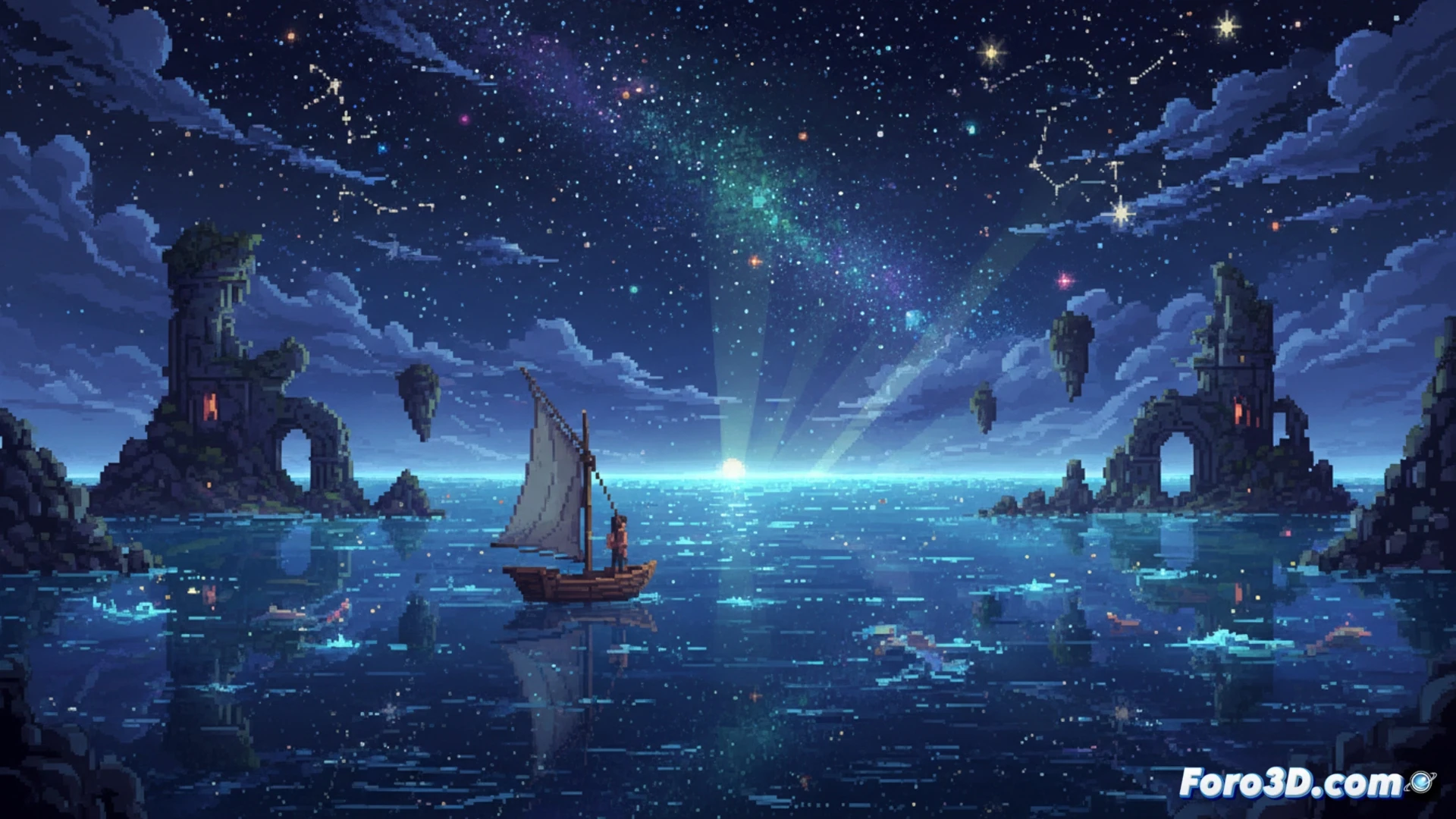
The Unity engine and Aseprite as technical foundation 🎮
The Sabotage Studio team used Unity to manage the dynamic lighting and light physics of the game. The sprites and backgrounds were created in Aseprite, a tool specialized in pixel art. The technical key lies in how Unity processes light over these sprites without losing the low-resolution aesthetic. Custom shaders are applied to simulate reflections and soft shadows, something that was unthinkable in the 16-bit era. The engine also allows for a smooth transition between day and night cycles.
The lighting that makes a pixel look like a light bulb 💡
Seeing a 16-pixel-tall character cast a realistic shadow over an equally square tree is an experience that makes you wonder if we are in 1995 or 2023. Dynamic lighting manages to make even an 8-bit torch seem to have a life of its own. That said, don't expect your PC from the 90s to handle this; even pixels need their modern graphics card. It's like putting an LED spotlight on a Game Boy: functional, but strangely beautiful.