Northeastern Thailand, specifically the province of Kalasin, has yielded a discovery of great paleontological significance. A team of Thai scientists has unearthed the fossilized remains of a long-necked herbivorous sauropod. With an estimated age of 120 million years, from the Early Cretaceous, this specimen stands as the largest dinosaur ever discovered in all of Southeast Asia.
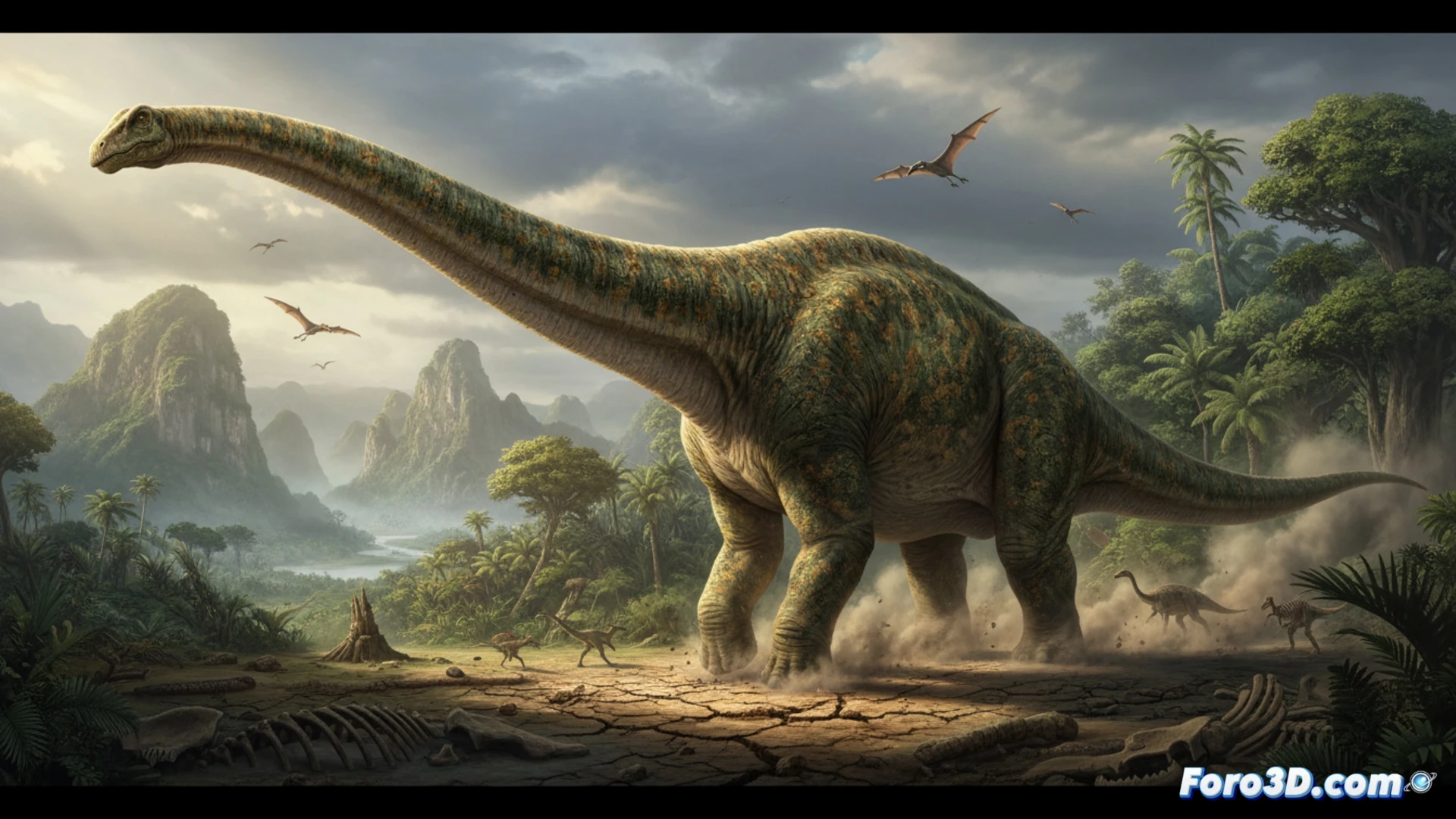
Scanners and ground-penetrating radar to unearth the colossus 🦴
The excavation was not a simple random shovel strike. Researchers used ground-penetrating radar to map the extent of the remains before removing the rock. Once extracted, the fossils underwent computed tomography to study the internal bone structure, allowing for estimates of the specimen's age and growth rate. The analysis of stable isotopes in the tooth enamel, in turn, will help reconstruct its diet and the region's climate during the Early Cretaceous.
The Thai cousin that didn't fit in the selfie 📏
While scientists celebrate the find, local sauropods must be breathing a sigh of relief. After all, being the largest in the region means that for 120 million years, no one has beaten you at a game of rock, paper, lizard. Of course, pity the paleontologist who has to assemble the skeleton in the museum: they're going to need more measuring tape than patience. And a higher ceiling.