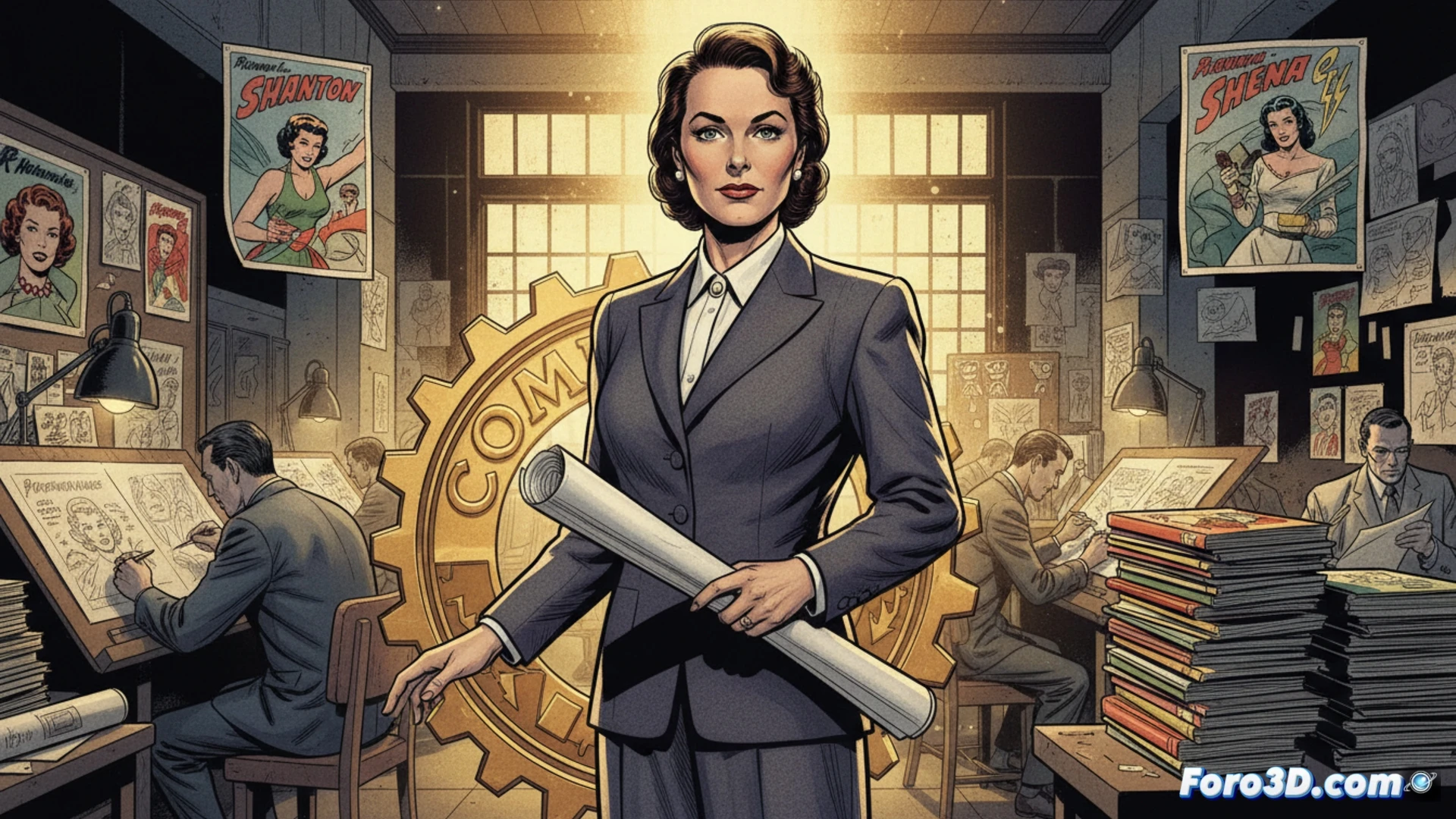
The comic book historian has an outstanding debt to Ruth Roche. As Jerry Iger's partner and director of the Roche-Iger studio, she oversaw the production of key titles like Phantom Lady and Sheena during the Golden Age. Her career, however, was buried by the moral panic of the 1950s. The graphic biography Ruth Roche: The Phantom Hand of Comics, by Joe Corallo and Meghan Hetrick, arrives in October from Mad Cave to restore her to her rightful place.
The Invisible Engine of the Creative Assembly Line 🎨
The Roche-Iger studio operated like an efficient production line. While Iger handled sales, Roche led the creative team, coordinated scripts, and oversaw the art for series like Camilla. Her work was not limited to editing: she also wrote under a pseudonym and created the strip Flamingo. Corallo, while researching, discovered that the lack of direct credits was the norm in the industry. Without personal files, he tracked down invoices, letters, and union records to reconstruct her footprint.
The Moral Panic Also Sweeps Away Your Career 😤
It turns out Ruth Roche's real superpower was invisibility. When Wertham's witch hunt arrived, her name disappeared from credits faster than a supporting character in a canceled series. She went from running a comic book empire to working in animation, where at least no one accused her of corrupting minors. Good thing that now, seventy years later, someone has decided to bring out of the shadows the boss who was always there, but whom no one talked about.