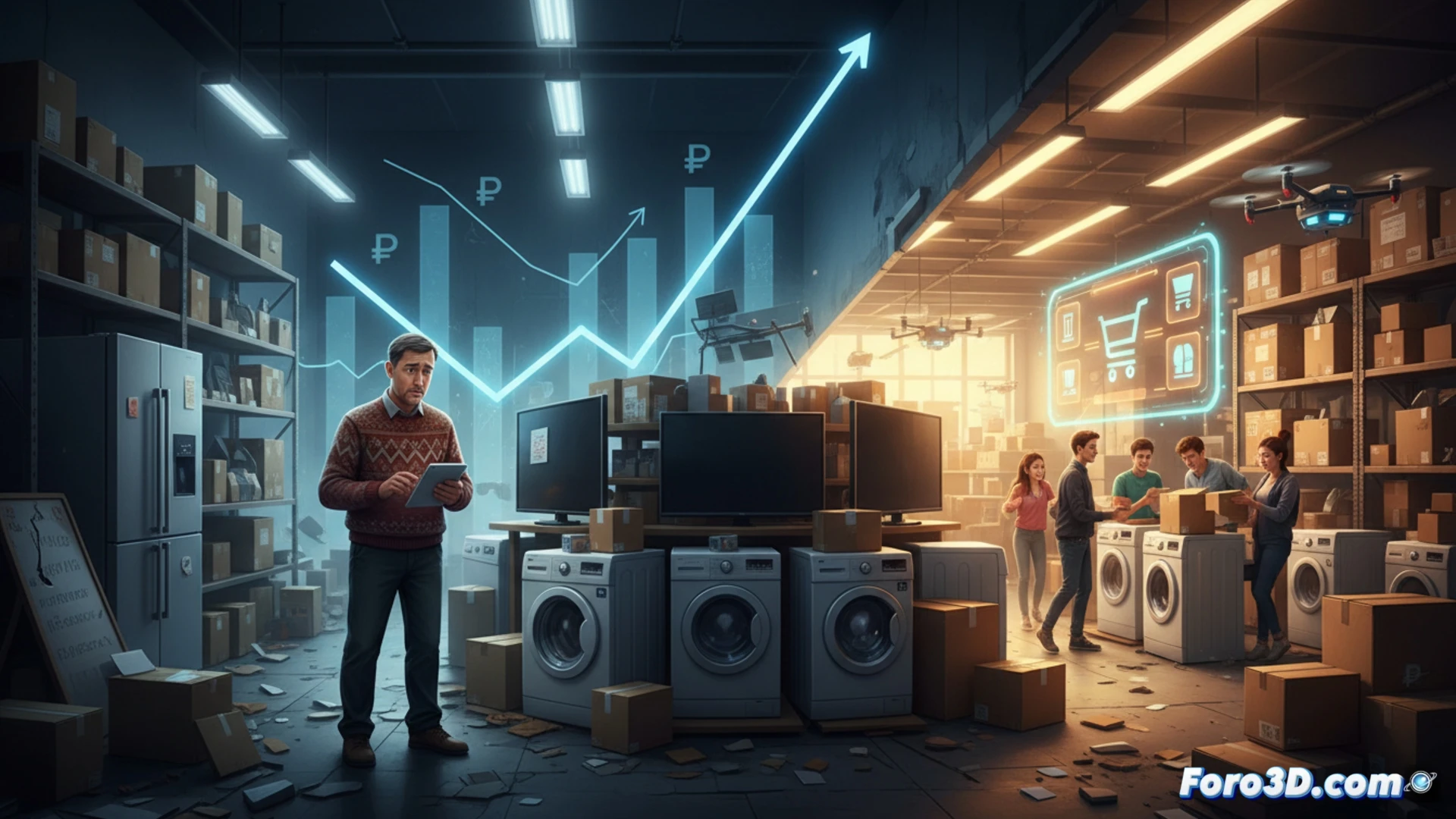
The Russian electronics and home appliance market suffered a historic contraction in 2025, with declines between 20% and 35%. The Central Bank's high interest rates reduced demand to a minimum, while ruble volatility made inventory storage more expensive. Traditional distributors face higher logistics and credit costs, but online commerce continues to advance unabated.
Marketplaces account for over 60% of sales in the first quarter 📈
In the first quarter of 2026, marketplaces already represented more than 60% of home appliance sales in units. This growth is explained by the adaptation of platforms like Ozon and Wildberries, which offer direct credit and integrated logistics. For traditional distributors, the solution lies in automating inventories and renegotiating payment terms, although margins are shrinking due to cost inflation.
Buying a microwave or paying the mortgage: the Russian dilemma 😅
With interest rates that would make a 19th-century lender pale, Russians now hesitate between buying a washing machine or paying for heating. Marketplaces, meanwhile, celebrate: they sell fewer units but charge higher commissions. In the end, the only winner is the ruble, which goes up and down like a roller coaster while distributors dream of a fixed rate.