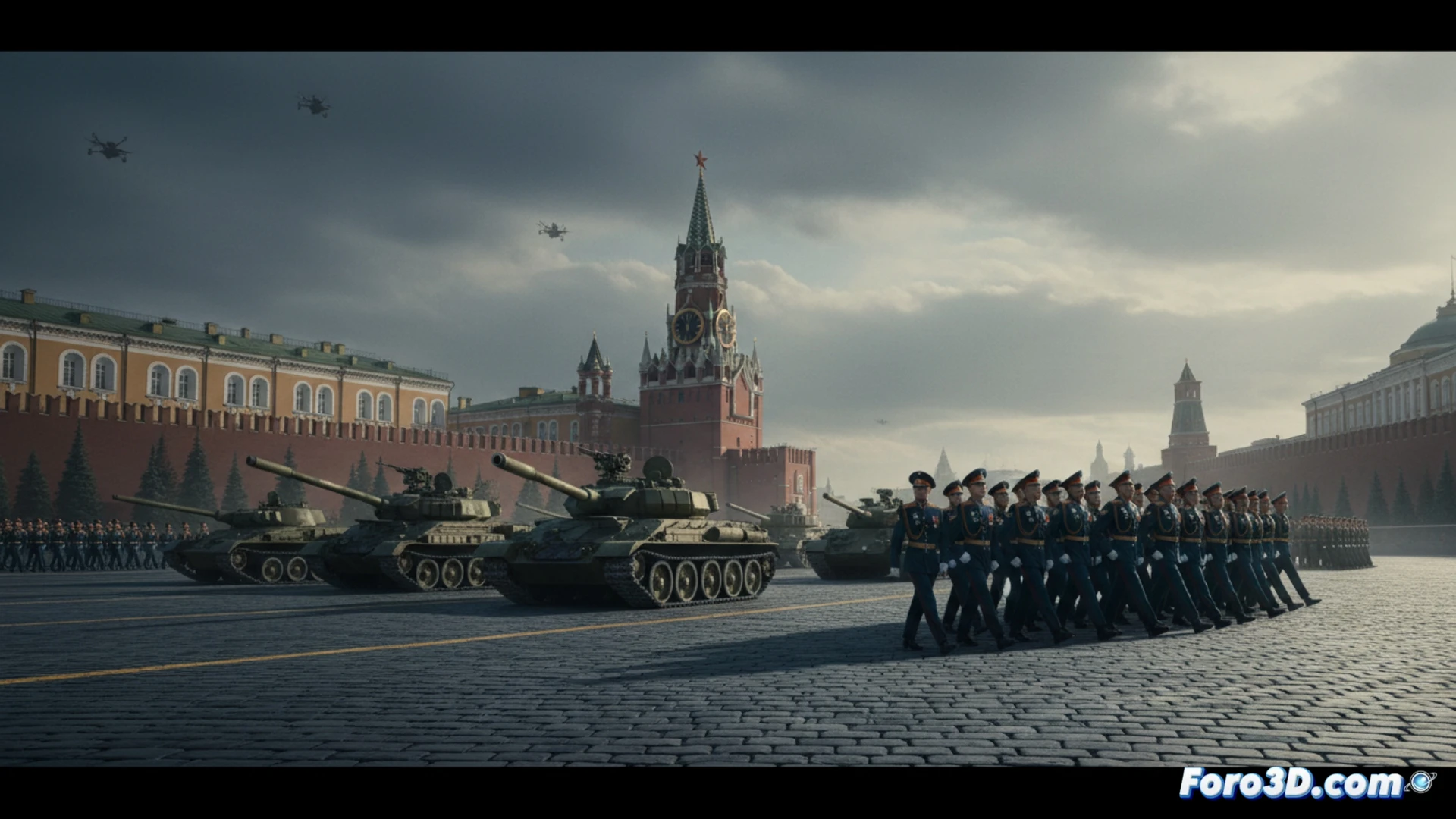
The celebration of Victory Day in Moscow took place with a reduced military display in Red Square. The threat of drone attacks from Ukraine forced authorities to limit the number of troops and armored vehicles. The commemorative event of the Soviet victory over Nazi Germany became an act of caution and security.
Anti-drone systems and the new low-intensity aerial warfare 🚁
To protect the parade, Russia deployed electronic warfare systems such as the Krasukha-4 and the Repelent-1, designed to intercept and disorient enemy drones. However, the proliferation of low-cost unmanned aerial vehicles has shown that even traditional air defense has blind spots. Drone swarm technology and low-altitude flight paths complicate detection, forcing organizers to reduce the size of the event to minimize potential targets.
The parade paradox: fewer tanks, more umbrellas ☂️
In the end, the greatest risk was not a missile, but the rain that soaked the officers in the stands. While the T-14 Armata tanks stayed in the garage to avoid being an easy target, umbrellas became the most visible military accessory. It seems the new Russian doctrine consists of hiding the scrap metal and hoping that only water, not drones, will rain down.