Rolls-Royce has launched a new additive manufacturing cell in Bristol, partially funded by the UK Ministry of Defence. Spanning 350 square meters, the facility uses metal powder bed fusion to produce critical components for next-generation military aircraft engines, in an environment with controlled humidity, temperature, and pressure.
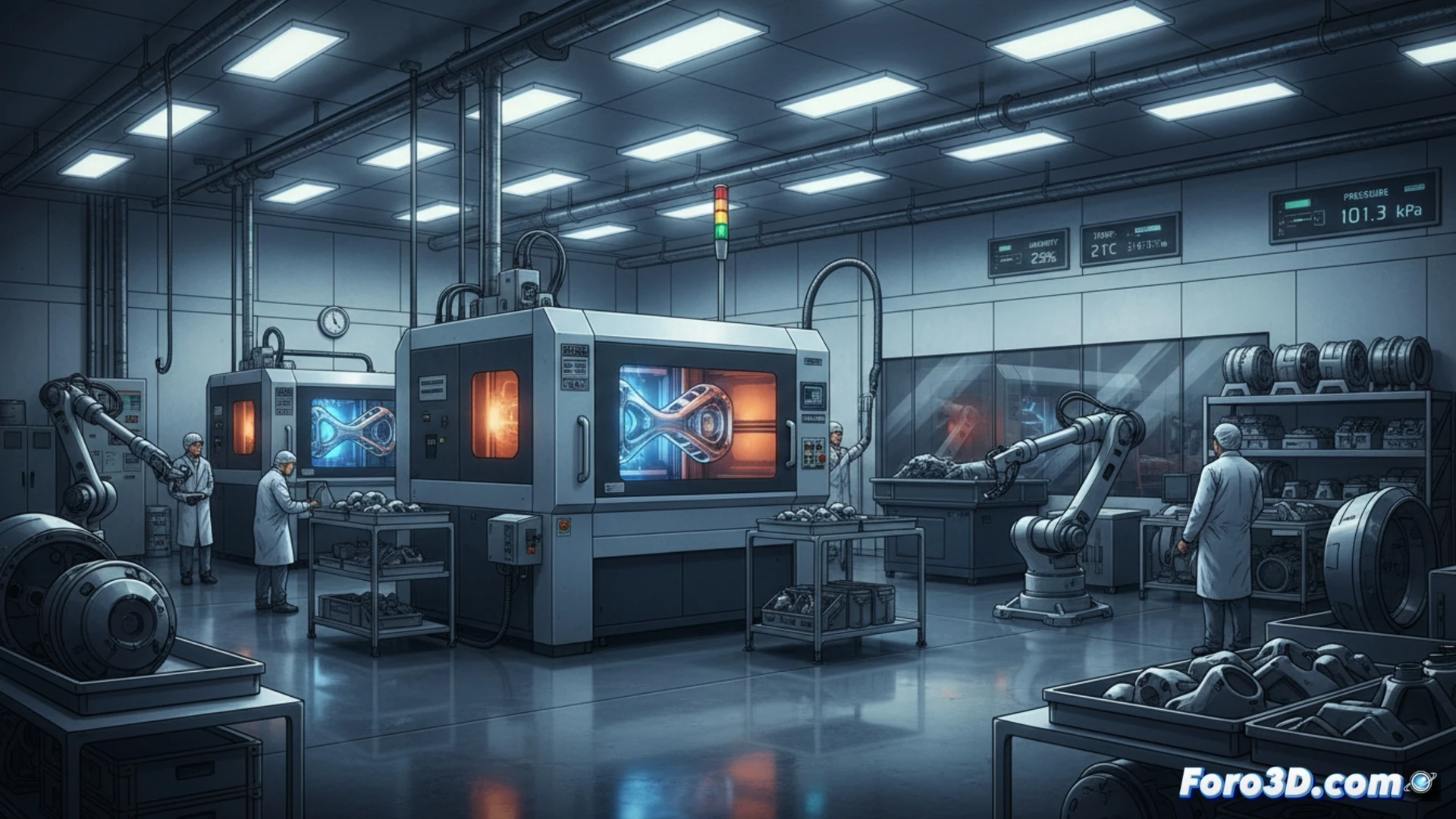
Metal powder and environmental control for high-performance parts 🔧
Powder bed fusion technology allows parts to be built layer by layer, reducing waste and production times compared to traditional machining. The cell's sealed environment ensures that each batch maintains uniform mechanical properties, an essential requirement for components that withstand extreme temperatures and high stresses in combat engines. Rolls-Royce already applies similar processes in other production centers.
Printing engines: the new military trend that saves screws 🛩️
It's no longer enough to have a workshop full of drills and metal filings. Now, to manufacture a fighter jet engine, all it takes is for the Ministry of Defence to put up the money and the printer to do the rest. Of course, with controlled humidity, just in case the part comes out with an extra droplet and the plane decides to make an unscheduled landing. The war of the future is won by printing in layers.