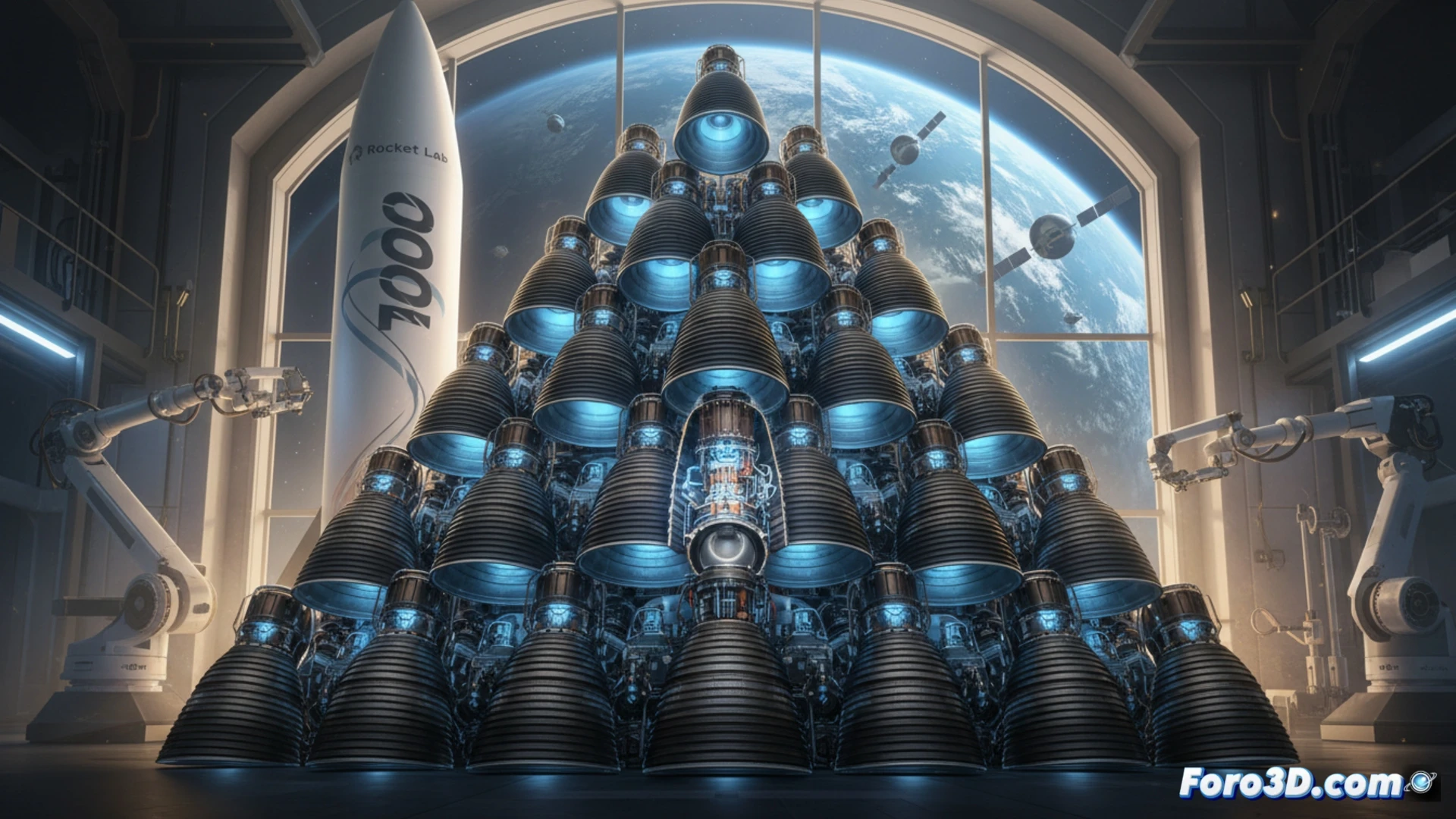
The California-based company Rocket Lab has announced the production of its 1,000th Rutherford engine, a milestone that solidifies 3D printing as a viable industrial process for orbital space flights. This engine, which debuted in 2018 powering the Electron rocket, is the first of its kind to use additive manufacturing and electric pumping, ranking among the most produced rocket thrusters on the planet.
Additive Manufacturing and Electric Pumping as Standard 🚀
The Rutherford, whose development began in 2013, uses 3D printing to manufacture its main components, reducing parts and assembly times. Its electric pumping system, powered by batteries, eliminates the need for complex turbopumps. With one thousand units produced at the Long Beach facility, Rocket Lab demonstrates that additive manufacturing can scale to volumes relevant for the aerospace industry, competing in reliability with traditional methods.
One Thousand Engines and a Printer That Never Rests 🛠️
While other manufacturers struggle to assemble a handful of engines per year, Rocket Lab has reached the thousand mark with parts coming out of a printer as if they were Tupperware containers. It's not that the Rutherford is cheap, but at least now they know that if one breaks down, they have 999 others waiting on the shelf. Of course, the engineers at the competition must look at their hand-soldered engines with the same nostalgia with which one remembers floppy disks.