Robotic surgery reduces risks for living donors and shortens hospital stays. An indisputable technical achievement. But while operating rooms fill with state-of-the-art mechanical arms, waiting rooms are overflowing and nurses are fleeing the system. Technology advances; precarity does too.
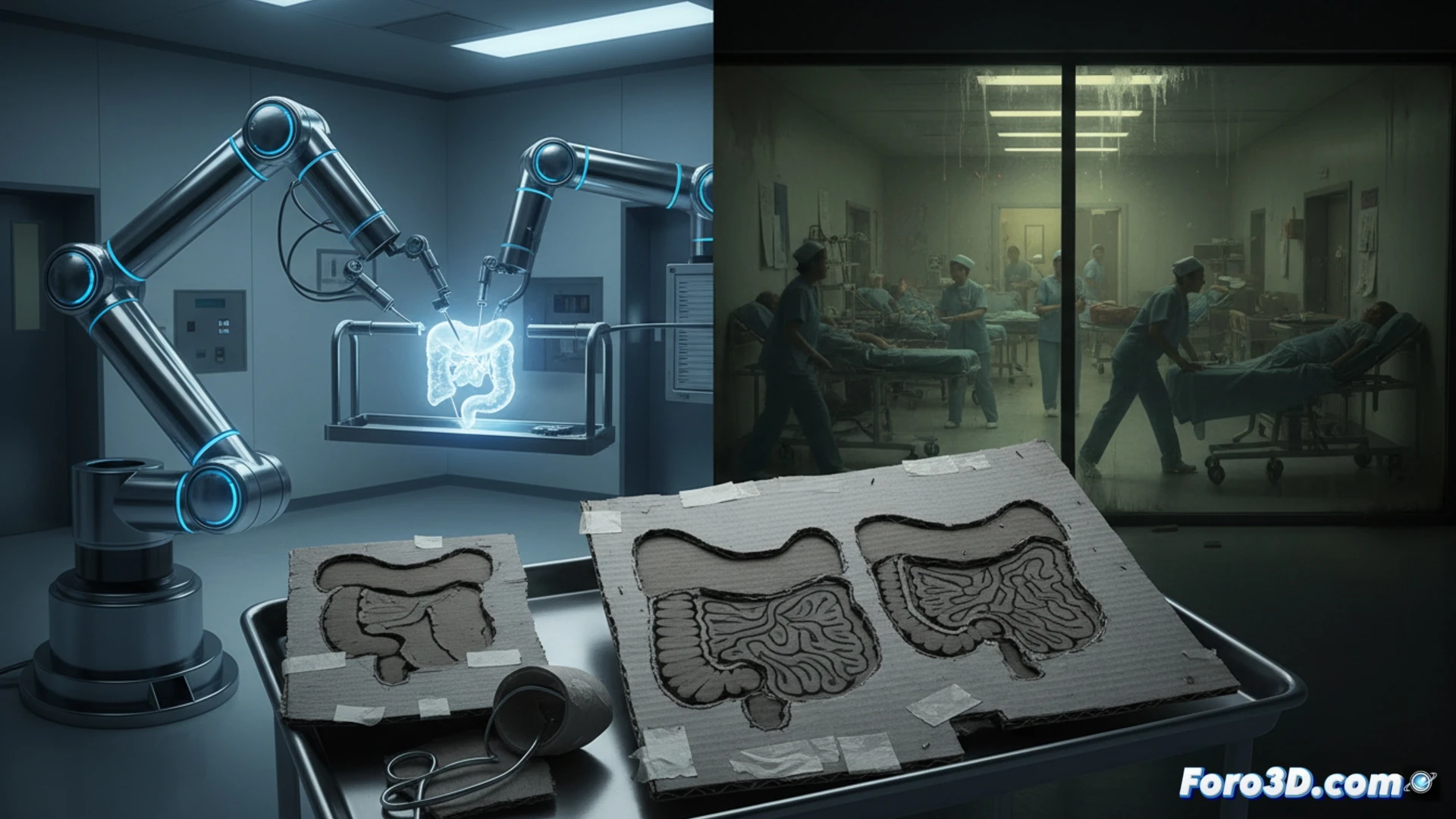
The robotic arm and the exposed bone of the system 🤖
Da Vinci systems and their competitors allow millimeter incisions and less bleeding. The precision is real. However, that same hospital unveiling a robot may have an ICU without staff to operate it at night. Investment in hardware does not translate into hiring surgeons or support staff. The result is first-class technology and third-class care. The gap widens.
You donate a kidney and get a voucher for the waiting list 🏥
The donor leaves the operating room with four holes and an invisible scar. Fantastic. Then they wait three hours for a glass of water because the nursing assistant is covering three floors. The solution is simple: for every robot they buy, hire two nurses. But of course, that doesn't sell newspaper covers or make election headlines.