When stable nuclear energy disappears from the mix, renewables cannot sustain the grid on their own. The intermittency of sun and wind requires constant backup, and that backup often comes from gas or coal plants. The result is a system that emits more CO₂ than expected, despite the installed solar panels and wind turbines.
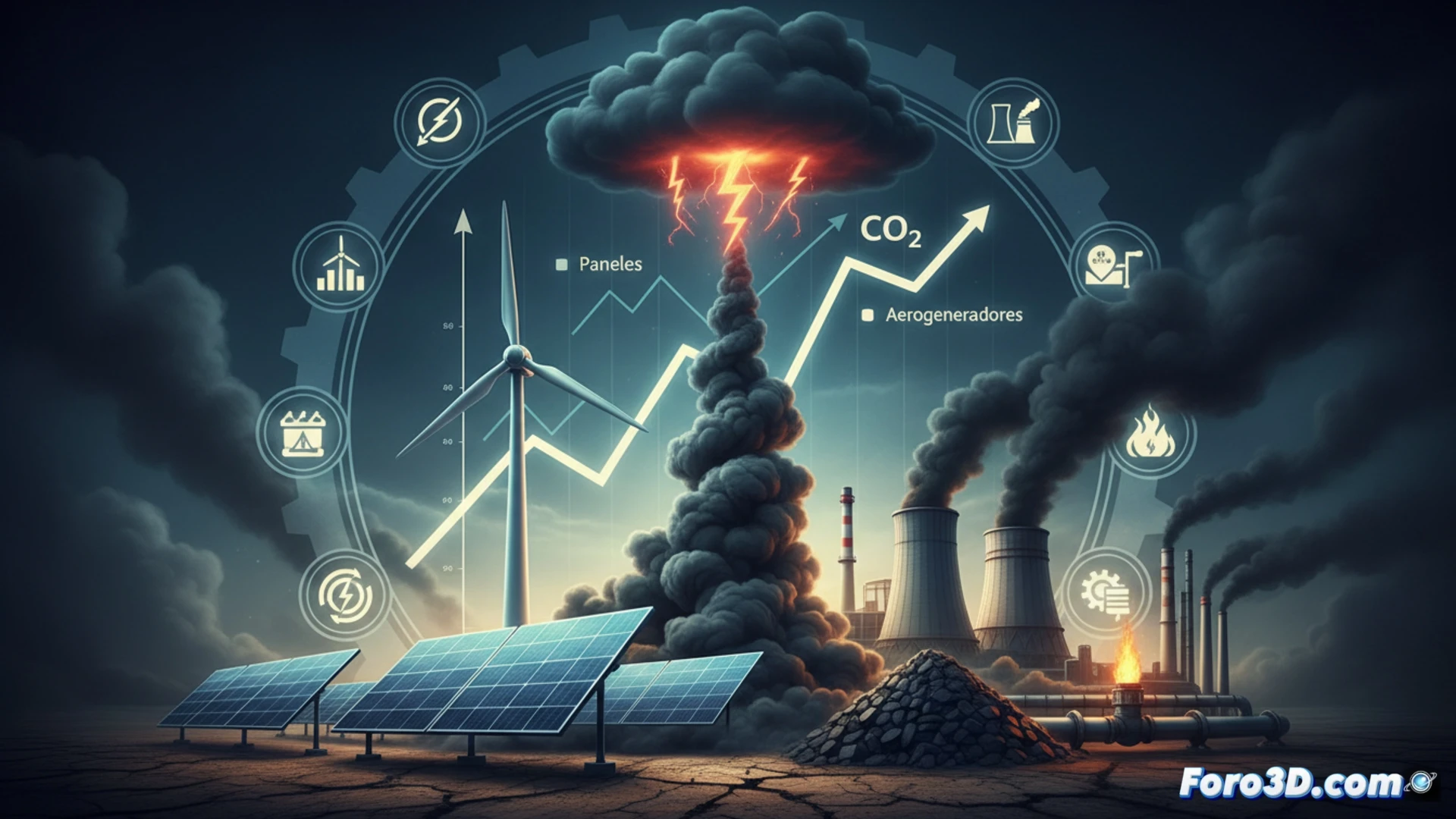
The technical dilemma of fossil backup ⚡
Wind and solar generation depend on variable weather conditions. Without a base source like nuclear, operators must keep combined-cycle gas plants ready to start within minutes. These plants operate at partial load or as backup, which reduces their efficiency and increases emissions per kWh. Battery storage is not yet scalable enough to cover days of low renewable production.
The green transition with coal backup 🔥
It turns out that to save the planet, you first have to burn more coal. It's like wanting to lose weight and ordering a double pizza just in case. Governments shut down nuclear plants for political reasons, and then fire up gas plants so the fans don't stop spinning. The logic is impeccable: if renewables fail, let the carbon budget burn.