On Saturday night, an inflatable planetarium collapsed in seconds during an immersive projection, trapping thirty attendees in the dark. The screams and panic lasted less time than it takes for a 200-cubic-meter pressure structure to deflate. Now, a digital forensics team has used Rhinoceros with Kangaroo, Agisoft Metashape, PyroSim, and Twinmotion to answer the key question: Was it a sharp object or a backup fan failure that caused the catastrophe?
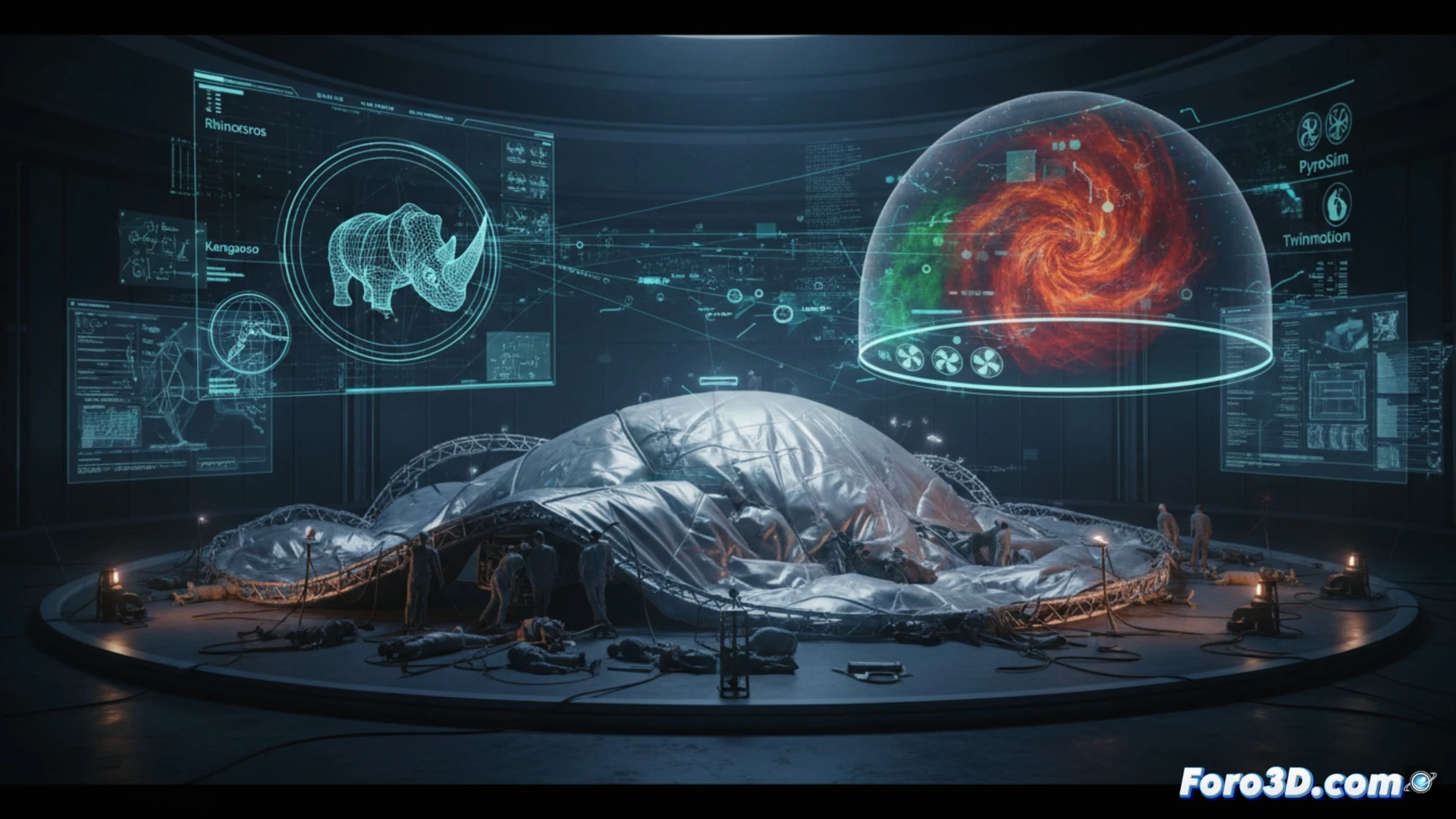
Differential Pressure Simulation and Tear of the Tarp 🎈
The first step was to reconstruct the original dome geometry in Rhinoceros 8, modeling the tarp as a mesh of triangular panels with fire-resistant PVC properties. Using Kangaroo, we applied an internal pressure of 120 pascals and simulated two scenarios: in the first, a 5 mm puncture in the rear panel generated a decompression wave that propagated a 12-meter tear in 0.8 seconds. In the second, we modeled the simultaneous failure of the two backup fans, reducing the pressure to 30 pascals in 3 seconds. In parallel, we processed 150 photographs of the collapsed dome in Agisoft Metashape, obtaining a point cloud that revealed folds consistent with a tear rupture rather than bulging due to pressure loss. Finally, in PyroSim, we simulated the fluid dynamics of the expelled air, confirming that the gas evacuation rate in the puncture scenario matched witness accounts of the tarp suddenly lowering onto the attendees' heads.
Lessons for Inflatable Structure Safety 🛡️
The 3D reconstruction points to a sharp object as the most likely cause, ruling out mechanical fan failure. However, the analysis revealed a critical vulnerability: the absence of differential pressure sensors that activate alarms before the structure loses rigidity. We propose integrating a monitoring system with a mesh of piezoresistive sensors and a microcontroller-controlled relief valve in future domes. The final visualization in Twinmotion showed the collapse from the audience's perspective, a resource that organizers will use to redesign evacuation protocols and prevent a simple tarp tear from turning into a tragedy.
What real-time structural simulation algorithms were used in the design of the augmented reality dome and how could they have failed to predict the dynamic load exerted by the airflow from the immersive projection system.
(PS: Simulating catastrophes is fun until the computer crashes and you are the catastrophe.)