Spanish researcher Vicente Luis Rosell Roig proposes a novel solution to the enigma of the construction of the Great Pyramid of Giza. His theory suggests that the Egyptians used a helical ramp integrated into the edges of the structure itself, raising the monument from the inside using temporary corridors that acted as ascending pathways.
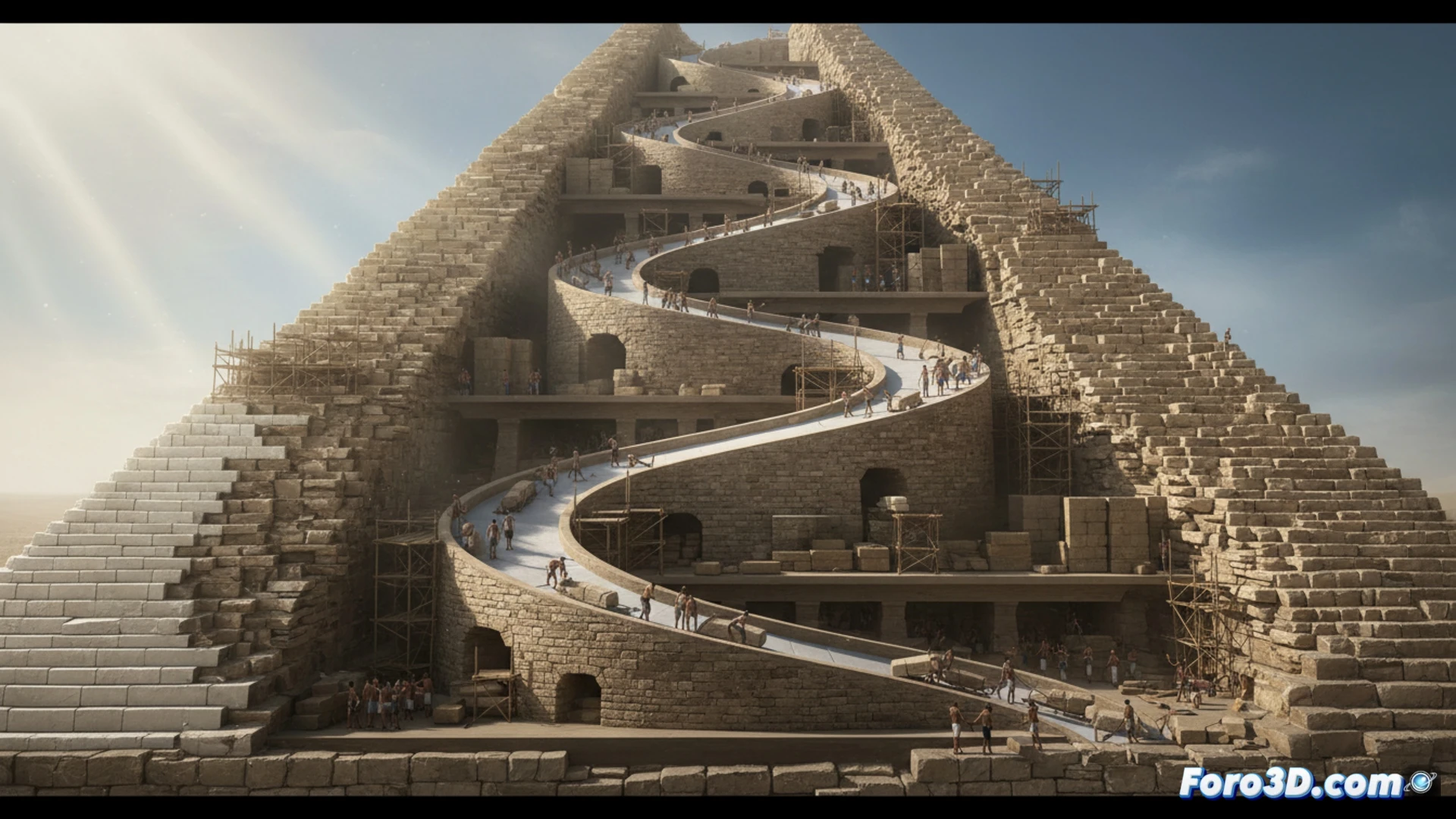
Hidden corridors as an ascending pathway 🏛️
Rosell details that these passages were sealed under the final blocks, eliminating the need for massive external ramps. The system allowed transporting stones weighing up to 2.5 tons via a continuous spiral route, optimizing the workforce and available space. The corridors, built with reusable materials, were dismantled upon completing each level, becoming integrated into the structure without leaving a visible trace.
The mystery is solved, but nobody told Khufu 😅
The curious thing is that, according to this theory, the Egyptians built a kind of functional labyrinth that they later covered up like someone hiding breadcrumbs. If Rosell is right, archaeologists have spent decades searching for external ramps while the solution was inside, disguised under tons of stone. Good thing nobody had to dismantle the pyramid to find the exit.