In 2017, AMD launched its Radeon Vega architecture hoping to compete with NVIDIA in the high-end segment. However, the move backfired for three key reasons: an outdated GCN architecture, expensive and scarce HBM2 memory, and exorbitant power consumption. The RX Vega 64 approached 300W, a burden gamers were unwilling to pay for.
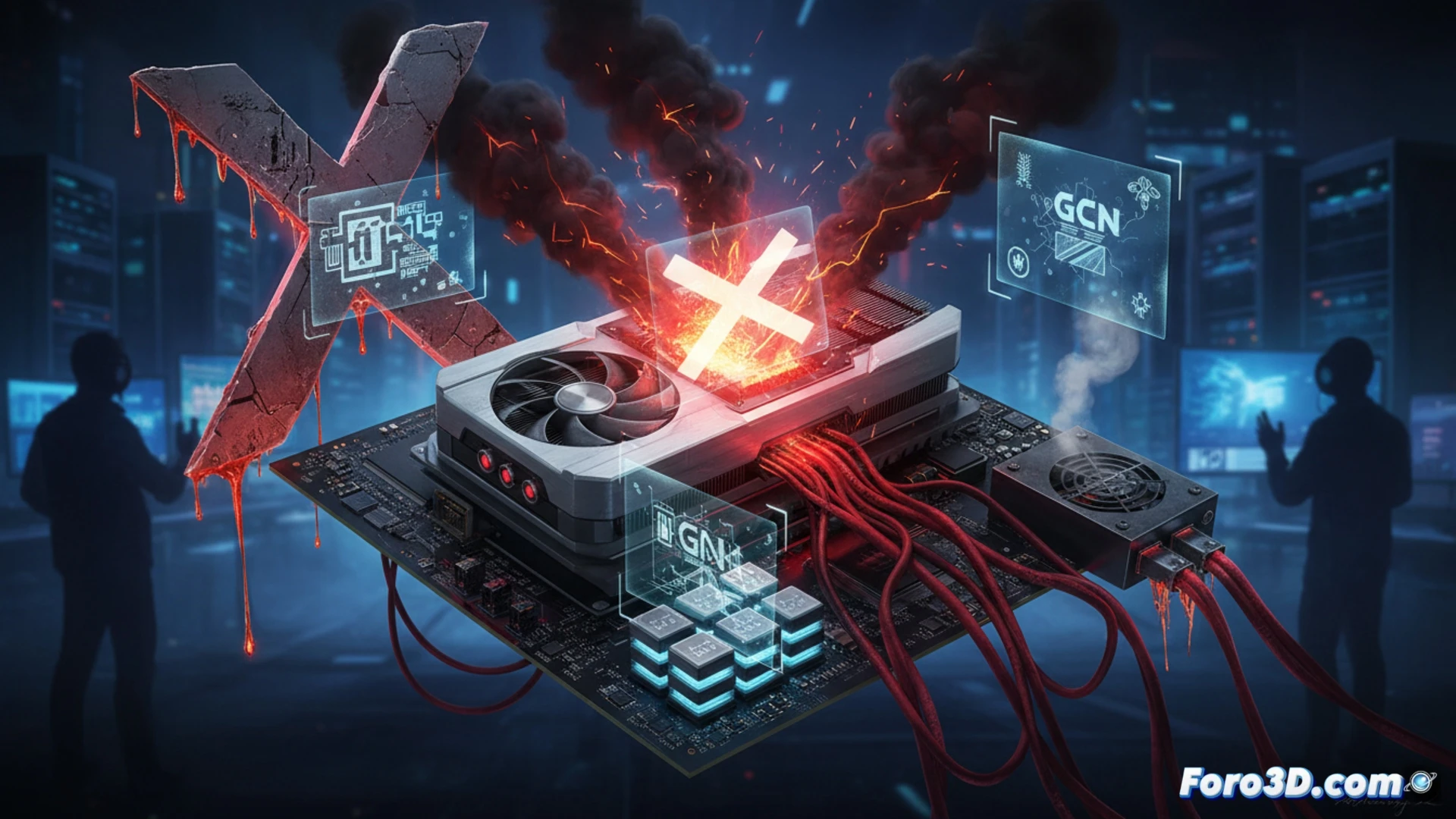
GCN, HBM2, and frequencies: the triple technical condemnation 🔥
The veteran GCN, despite being functional, lacked real developer support for its most advanced technologies. AMD opted for HBM2 memory, faster but costly and with limited availability, compared to NVIDIA's efficient GDDR5X. To make matters worse, they increased core frequencies to gain performance, which drove power consumption to extreme levels. The result was a hot, noisy card with poor performance per watt.
The recipe for failure: lots of power, but with the fan at full blast 💨
In the end, having a Vega 64 was like having a heater that also let you play games. Users had to choose between performance or not blowing their electricity bill. And developers paid no attention to GCN's special features. In 2019, AMD said enough, acknowledged the mistake, and closed the book on GCN to create the UDNA architecture. Better late than never, but what a cold sweat it caused.