Pseudoregalia proves that Unreal Engine 4 is not incompatible with a retro visual style. This indie title manages to capture the essence of the N64/PS1 era through a precise combination of simple polygonal models, low-resolution textures, and post-processing filters. For indie developers seeking this finish, the secret lies not in graphical power, but in technical restraint and smart use of tools.
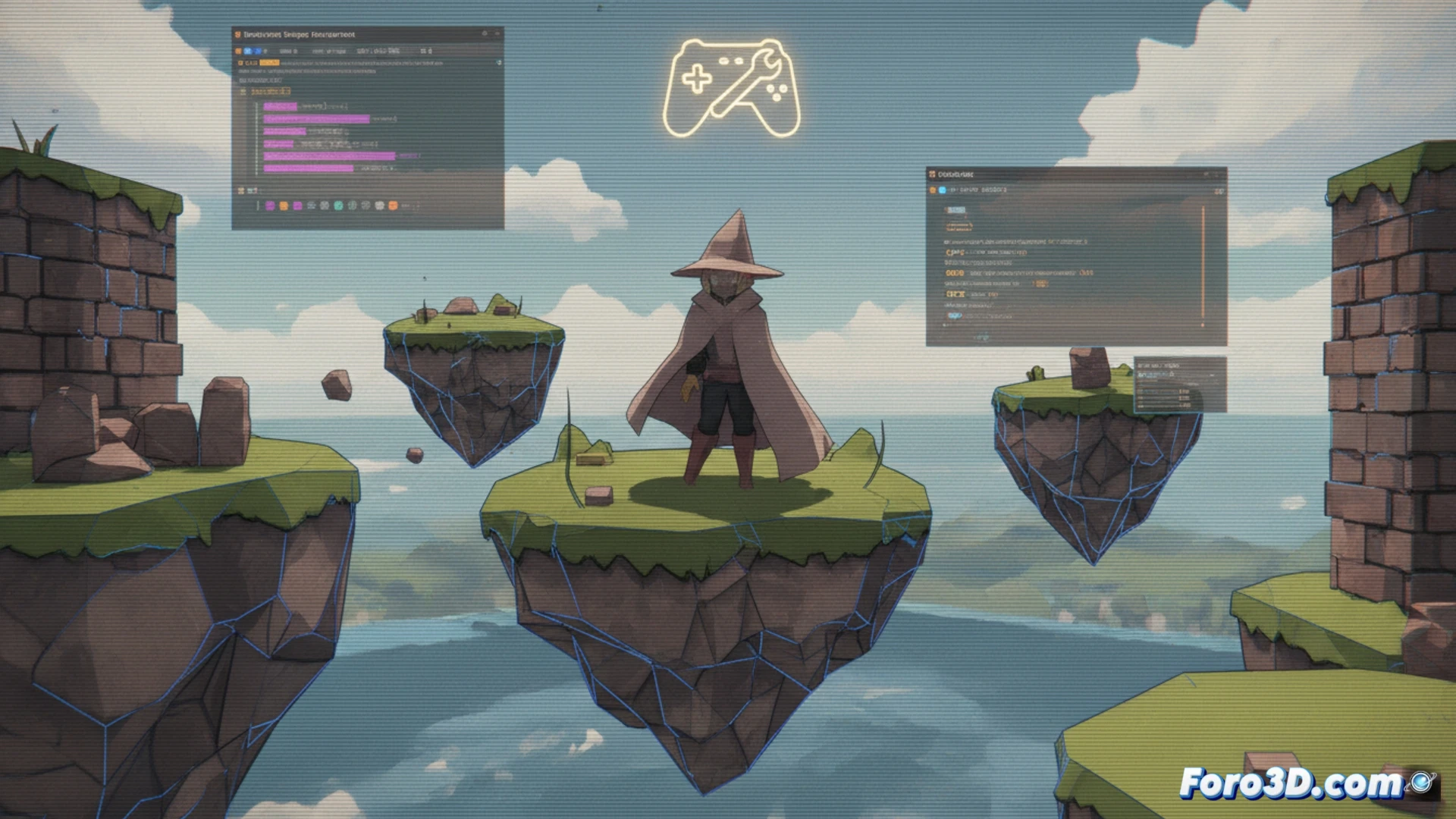
Production Pipeline: Blender and UE4 for the Retro Style 🎮
The process begins in Blender, where assets are modeled with an extremely low polygon count, mimicking the hardware limitations of the 90s. Textures are created at resolutions of 64x64 or 128x128 pixels, using limited color palettes to avoid modern blurring. In Unreal Engine 4, features like automatic mipmapping are disabled, and texture filtering is forced to Point (no smoothing). The post-processing applies a dithering effect and a low internal resolution scale, which is rendered at the monitor's native resolution. This generates that characteristic pixelated look and flat lighting that defines the 32-bit generation. Optimization is inherent: by using fewer polygons and smaller textures, performance skyrockets, allowing the game to run on modest hardware or even portable consoles like the Steam Deck.
Key Tips for Indie Developers 💡
To emulate this style, prioritize visual consistency over realism. Do not mix low-resolution models with complex dynamic shadows; use static lights and flat shading. In UE4, enable Forward Shading mode for simpler lighting and avoid complex materials with normals or speculars. The most common mistake is applying retro filters to an engine working with modern assets. The key lies in the pipeline: from Blender, export your meshes without smoothing shading groups, and in UE4, force the use of uncompressed DXT textures. Pseudoregalia is proof that less is more: well-executed technical nostalgia outperforms poorly optimized hyper-realistic graphics.
Is it possible to replicate the low-resolution and textured aesthetic of the N64/PS1 era in Unreal Engine 4 without sacrificing performance or modern gameplay?
(PS: game jams are like weddings: everyone is happy, no one sleeps, and you end up crying)