Project: N, the Dungeon & Fighter spin-off from Nexon, is not just another beat 'em up; it is a case study on how to trick the human eye. The team has used Unreal Engine 4 to create a 2.5D world where three-dimensional models, sculpted in 3ds Max, perfectly mimic the stroke of a hand-painted 2D illustration. This hybrid approach seeks to capture the nostalgia of classic sprites without sacrificing the fluidity of modern 3D animation. 🎮
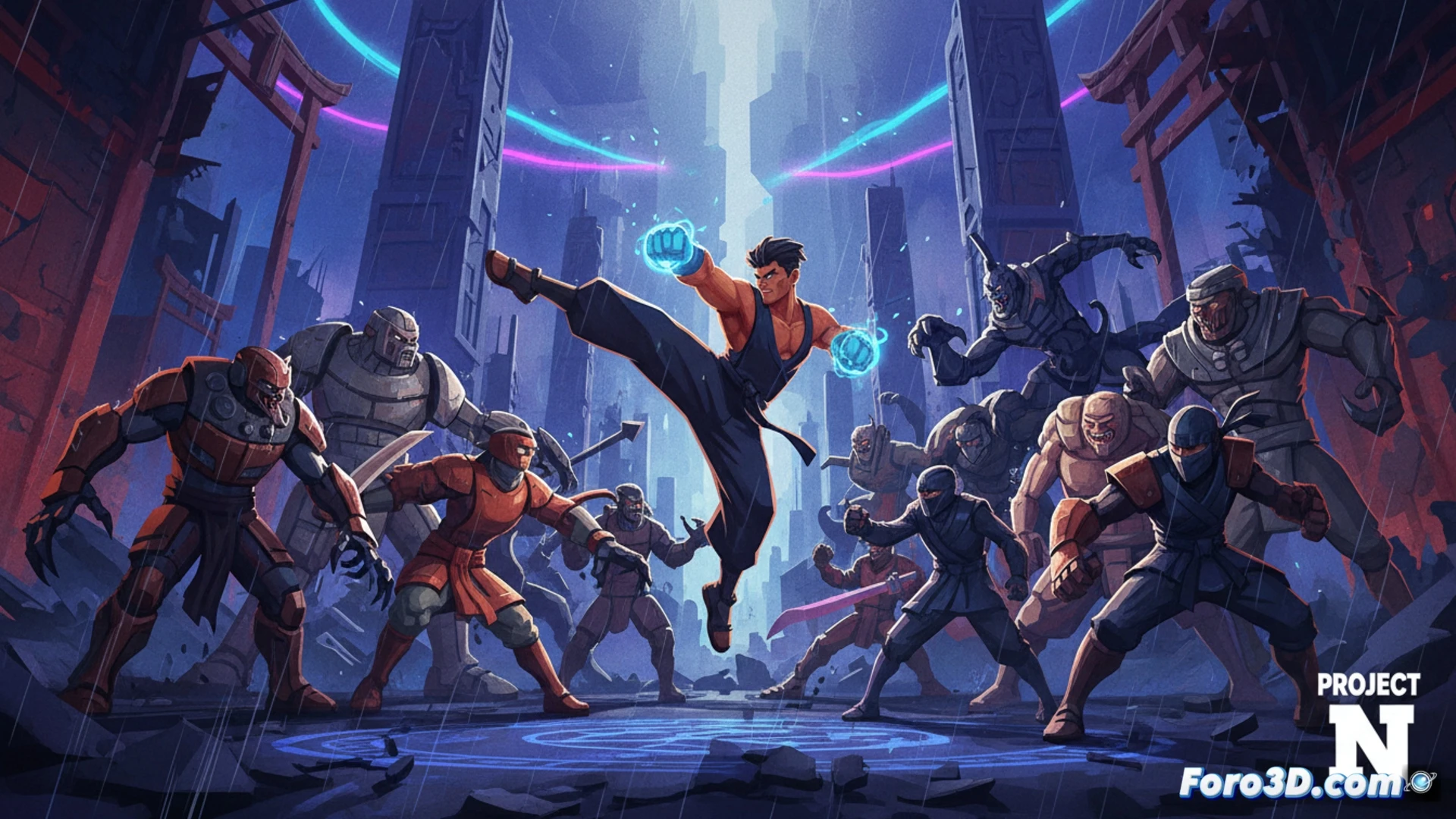
Technical Pipeline: From 3ds Max to Unreal Engine 4 🛠️
The heart of the pipeline lies in asset creation in 3ds Max. Modelers build characters with low polygon geometry, but with a very pronounced silhouette. Subsequently, in Photoshop, textures are painted that mimic the shadows and lights of 2D cel-shading art, but without aggressive black contour lines. The magic happens in the graphics engine: Unreal Engine 4 uses a custom shader that forces the 3D models to always rotate to face the camera, eliminating the perception of real depth. Visual effects, such as explosions and slashes, are rendered in After Effects and integrated as flat textures, reinforcing the illusion of an animated canvas.
Innovation vs. Beat 'em Up Tradition ⚔️
Unlike titles like Streets of Rage 4, which use hand-drawn 2D sprites, or Dragon Ball FighterZ, which uses 3D shading with black lines, Project: N bets on a more complex middle ground. Its innovation is technical: it manages to make a 3D model behave like an animated paper cutout, allowing dynamic lighting without breaking the pictorial aesthetic. For developers, this pipeline reduces animation creation time (by using 3D skeletons) and allows for more dramatic camera changes than a traditional sprite, marking a viable path for future titles in the genre.
How does Project N by Nexon manage to integrate 2.5D art with Unreal Engine 4 to generate an illusion of depth that tricks the human eye without sacrificing technical performance in video game development?
(PS: shaders are like mayonnaise: if they break, you have to start all over again)