Project Mugen, developed by NetEase and Naked Rain, is setting a technical milestone in the creation of urban open worlds. The team uses Unreal Engine 4 with an active transition to UE5, combining procedural generation of dense cities with an advanced nighttime lighting system. Tools like Houdini and Marvelous Designer are key to optimizing the production pipeline and achieving stunning visual quality.
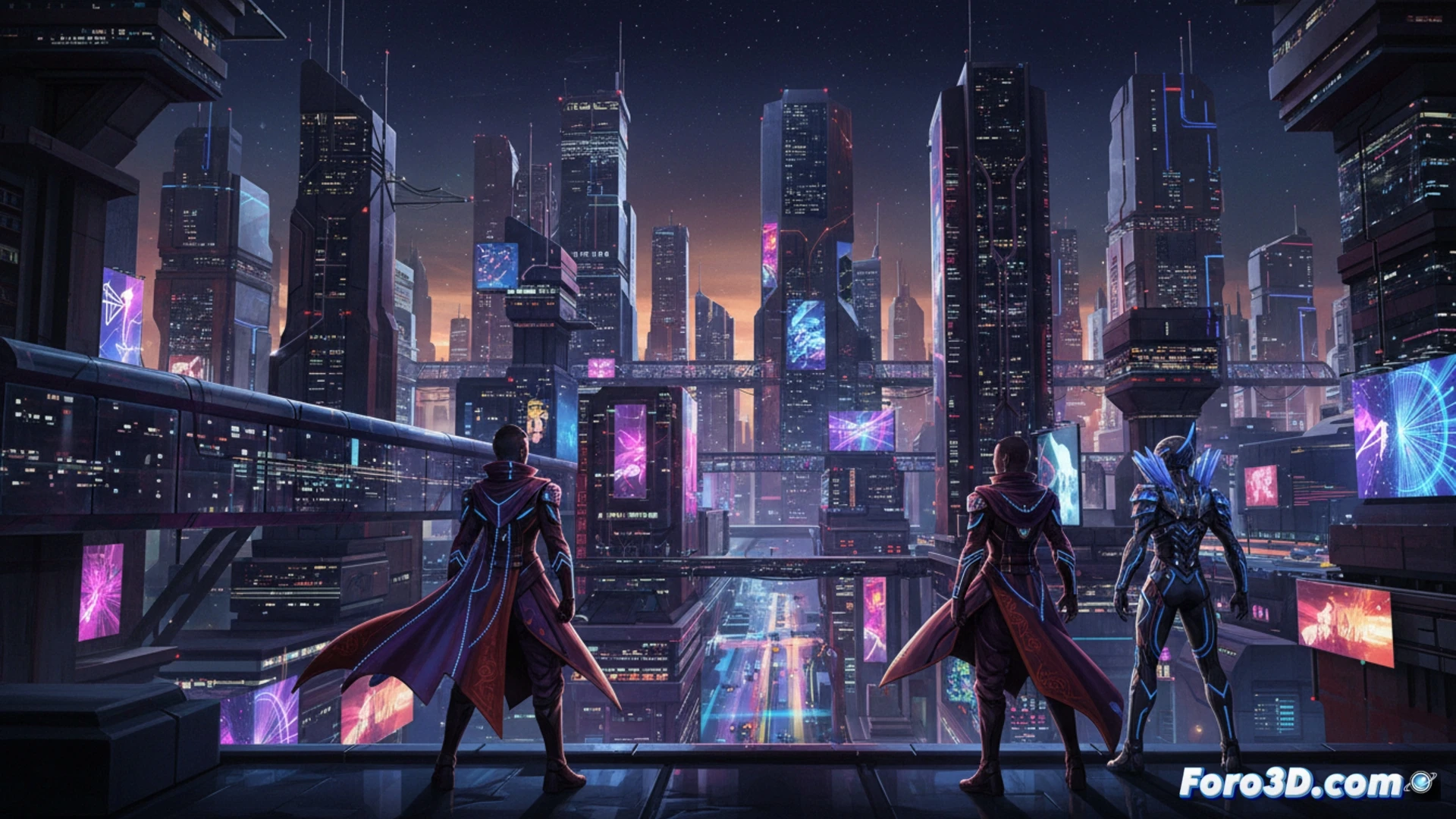
Technical Pipeline: Houdini for the City and Marvelous Designer for Costumes 🏙️
The procedural generation of the city relies on Houdini, allowing urban blocks, streets, and buildings to be created algorithmically, drastically reducing manual modeling time. For character costumes, Marvelous Designer is used, which physically simulates realistic fabrics and folds. Both workflows are integrated into Unreal Engine, where nighttime lighting with dynamic reflections leverages the capabilities of Lumen and Nanite in the transition to UE5. This not only accelerates asset iteration but also ensures a dense and coherent open world without sacrificing performance.
Impact on Production and Visual Quality 🎯
The combination of Houdini and Marvelous Designer allows Naked Rain to scale the complexity of its open world without inflating production costs. The procedural city dynamically adapts to the camera, while realistic costumes add depth to the characters. The transition to Unreal Engine 5 enhances these systems with global illumination and real-time reflections, setting a new technical standard for urban open-world games.
How does Project Mugen achieve the technical integration between Houdini for procedural city generation and Marvelous Designer for character costumes without compromising visual coherence or real-time performance?
(PS: 90% of development time is polishing, the other 90% is fixing bugs)