The studio Bounding Box Software has developed Prodeus using a hybrid graphics architecture that breaks the classic dichotomy between retro and modern. The engine, built on a Custom Scriptable Render Pipeline (SRP) in Unity, applies a dynamic pixelation filter over high-resolution 3D models. This allows geometry and particle effects to maintain the fidelity of a current game, while the final image is fragmented into visible blocks to emulate the resolution of 90s shooters.
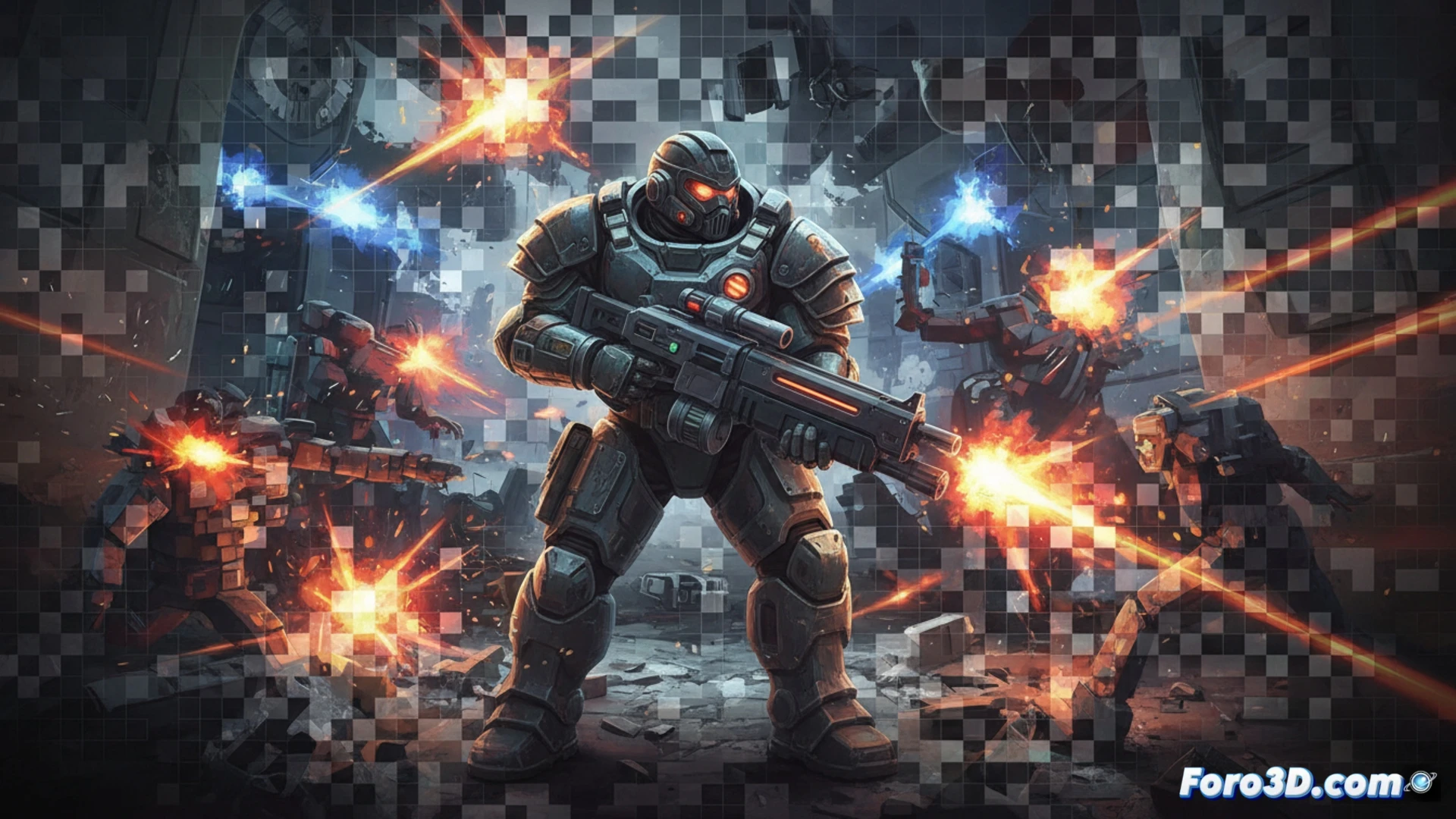
Workflow between Maya, Unity, and the custom level editor 🛠️
The production process relies on three pillars. First, Maya is used for asset modeling and animations, exporting meshes with a high level of geometric detail. These models are imported directly into Unity, where the Custom SRP handles dynamic lighting, PBR shading, and post-processing systems. The key to the visual style lies in the level editor integrated into the game itself, a tool that allows designers to build scenarios and apply the pixelation filter at the camera and texture level. This workflow avoids the need to manually rescale assets, delegating the retro aesthetic to the real-time renderer.
The illusion of low resolution without sacrificing modern technology 🎮
The main technical challenge was ensuring that the pixelation did not break the visual coherence of modern effects, such as specular reflections or normal mapping. The solution implemented in the Custom SRP separates the resolution from the lighting logic: light calculations are performed in high definition, while the output framebuffer is quartered using a mosaic filter. In this way, Prodeus achieves the feel of a 90s title without sacrificing the smoothness of 60 FPS or Unity's advanced particle systems.
In a modern engine like Unity, which prioritizes photorealistic performance, how is the use of a Custom SRP technically justified to emulate the color palette and resolution limitations of the 90s without sacrificing gameplay readability in Prodeus?
(PS: shaders are like mayonnaise: if they break, you start all over again)