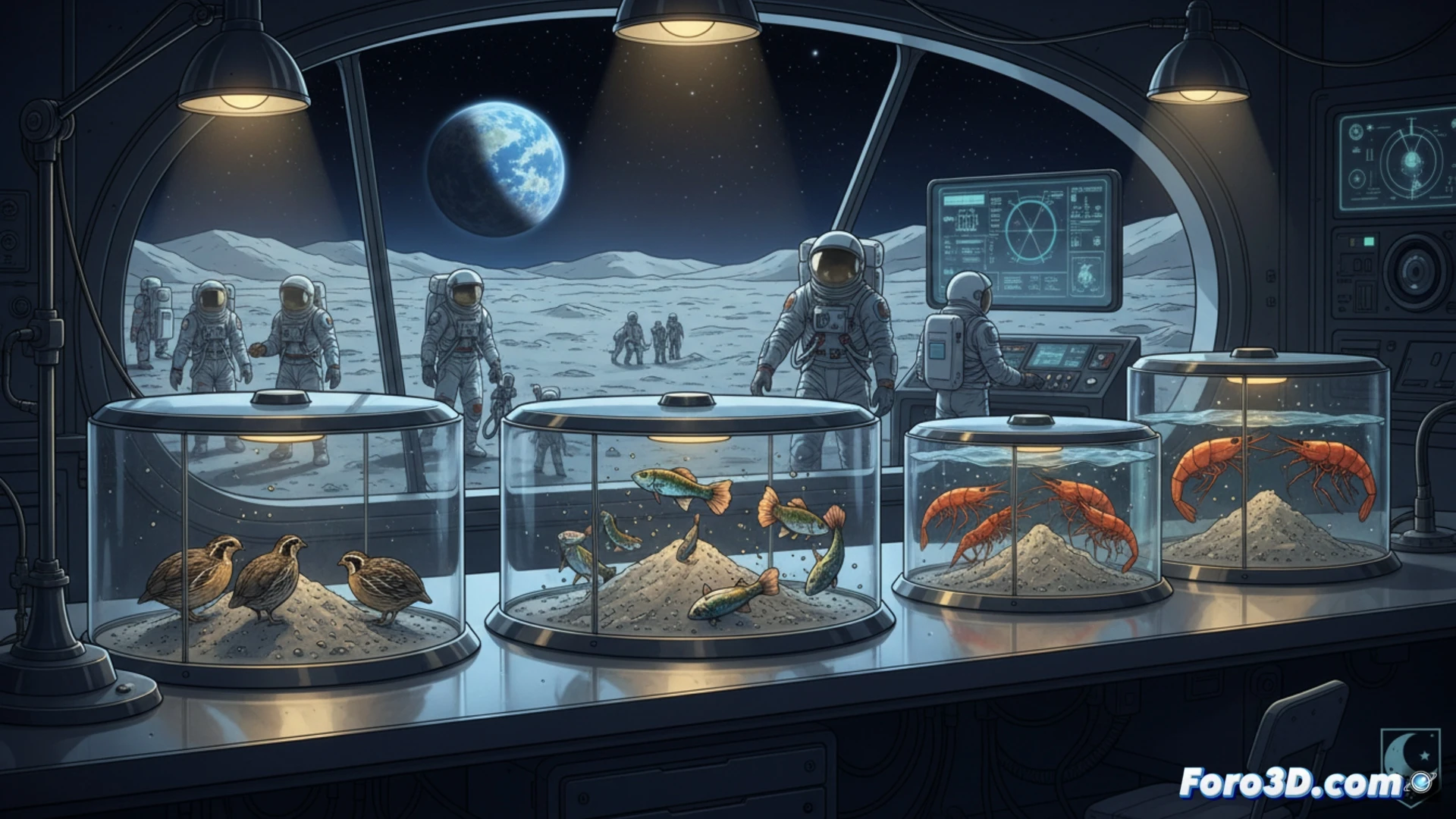
When Apollo 11 returned, NASA wasn't just looking for rocks. To rule out biological risks, they fed lunar dust to quails, shrimp, and cockroaches. The only casualties were a group of guppy fish, but the autopsy revealed they died from fumes of a spilled disinfectant, not from the regolith. The verdict was clear: the Moon was sterile and safe for terrestrial life. 🌙
The technical side of lunar regolith 🔬
Lunar dust is an abrasive material composed of silicates, glass, and minerals like ilmenite. Its origin comes from micrometeorite impacts that fracture rock into sharp particles. Although the 1969 experiment showed it contained no pathogens, Apollo 17 astronauts reported symptoms similar to hay fever when inhaling it. Inhaling these particles can cause lung irritation and eye damage, forcing the design of advanced filtration systems for future missions.
Lunar dinner: the menu that killed no one (almost) 🍽️
NASA offered its animals a luxury banquet: sterilized lunar dust, unsterilized dust, and even walkways over the material. The quails and cockroaches devoured it without complaint, while the shrimp and oysters survived to tell the tale. Only the guppies decided to collectively commit suicide, but it turned out to be a cleaning accident. No one asked them if they preferred lunar water. In the end, the dust proved more dangerous for humans than for a cockroach.