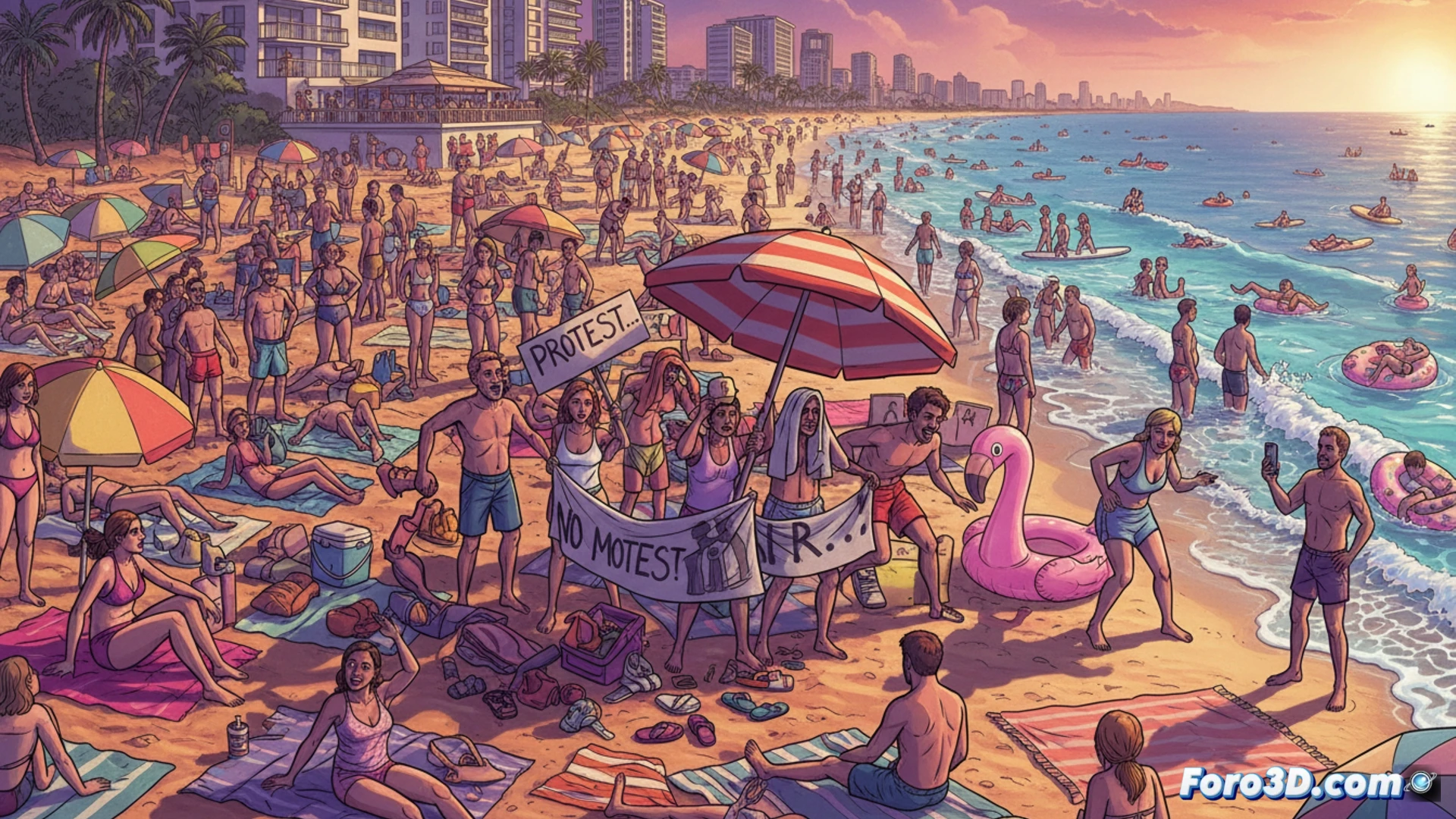
Every summer the ritual repeats. Neighbors and tourists complain about overcrowded beaches, with photos of towels touching and umbrellas millimeters apart. They organize protests on social media, sign petitions, and even arrange meetups. But in the end, the following Sunday, they are all there, with their portable cooler and sunscreen, occupying the same space they criticized. The problem is not the beach, but the lack of a plan B.
The logic of geolocation and the algorithm of chaos 🏖️
Map applications and social networks fuel the problem. When a beach appears as popular on Google Maps or TikTok, the algorithm turns it into a must-visit destination. There is no technical regulation to limit the flow of people in real time. Systems like capacity sensors exist, but they are not implemented due to lack of investment or political will. The result is a predictable collapse: everyone goes to the same place because their phone tells them it is the best, without considering alternatives.
The digital protest that ends in a selfie and a cocktail 📱
The funny thing is that many of those who complain on Twitter are the same ones who later post stories with the phrase dream beach. The protest becomes content. A video of overcrowding gets likes, but the next day the video creator is already reserving their spot with a towel at 8 in the morning. It is like complaining that the elevator is full while squeezing in. The solution is not to protest, but to get up early or go to the next beach over. But that no longer gets as many likes.