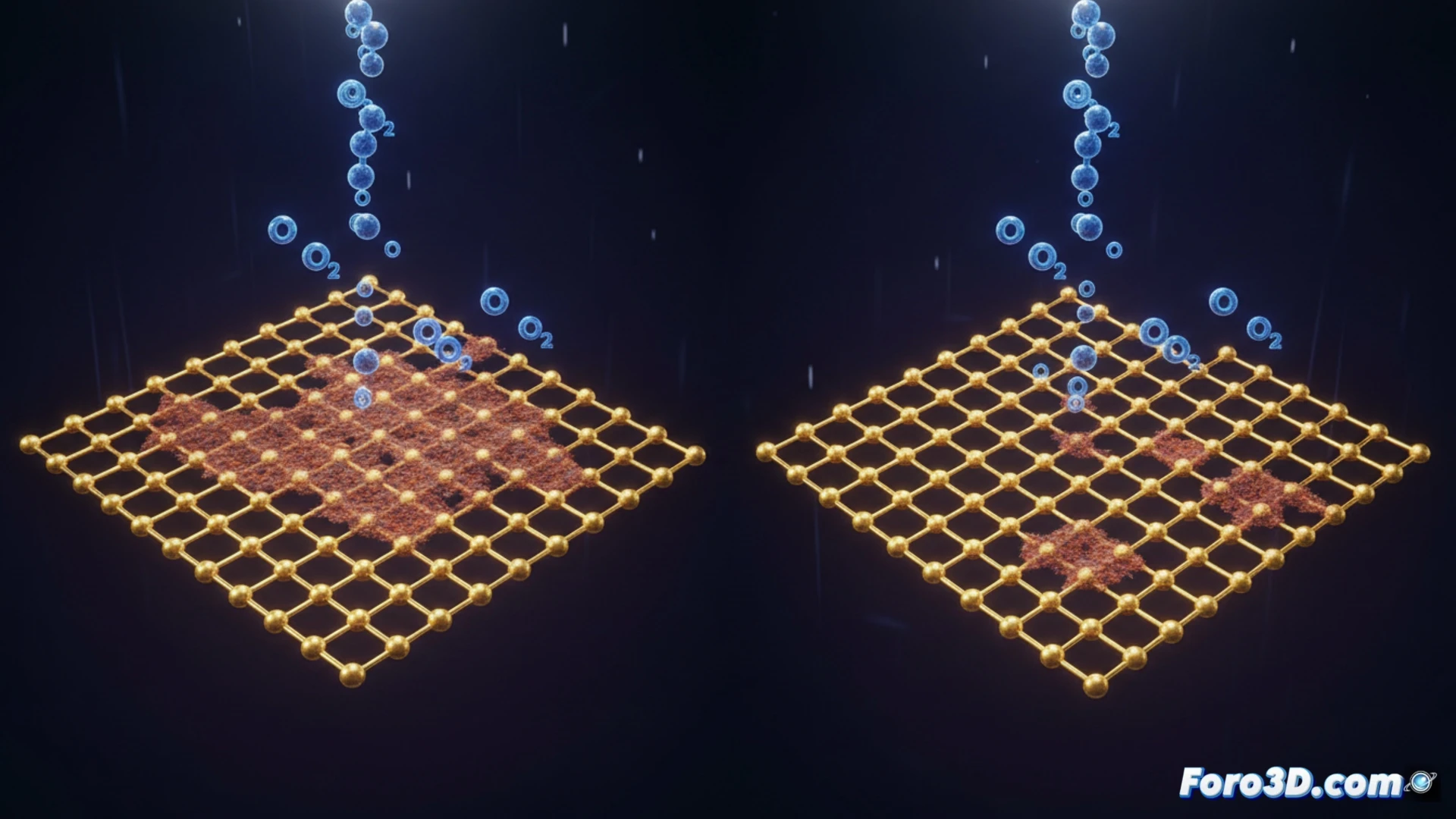
A quantum mechanics study reveals that the atomic arrangement of gold determines its oxidation rate. The square structure easily splits oxygen molecules from the air, initiating the process. In contrast, the hexagonal structure is much less efficient and must distort back to a square shape, an obstacle that delays the reaction.
More precise catalysts thanks to atomic structure 🧪
Chemical engineer Matthew Montemore, co-author of the study, points out that the oxidation rate in reconstructed gold is between one billion and one trillion times slower. Furthermore, gold oxide is unstable: even maintaining the square structure, it only forms a thin layer. These findings would allow designing catalysts with greater control over chemical reactions, optimizing industrial processes.
Lazy gold: prefers not to oxidize 😴
It seems that gold, besides being expensive, is lazy. If it is already difficult for it to oxidize under normal conditions, when reconstructed into a hexagonal structure, it directly takes a billion-year break. And if it happens to oxidize, the oxide is so unstable that it disappears almost instantly. A metal that refuses to work: the perfect employee for doing nothing.