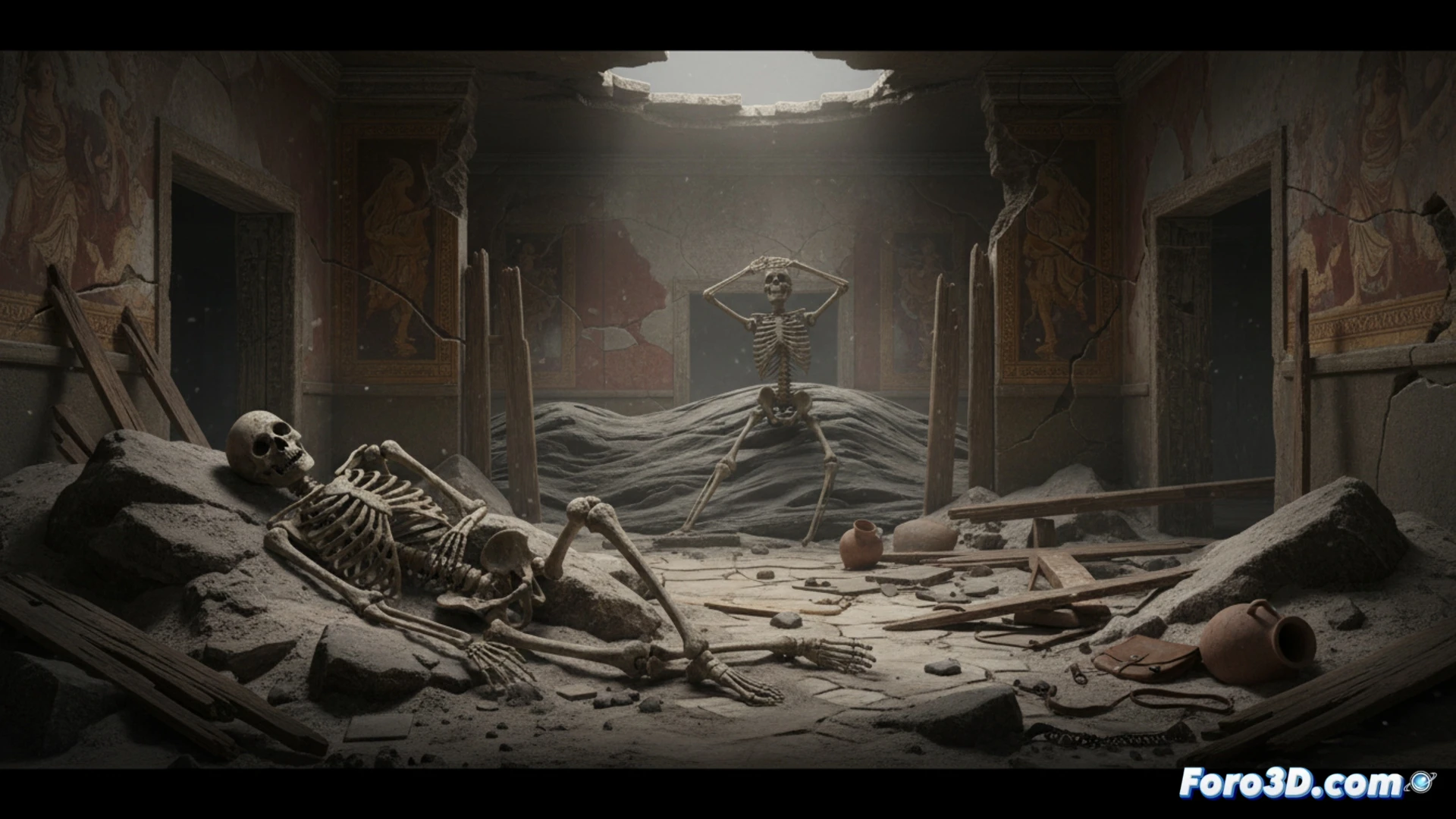
Archaeologists have found two skeletons in a suburban villa in Pompeii that offer new insight into the destruction of 79 AD. The remains belong to a man aged 30 to 40 and a woman, who died at different stages of the disaster. The man died during the pumice stone rain, while the woman perished later, swept away by a pyroclastic flow of gases and volcanic material.
Forensic technology applied to dating volcanic victims 🔍
The analysis of the skeletons was carried out using 3D scanning and computed tomography techniques, allowing experts to differentiate the injuries caused by each eruptive phase. The man shows fractures from rock impacts, while the woman shows signs of exposure to extreme temperatures exceeding 250 degrees. This data helps model the sequence of the disaster with greater precision, using pyroclastic flow simulation software.
Vesuvius gave no warning: two different ways to have a bad day 🌋
The Pompeii couple shows that, in an eruption, luck is not evenly distributed. The man had time to complain about the falling stones; the woman, on the other hand, received a wave of heat that leaves no time even to sweat. If you are looking for an excuse not to plan your next date, remember: even in 79 AD there was already a lack of coordination of fatal schedules.