A Seville hospital has incorporated a state-of-the-art mammogram that allows for high-resolution three-dimensional images. This equipment represents an advance in the fight against breast cancer, as it offers a more detailed view of breast tissue. The technology facilitates the identification of suspicious lesions with greater clarity, which can reduce the need for complementary tests and unnecessary biopsies.
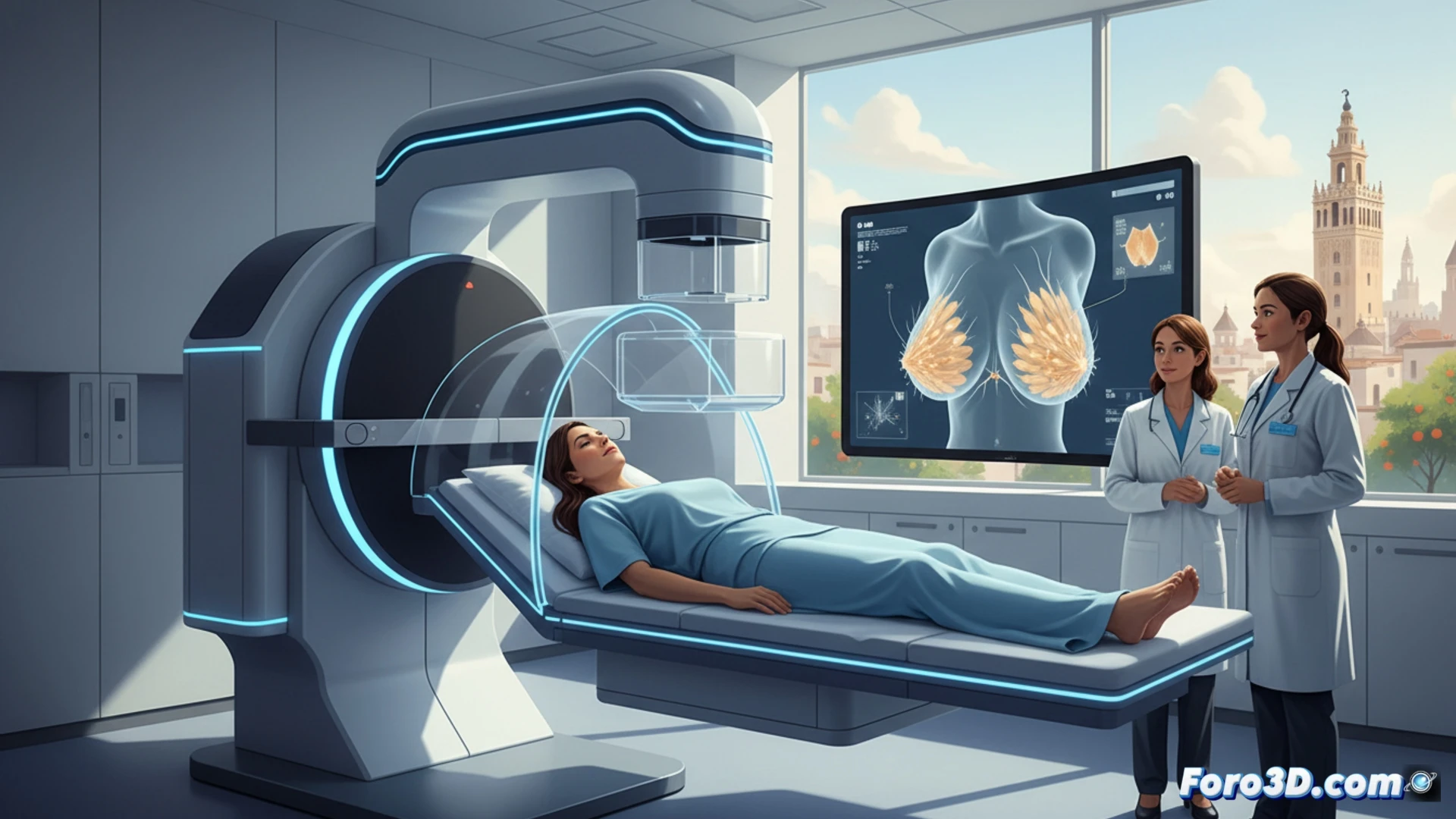
How tomosynthesis works and what it brings to diagnosis 🩺
Tomosynthesis, the base technology of this equipment, performs an X-ray scan at multiple angles around the breast. A computer reconstructs these images into thin 1 mm slices, eliminating the tissue overlap that makes reading conventional mammograms difficult. This allows radiologists to examine layer by layer, detecting nodules or microcalcifications that previously went unnoticed. The radiation dose is comparable to that of a standard digital study, although the scan time is slightly longer.
Now breasts also have their own 3D scanner 🤖
The new device promises that patients won't have to repeat the test because the technician frowned. Goodbye to that awkward moment when they squash your breast like a slice of bread and then tell you it doesn't look good. Now, with 3D, the radiologist will be able to see even the smallest suspicious mole. The downside is that, with so much resolution, they might also discover you have wrinkles in your lungs.