Users of budget 3D printers are well aware of the problem: rough surfaces and blurry details caused by uncontrolled light scattering. A new double-sided collimation film promises to solve this. The material, designed to align with the projector beam, reduces surface errors and improves part sharpness without needing to change the machine.
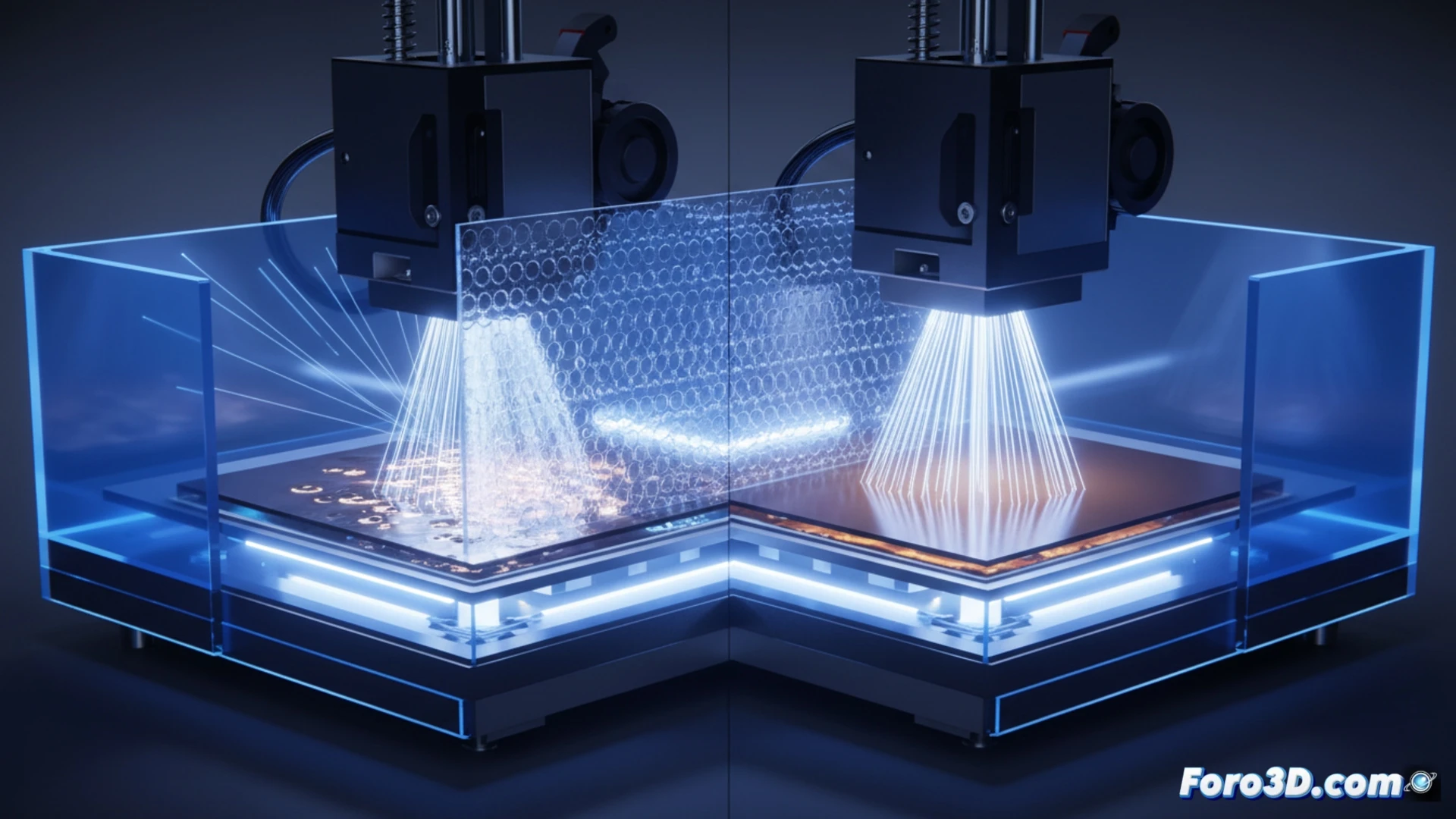
How optical correction works in 3D printing
The film acts as a directional filter that limits the light's exit angle. By placing two faces with aligned microstructures, rays are prevented from scattering into unwanted areas of the resin. This reduces lateral bleeding and deformed layers. The result is parts with sharper edges and fewer undulations. The system is installed between the light source and the vat, and is compatible with most low-end LCD and DLP printers.
Goodbye to parts that look like a bitten cookie
Finally, you can show off your miniatures without them looking like a rodent with poor eyesight has taken a bite. The new film won't turn your 200-euro printer into an industrial one, but at least it will prevent your figures' arms from looking like they were carved with a hammer. Of course, if you expect lab-quality results with supermarket resin, you might want to lower your expectations along with the price of the filament.