The National Transportation Safety Board has opened a hearing to clarify the causes of the accident of UPS Flight 2976, an MD-11 cargo plane that crashed while taking off from Louisville airport. The aircraft only reached 30 feet in altitude before falling and exploding, leaving 15 fatalities. Preliminary data indicates that the left engine detached and flew over the wing during the takeoff maneuver.
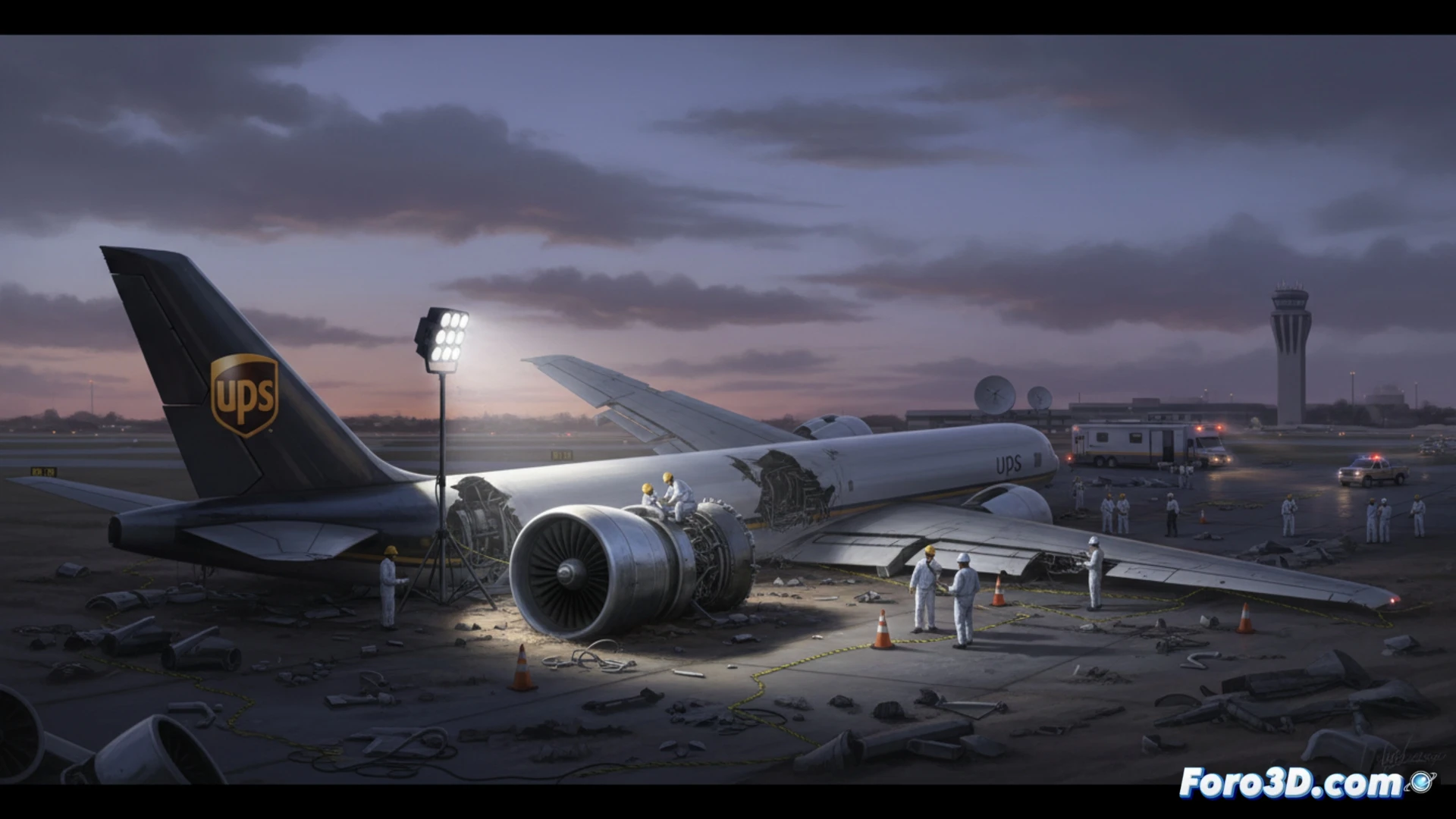
The engine that flew off: a mechanical failure with fatal consequences 🛩️
Investigators are focusing on the detachment of the Pratt & Whitney engine from the left wing of the MD-11. This type of failure, known as engine release, typically originates from fatigue in the structural supports or inadequate maintenance. When the engine separates, it can damage the hydraulic and flight control systems, leaving pilots without maneuverability. In this case, the loss of lift at low altitude was lethal.
The engine went for a stroll and the plane didn't follow 🔧
It seems the left engine decided to take a vacation before the rest of the plane. It flew over the wing, as if it wanted to overtake the MD-11 in the race. Too bad that without it, the aircraft lost its desire to fly and preferred to make a crater in the asphalt. The NTSB is now looking for the culprit: material fatigue, a loose bolt, or perhaps the whim of a part that wanted to be a bird.