Five Japanese municipalities hosting nuclear plants or storage facilities have established a tax on spent nuclear fuel. For fiscal year 2025, estimated tax revenues reach 2.4 billion yen, a figure 2.5 times higher than 15 years ago, following the Fukushima Daiichi accident in 2011. This increase reflects the accumulation of radioactive waste due to delays at the Rokkasho reprocessing plant, which has been under construction for over three decades.
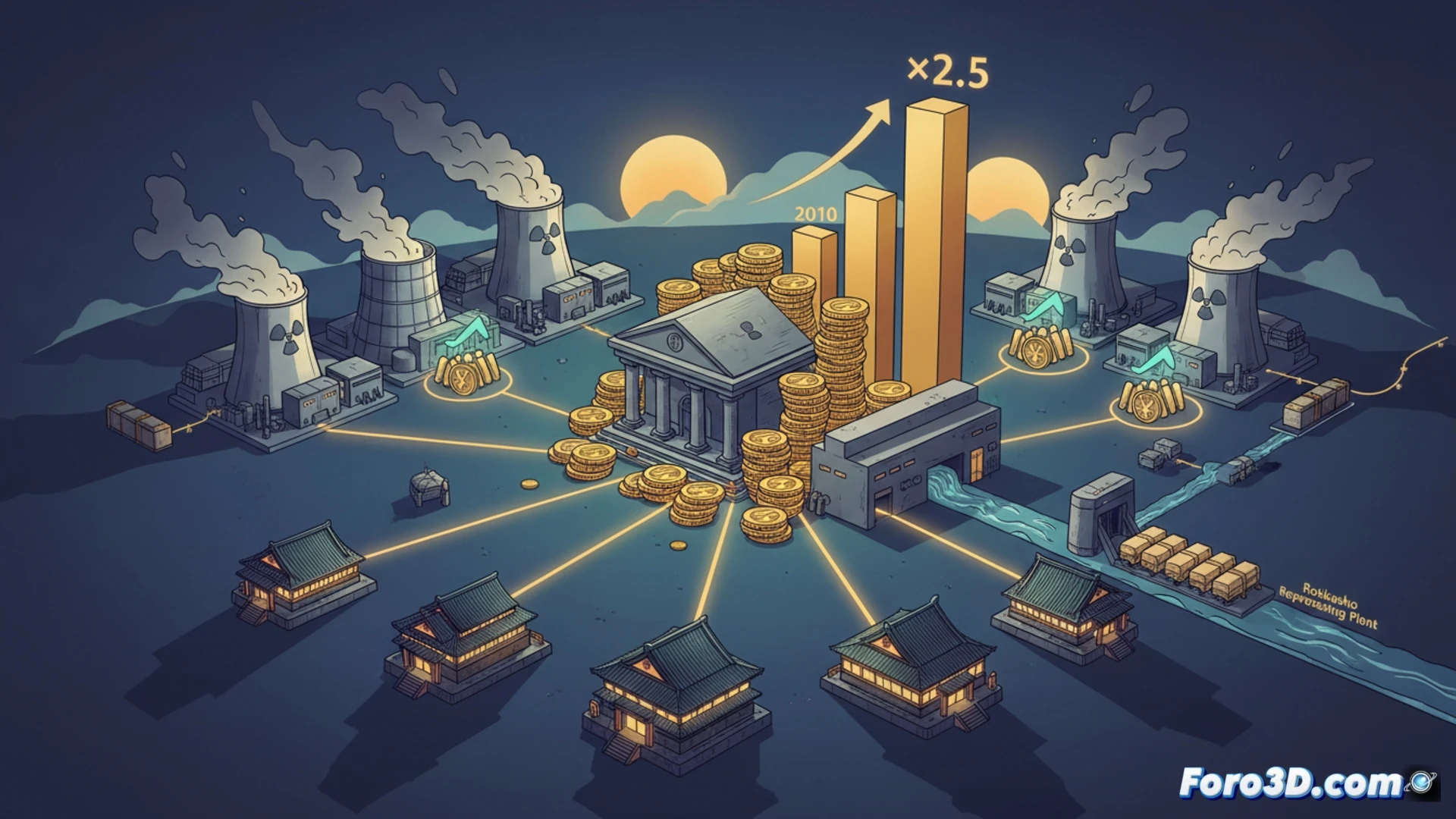
Delayed reprocessing: 30 years of promises and untreated fuel ⚛️
The reprocessing plant in Rokkasho, Aomori Prefecture, remains unfinished after more than 30 years of work. This delay forces nuclear power plants to store spent fuel on-site, accumulating without a clear final destination. The municipal tax seeks to compensate for storage and security costs in these areas. The technology to reprocess uranium and plutonium is not yet operating at a commercial scale, prolonging dependence on temporary storage and generating growing tax revenues for host municipalities.
The rate that rises while the fuel awaits its final destination 💰
The municipalities have discovered that if the fuel does not move, at least it should pay taxes. Like a tenant who never leaves but pays good rent, spent uranium generates tax revenues that have risen 2.5 times since 2011. While Rokkasho engineers fine-tune their tools, nuclear towns enjoy a source of income that grows with each barrel of waste. Perhaps the lesson is that, in nuclear energy, the only thing that multiplies faster than waste is taxes.