3D technology offers useful tools for the bartending trade, from space planning to creating custom tools. For example, a bartender can design an ergonomic liquor dispenser in 3D to fit their hand, optimizing service speed. Programs like Blender, Fusion 360, and SketchUp allow modeling these objects before printing them in resin or plastic filament.
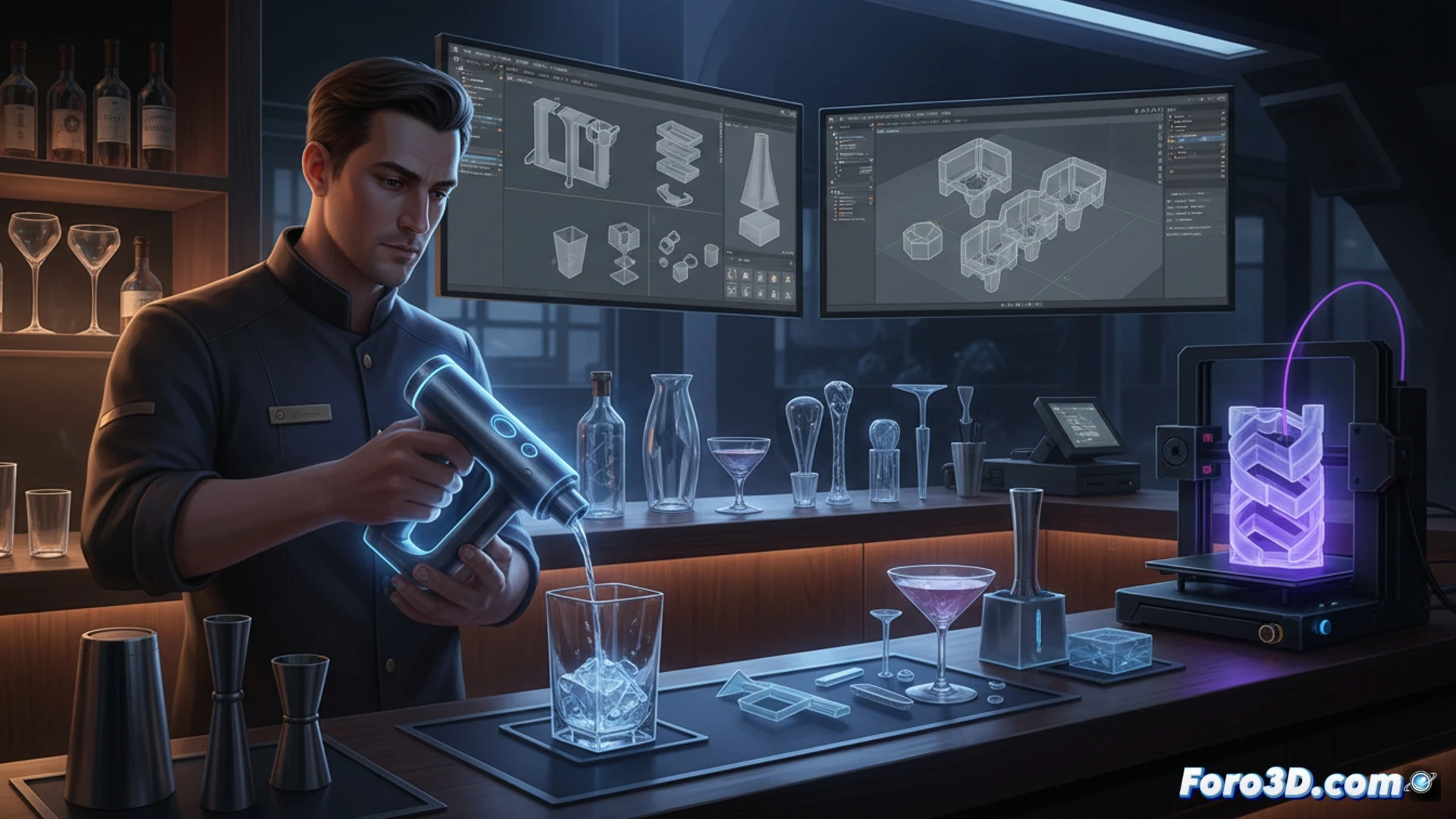
Prototyping utensils and organizing the workspace 🍸
3D modeling allows designing coasters with slots for garnishes, stackable trays, or bottle holders that fit the bar's geometry. With tools like Tinkercad or SolidWorks, loads and adjustments can be simulated before manufacturing. It is also used to plan the layout of workstations, avoiding bottlenecks during peak hours. 3D printing in PLA or PETG offers lightweight, splash-resistant parts.
When your 3D-printed cocktail shaker leaks 🥴
Because there's nothing quite like watching a customer wait for their Manhattan while your artisanal 3D-printed cocktail shaker decides to turn into a fountain in the middle of the bar. Sure, the piece looked nice in the render, but in practice, it seems more like a strainer than a shaker. Good thing modeling allows for quick iteration: by the third version, it no longer stains the white shirt. Of course, the ice still melts faster than your patience.