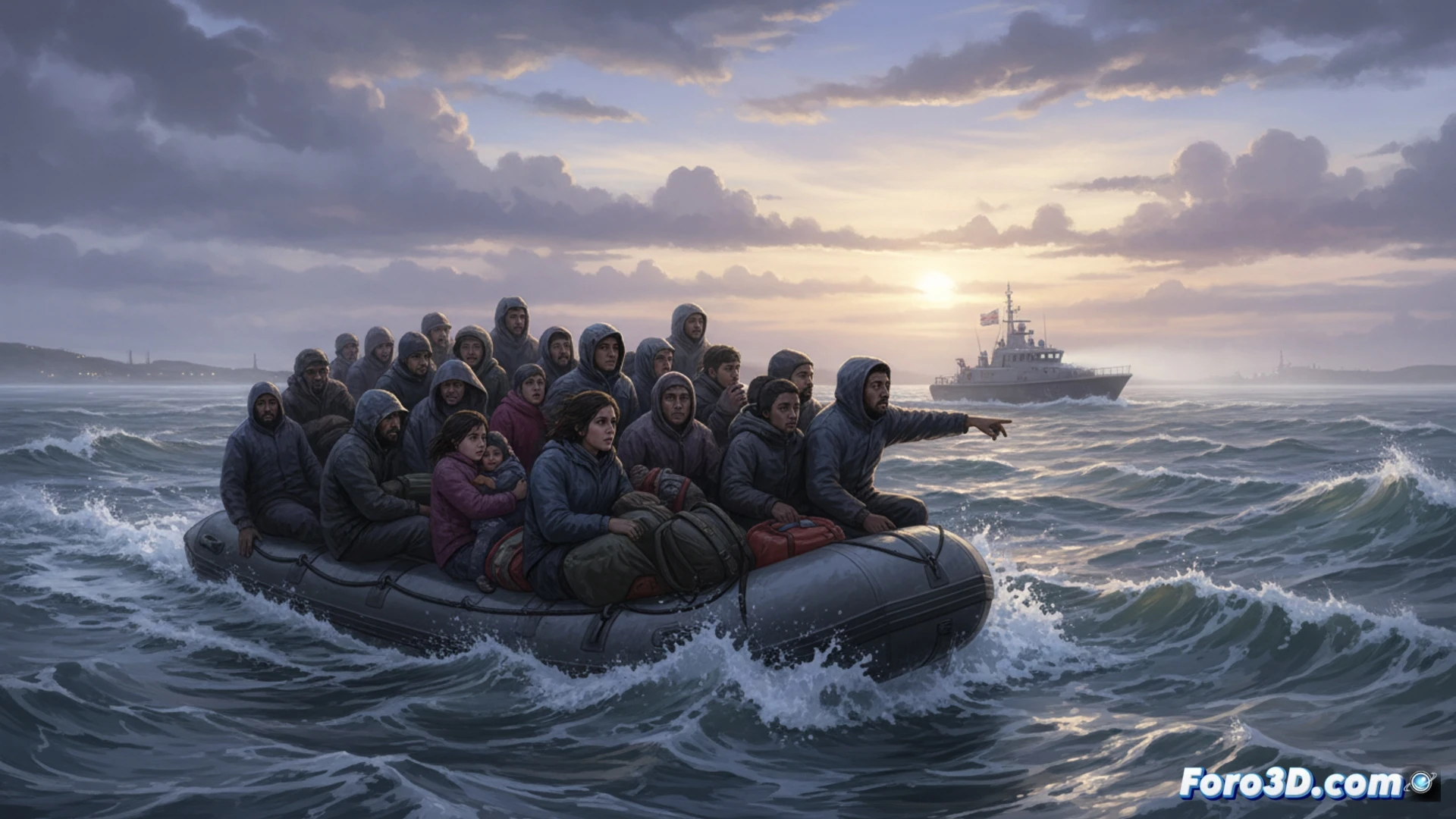
Despite joint patrols by France and the United Kingdom, thousands of migrants continue to attempt crossing the English Channel. Every year, dozens gather on the northern French coast to cover the 34 kilometers separating the two countries. Some flee war, others seek a better life. In the last year alone, nearly 41,000 people made this dangerous crossing, most from Eritrea, Afghanistan, Iran, Syria, and Iraq.
Drones and sensors: technology at the service of border control 🛰️
To curb these crossings, authorities have deployed advanced technology. Surveillance drones with thermal cameras fly over the French coast 24 hours a day, detecting makeshift boats. Additionally, motion sensors have been installed at key points, along with maritime radar systems that alert patrols. However, migrants adapt their methods: they use faster rubber boats and depart at night to evade detection. Technology reduces attempts but does not eliminate them.
The Channel as an unwanted tourist attraction 😅
If the English Channel were a tourist destination, it would have mixed reviews. The views are spectacular, they say, but the ferry service is terrible: passengers arrive wet, without luggage, and sometimes without a boat. Plus, the police offer a free tour back to France. Sure, the trip is exciting, as long as you don't mind sharing a seat with a broken outboard motor and 50 other people.