A patient developed a cerebral embolism after implantation of a continuous-flow ventricular assist device. Technical autopsy of the device, performed using micro-CT and computational fluid dynamics (CFD), revealed that the impeller design generated micro-vapor bubbles. These bubbles, upon collapsing, fragmented red blood cells, releasing microemboli that traveled to the central nervous system. The case underscores the need to validate the hydrodynamics of rotors in blood pumps.
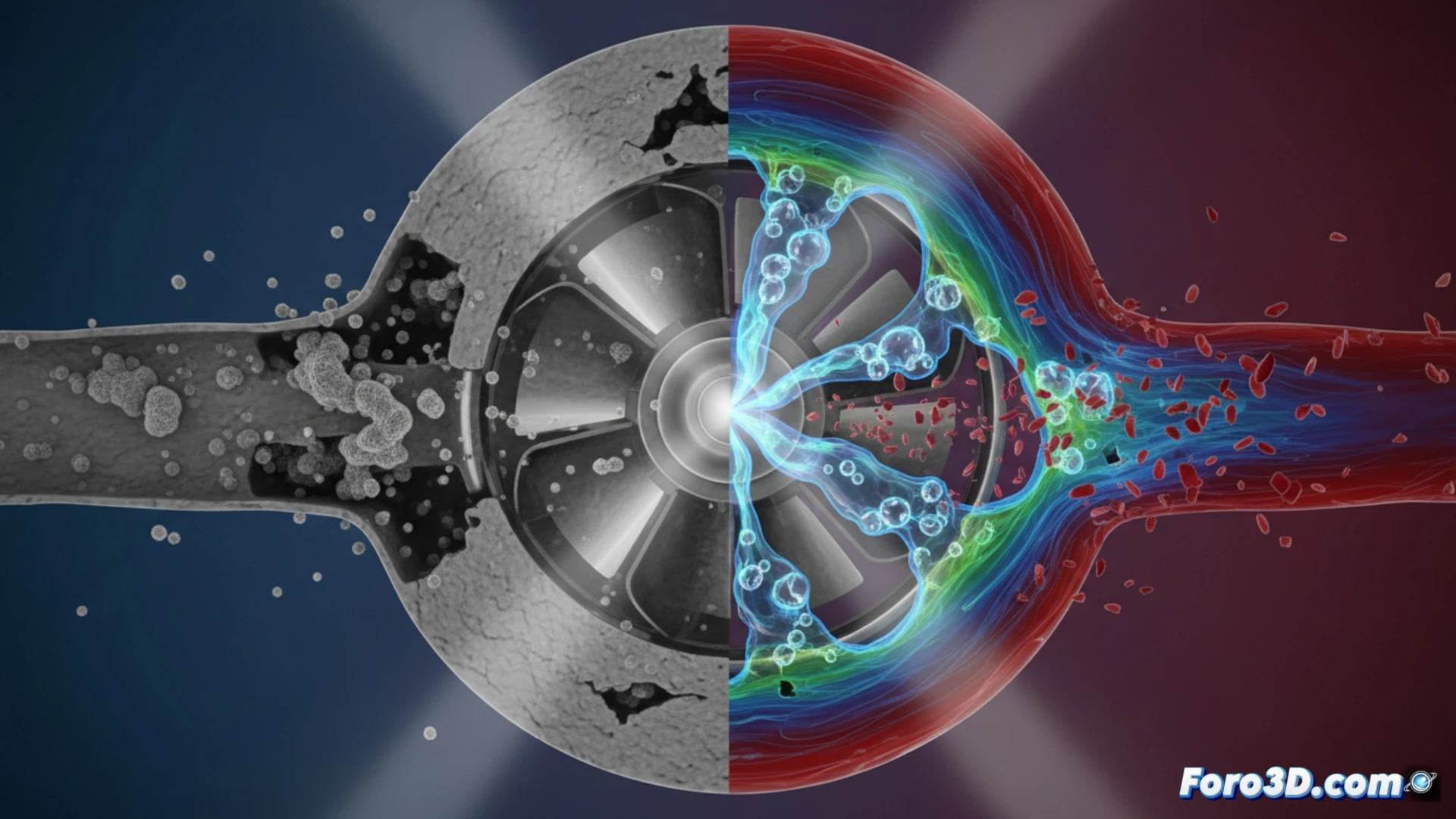
3D reconstruction and CFD simulation of the impeller 🧬
The forensic team digitized the pump with a high-resolution micro-CT in VGSTUDIO MAX, obtaining a volumetric mesh of the impeller and volute. On this real geometry, simulations were run in ANSYS Fluent to model blood flow at 10,000 RPM. The results showed zones of static pressure below the vapor pressure of blood, confirming the presence of incipient cavitation on the leading edges of the blades. Hemolysis analysis in Materialise Mimics quantified the rate of cell damage in those regions, directly correlating it with the fragmentation observed in the patient.
Lessons for implantable prosthesis design ⚙️
This case demonstrates that micro-cavitation is a real risk in continuous-flow pumps, even in certified designs. The combination of micro-CT and CFD allows detection of failures that escape conventional hydraulic tests. For the biomedical industry, integrating tools such as VGSTUDIO MAX and ANSYS Fluent into the review process of already implanted devices is a key strategy to prevent future embolisms and improve the safety of artificial hearts.
Would you use this digital twin for surgical planning?