Researchers at Delft University of Technology have successfully 3D printed living mycelium that self-assembles with functional particles. The method allows fungal networks to grow and be selectively functionalized, generating biohybrid materials with adjustable conductivity. A new way of understanding living materials.
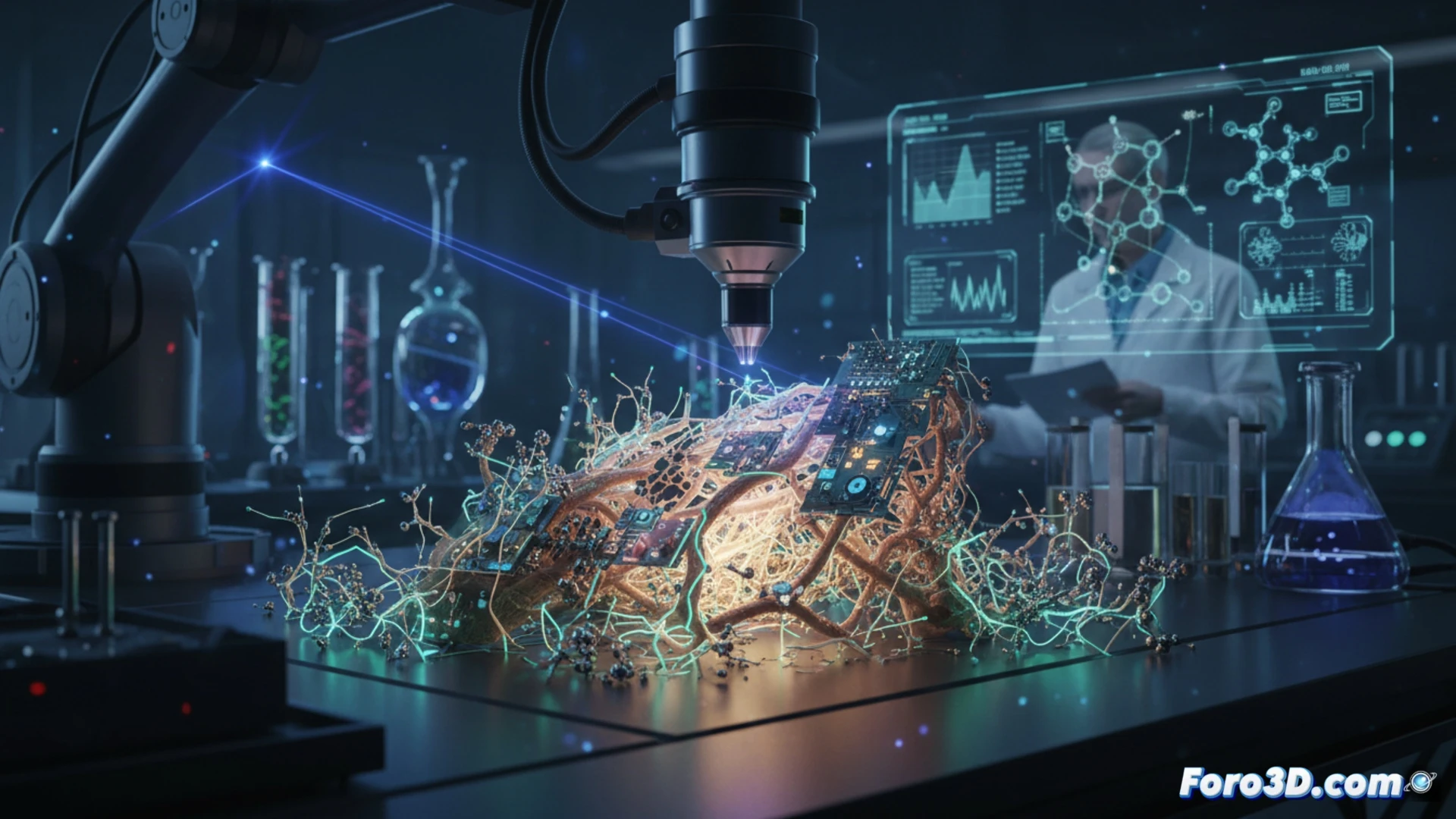
Directed growth and selective functionalization of mycelium 🍄
The TU Delft team uses a 3D printing process that deposits mycelium alongside conductive particles. During growth, the fungus integrates these particles into its network, creating precise electrical pathways. Researchers control the final arrangement of the material by adjusting particle density and growth rate. The result is a biohybrid material that combines the natural resilience of mycelium with programmable electronic properties, without the need for complex manufacturing processes.
Fungi with an electrician's license ⚡
Now fungi not only decompose old logs, they also aspire to wire their own electrical network. Soon we will see mushrooms asking for a voltage increase instead of water. The next thing will be a mushroom asking for a low-voltage electrical installer certificate. At least, if the wifi fails, we know who to blame.