Medical-grade silicone 3D printing has always been a challenge due to its viscosity and curing. Lynxter, a French manufacturer, has managed to process this inert and durable material, eliminating the need for expensive molds. This promises to lower costs and speed up the production of devices for clinical environments, opening new possibilities in on-demand manufacturing.
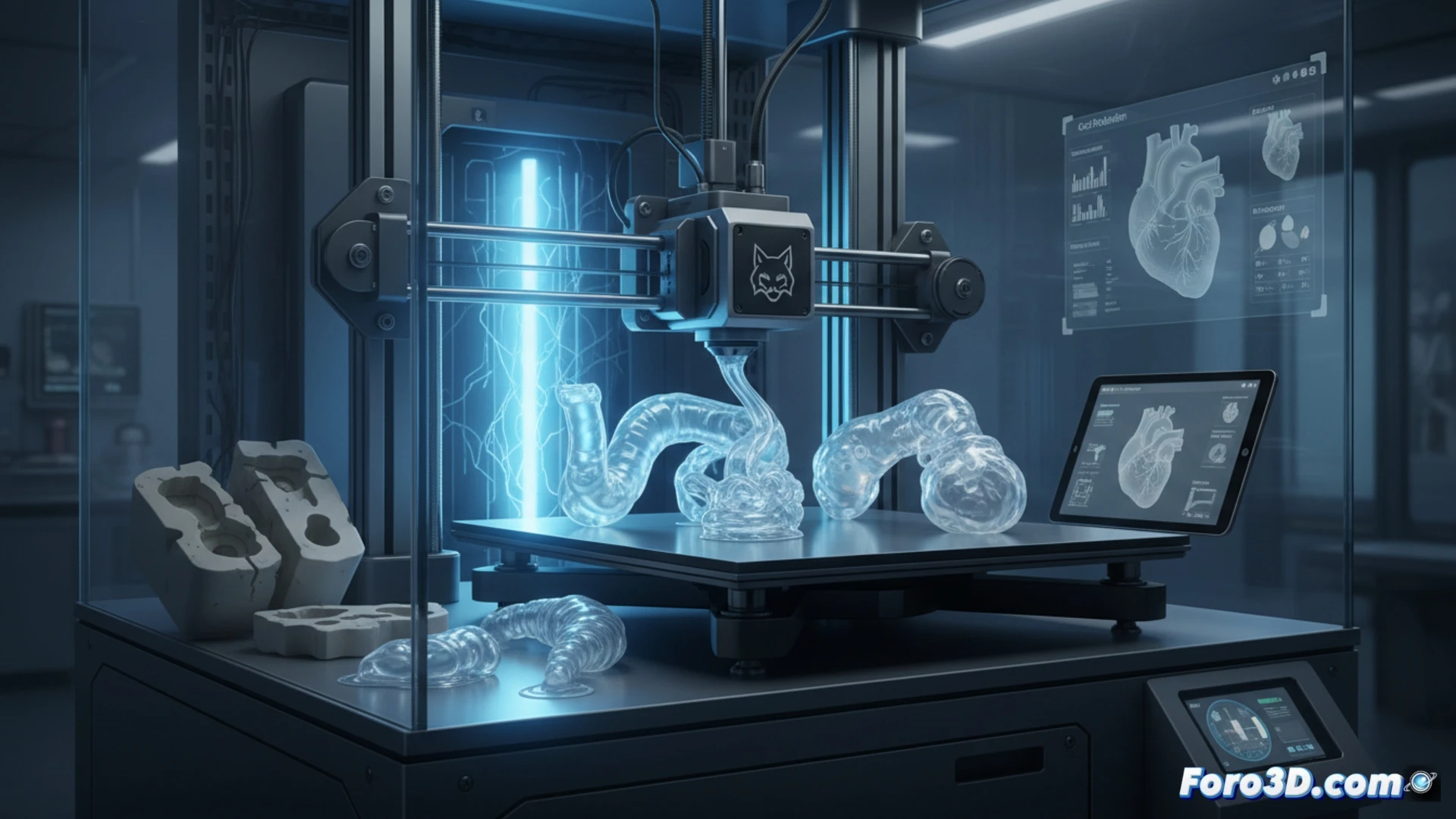
Two platforms for a rebellious material 🛠️
Lynxter offers two approaches. The modular platform features interchangeable print heads that allow material changes without manual intervention, ideal for prototyping. The second, specialized in silicone, incorporates a water-soluble support system to create complex geometries impossible with traditional molds. Both work with two-component LSR silicone, a material that requires precise temperature and pressure control to avoid failures.
Silicone, the material that no longer needs its mold 🧪
Until now, manufacturing a silicone part for a hospital meant ordering a steel mold and waiting weeks. Lynxter offers to print the part in hours, without a mold and with less paperwork. The only downside: if the printer fails, you have no one to blame but the software. At least you won't have to explain to your boss why the new mold looks like a 500-euro paperweight.