The island restored its electrical supply after a total blackout that affected all Cubans, but the relief is temporary. The lack of fuel and the depletion of oil reserves keep the system on the brink of collapse, with daily outages disrupting daily life and sparking protests against the government.
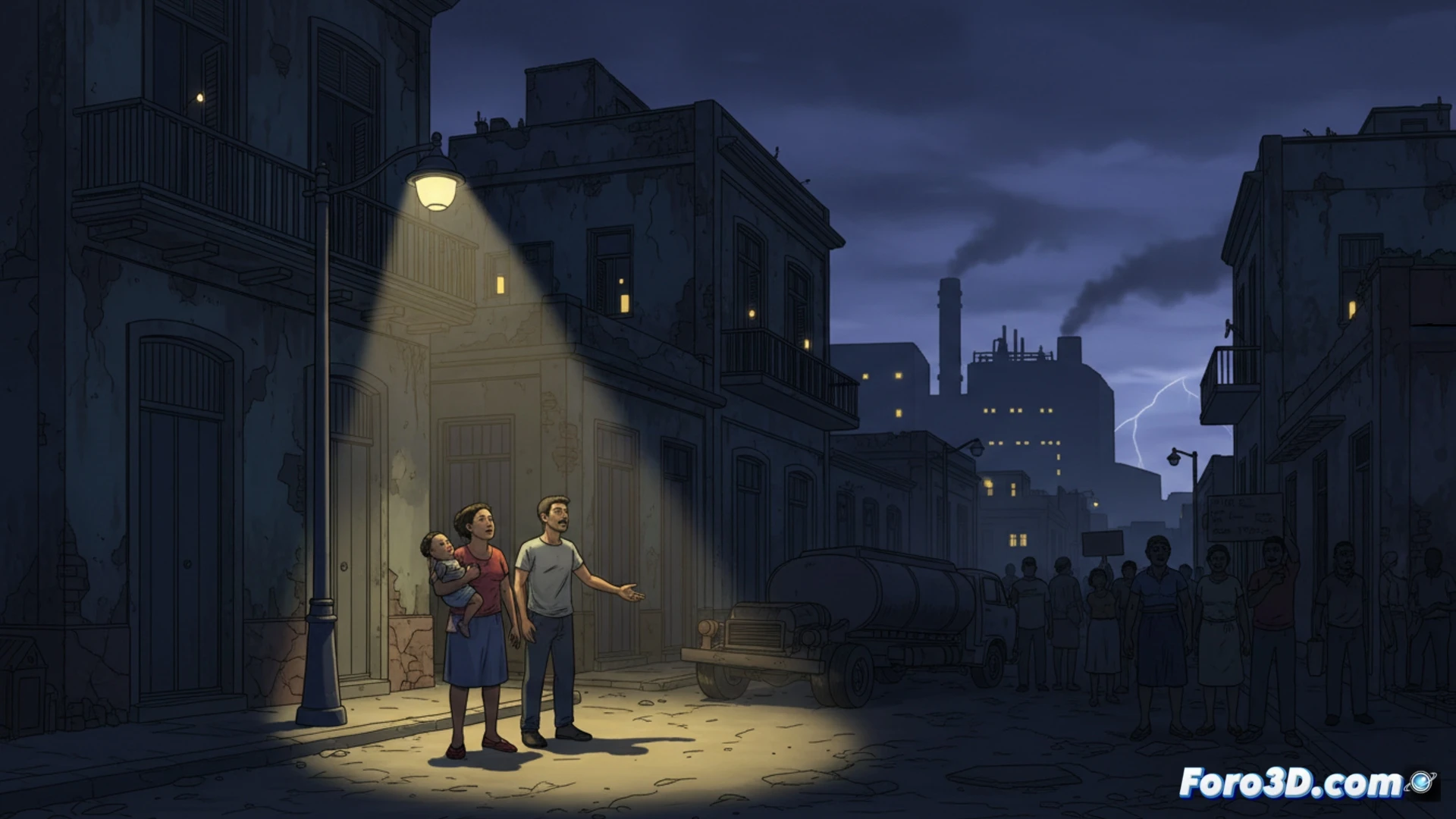
Obsolete technology and external dependence: the energy burden ⚡
The Cuban electrical system relies on old thermal plants that require constant maintenance and large volumes of imported crude oil, mainly from Venezuela and Russia. Without foreign currency to buy fuel on the international market, the plants operate at a minimum. The lack of investment in renewable sources, such as solar or wind, leaves the grid without viable short-term alternatives.
The blackout that illuminated national creativity 🚴
Cubans, accustomed to solving everything, have turned the outages into an extreme sport: guessing when the power will return, cooking by candlelight, and showering in the dark. While the government promises solutions, the population has already patented a new method for charging their phones: a stationary bike connected to a car charger. Creole innovation, they call it.