The National Dance Company presented a double bill that left opposing sensations. On one hand, Malaga-born choreographer Luz Arcas made an impact with Masa, a work that turns the stage into a living organism where the group moves as a single body. On the other, Tablero, by Korsia, tried to add layers of meaning but ended up stumbling over its own ambition. Two proposals, two very different results.
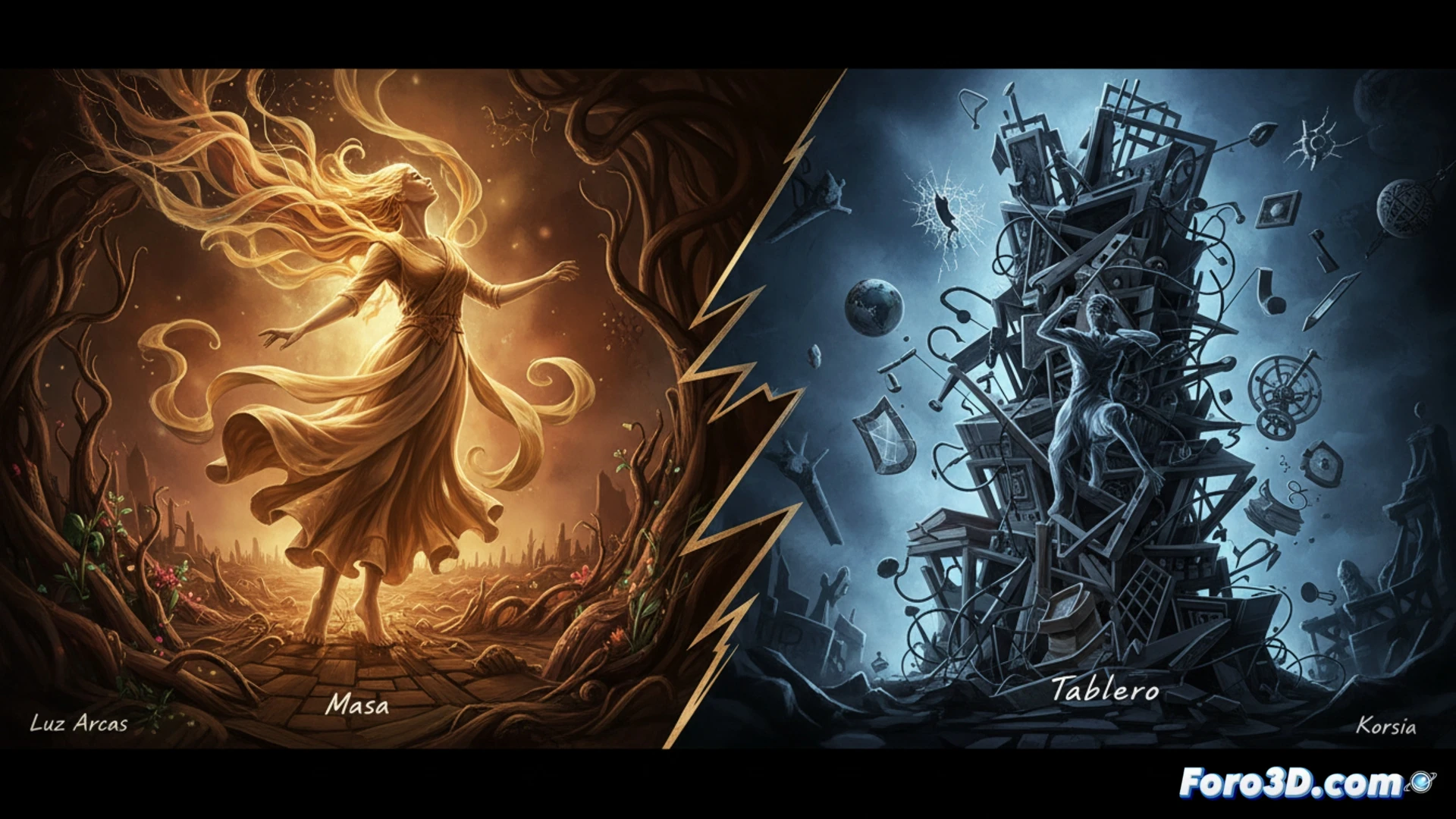
Masa: the collective engine as stage technology 🎭
Arcas's proposal works because it understands group movement as a system of gears. Each dancer is a piece that fits into a precise choreographic mechanism, where strength is born not from the individual but from synchrony. The staging relies on repetition and the accumulation of gestures, generating a tension that grows without the need for external effects. It is pure dance that speaks of identity without resorting to explicit discourse. The direction of the performers and the lighting reinforce that sensation of an organic mass that breathes and contracts.
Tablero or how to get lost in one's own labyrinth 🧩
Korsia wanted to do something big and ended up with a jumble. Tablero has powerful images, but so many ideas together feel like a poorly packed move: everything falls apart along the way. There is a moment when the dancers seem to wonder what they are doing there, and the audience does too. Good thing Arcas came first to remind us that less is more, even if Korsia didn't get the memo.